
IELTS Handbook 13 – Test 4 – R
09/11/2024 2024-11-09 17:26IELTS Handbook 13 – Test 4 – R
READING PASSAGE 1
You should spend about 20 minutes on Questions 1-13 which are based on Reading Passage 1 below.
Cutty Sark: the fastest sailing ship of all time
The nineteenth century was a period of great technological development in Britain, and for shipping the major changes were from wind to steam power, and from wood to iron and steel.
The fastest commercial sailing vessels of all time were clippers, three-masted ships built to transport goods around the world, although some also took passengers. From the 1840s until 1869, when the Suez Canal opened and steam propulsion was replacing sail, clippers dominated world trade. Although many were built, only one has survived more or less intact: Cutty Sark, now on display in Greenwich, southeast London.
Cutty Sark’s unusual name comes from the poem Tam O’Shanter by the Scottish poet Robert Burns. Tam, a farmer, is chased by a witch called Nannie, who is wearing a ‘cutty sark’ – an old Scottish name for a short nightdress. The witch is depicted in Cutty Sark’s figurehead – the carving of a woman typically at the front of old sailing ships. In legend, and in Burns’s poem, witches cannot cross water, so this was a rather strange choice of name for a ship.
Cutty Sark was built in Dumbarton, Scotland, in 1869, for a shipping company owned by John Willis. To carry out construction, Willis chose a new shipbuilding firm, Scott & Linton, and ensured that the contract with them put him in a very strong position. In the end, the firm was forced out of business, and the ship was finished by a competitor.
Willis’s company was active in the tea trade between China and Britain, where speed could bring shipowners both profits and prestige, so Cutty Sark was designed to make the journey more quickly than any other ship. On her maiden voyage, in 1870, she set sail from London, carrying large amounts of goods to China. She returned laden with tea, making the journey back to London in four months. However, Cutty Sark never lived up to the high expectations of her owner, as a result of bad winds and various misfortunes. On one occasion, in 1872, the ship and a rival clipper, Thermopylae, left port in China on the same day. Crossing the Indian Ocean, Cutty Sark gained a lead of over 400 miles, but then her rudder was severely damaged in stormy seas, making her impossible to steer. The ship’s crew had the daunting task of repairing the rudder at sea, and only succeeded at the second attempt. Cutty Sark reached London a week after Thermopylae.
Steam ships posed a growing threat to clippers, as their speed and cargo capacity increased. In addition, the opening of the Suez Canal in 1869, the same year that Cutty Sark was launched, had a serious impact. While steam ships could make use of the quick, direct route between the Mediterranean and the Red Sea, the canal was of no use to sailing ships, which needed the much stronger winds of the oceans, and so had to sail a far greater distance. Steam ships reduced the journey time between Britain and China by approximately two months.
By 1878, tea traders weren’t interested in Cutty Sark, and instead, she took on the much less prestigious work of carrying any cargo between any two ports in the world. In 1880, violence aboard the ship led ultimately to the replacement of the captain with an incompetent drunkard who stole the crew’s wages. He was suspended from service, and a new captain appointed. This marked a turnaround and the beginning of the most successful period in Cutty Sark’s working life, transporting wool from Australia to Britain. One such journey took just under 12 weeks, beating every other ship sailing that year by around a month.
The ship’s next captain, Richard Woodget, was an excellent navigator, who got the best out of both his ship and his crew. As a sailing ship, Cutty Sark depended on the strong trade winds of the southern hemisphere, and Woodget took her further south than any previous captain, bringing her dangerously close to icebergs off the southern tip of South America. His gamble paid off, though, and the ship was the fastest vessel in the wool trade for ten years.
As competition from steam ships increased in the 1890s, and Cutty Sark approached the end of her life expectancy, she became less profitable. She was sold to a Portuguese firm, which renamed her Ferreira. For the next 25 years, she again carried miscellaneous cargoes around the world.
Badly damaged in a gale in 1922, she was put into Falmouth harbor in southwest England, for repairs. Wilfred Dowman, a retired sea captain who owned a training vessel, recognised her and tried to buy her, but without success. She returned to Portugal and was sold to another Portuguese company. Dowman was determined, however, and offered a high price: this was accepted, and the ship returned to Falmouth the following year and had her original name restored.
Dowman used Cutty Sark as a training ship, and she continued in this role after his death. When she was no longer required, in 1954, she was transferred to dry dock at Greenwich to go on public display. The ship suffered from fire in 2007, and again, less seriously, in 2014, but now Cutty Sark attracts a quarter of a million visitors a year.
Questions
1 – 8Do the following statements agree with the information given in Reading Passage 1?
In boxes 1-8 on your answer sheet, write
TRUE if the statement agrees with the information
FALSE if the statement contradicts the information
NOT GIVEN if there is no information on this
- 1
Clippers were originally intended to be used as passenger ships.
- A
True
BFalse
CNot Given
- 2
Cutty Sark was given the name of a character in a poem.
- A
True
BFalse
CNot Given
- 3
The contract between John Willis and Scott & Linton favoured Willis.
- A
True
BFalse
CNot Given
- 4
John Willis wanted Cutty Sark to be the fastest tea clipper travelling between the UK and China.
- A
True
BFalse
CNot Given
- 5
Despite storm damage, Cutty Sark beat Thermopylae back to London.
- A
True
BFalse
CNot Given
- 6
The opening of the Suez Canal meant that steam ships could travel between Britain and China faster than clippers.
- A
True
BFalse
CNot Given
- 7
Steam ships sometimes used the ocean route to travel between London and China.
- A
True
BFalse
CNot Given
- 8
Captain Woodget put Cutty Sark at risk of hitting an iceberg.
- A
True
BFalse
CNot Given
Questions
9 – 13Complete the sentences below. Choose ONE WORD ONLY from the passage for each answer. Write your answers in boxes 9-13 on your answer sheet.
READING PASSAGE 2
You should spend about 20 minutes on Questions 14-26 which are based on Reading Passage 2 below.
SAVING THE SOIL
More than a third of the Earth’s top layer is at risk. Is there hope for our planet’s most precious resource?
A
More than a third of the world’s soil is endangered, according to a recent UN report. If we don’t slow the decline, all farmable soil could be gone in 60 years. Since soil grows 95% of our food, and sustains human life in other more surprising ways, that is a huge problem.
B
Peter Groffman, from the Cary Institute of Ecosystem Studies in New York, points out that soil scientists have been warning about the degradation of the world’s soil for decades. At the same time, our understanding of its importance to humans has grown. A single gram of healthy soil might contain 100 million bacteria, as well as other microorganisms such as viruses and fungi, living amid decomposing plants and various minerals.
That means soils do not just grow our food, but are the source of nearly all our existing antibiotics, and could be our best hope in the fight against antibiotic-resistant bacteria. Soil is also an ally against climate change: as microorganisms within soil digest dead animals and plants, they lock in their carbon content, holding three times the amount of carbon as does the entire atmosphere. Soils also store water, preventing flood damage: in the UK, damage to buildings, roads and bridges from floods caused by soil degradation costs £233 million every year.
C
If the soil loses its ability to perform these functions, the human race could be in big trouble. The danger is not that the soil will disappear completely, but that the microorganisms that give it its special properties will be lost. And once this has happened, it may take the soil thousands of years to recover.
Agriculture is by far the biggest problem. In the wild, when plants grow they remove nutrients from the soil, but then when the plants die and decay these nutrients are returned directly to the soil. Humans tend not to return unused parts of harvested crops directly to the soil to enrich it, meaning that the soil gradually becomes less fertile. In the past we developed strategies to get around the problem, such as regularly varying the types of crops grown, or leaving fields uncultivated for a season.
D
But these practices became inconvenient as populations grew and agriculture had to be run on more commercial lines. A solution came in the early 20th century with the Haber-Bosch process for manufacturing ammonium nitrate. Farmers have been putting this synthetic fertiliser on their fields ever since.
But over the past few decades, it has become clear this wasn’t such a bright idea. Chemical fertilisers can release polluting nitrous oxide into the atmosphere and excess is often washed away with the rain, releasing nitrogen into rivers. More recently, we have found that indiscriminate use of fertilisers hurts the soil itself, turning it acidic and salty, and degrading the soil they are supposed to nourish.
E
One of the people looking for a solution to his problem is Pius Floris, who started out running a tree-care business in the Netherlands, and now advises some of the world’s top soil scientists. He came to realise that the best way to ensure his trees flourished was to take care of the soil, and has developed a cocktail of beneficial bacteria, fungi and humus* to do this. Researchers at the University of Valladolid in Spain recently used this cocktail on soils destroyed by years of fertiliser overuse. When they applied Floris’s mix to the desert-like test plots, a good crop of plants emerged that were not just healthy at the surface, but had roots strong enough to pierce dirt as hard as rock. The few plants that grew in the control plots, fed with traditional fertilisers, were small and weak
F
However, measures like this are not enough to solve the global soil degradation problem. To assess our options on a global scale we first need an accurate picture of what types of soil are out there, and the problems they face. That’s not easy. For one thing, there is no agreed international system for classifying soil. In an attempt to unify the different approaches, the UN has created the Global Soil Map project. Researchers from nine countries are working together to create a map linked to a database that can be fed measurements from field surveys, drone surveys, satellite imagery, lad analyses and so on to provide real-time data on the state of the soil. Within the next four years, they aim to have mapped soils worldwide to a depth of 100 metres, with the results freely accessible to all.
G
But this is only a first step. We need ways of presenting the problem that bring it home to governments and the wider public, says Pamela Chasek at the International Institute for Sustainable Development, in Winnipeg, Canada. ‘Most scientists don’t speak language that policy-makers can understand, and vice versa.’ Chasek and her colleagues have proposed a goal of ‘zero net land degradation’. Like the idea of carbon neutrality, it is an easily understood target that can help shape expectations and encourage action.
For soils on the brink, that may be too late. Several researchers are agitating for the immediate creation of protected zones for endangered soils. One difficulty here is defining what these areas should conserve: areas where the greatest soil diversity is present? Or areas of unspoilt soils that could act as a future benchmark of quality?
Whatever we do, if we want our soils to survive, we need to take action now.
Questions
14 – 17Complete the summary below. Write ONE WORD ONLY from the passage for each answer. Write your answers in boxes 14-17 on your answer sheet.
Why soil degradation could be a disaster for humans
Questions
18 – 23Complete each sentence with the correct ending, A-F, below. Match the correct letter, A-F, with questions 18-21.
Questions
24 – 26Reading Passage 2 has seven paragraphs, A-G. Which section contains the following information? Match the correct letter, A-G, with questions 22-26. NB You may use any letter more than once.
READING PASSAGE 3
You should spend about 20 minutes on Questions 27-40 which are based on Reading Passage 3 below.
Book Review
The Happiness Industry: How the Government and Big Business Sold Us Well-Being
By William Davies
‘Happiness is the ultimate goal because it is self-evidently good. If we are asked why happiness matters we can give no further external reason. It just obviously does matter.’ This pronouncement by Richard Layard, an economist and advocate of ‘positive psychology’, summarises the beliefs of many people today. For Layard and others like him, it is obvious that the purpose of government is to promote a state of collective well-being. The only question is how to achieve it, and here positive psychology – a supposed science that not only identifies what makes people happy but also allows their happiness to be measured – can show the way. Equipped with this science, they say, governments can secure happiness in society in a way they never could in the past.
It is an astonishingly crude and simple-minded way of thinking, and for that very reason increasingly popular. Those who think in this way are oblivious to the vast philosophical literature in which the meaning and value of happiness have been explored and questioned, and write as if nothing of any importance had been thought on the subject until it came to their attention. It was the philosopher Jeremy Bentham (1748-1832) who was more than anyone else responsible for the development of this way of thinking. For Bentham it was obvious that the human good consists of pleasure and the absence of pain. The Greek philosopher Aristotle may have identified happiness with self-realisation in the 4th century BC, and thinkers throughout the ages may have struggled to reconcile the pursuit of happiness with other human values, but for Bentham all this was mere metaphysics or fiction. Without knowing anything much of him or the school of moral theory he established – since they are by education and intellectual conviction illiterate in the history of ideas – our advocates of positive psychology follow in his tracks in rejecting as outmoded and irrelevant pretty much the entirety of ethical reflection on human happiness to date.
But as William Davies notes in his recent book The Happiness Industry, the view that happiness is the only self-evident good is actually a way of limiting moral inquiry. One of the virtues of this rich, lucid and arresting book is that it places the current cult of happiness in a well-defined historical framework. Rightly, Davies his story with Bentham, noting that he was far more than a philosopher. Davies writes, ‘Bentham’s activities were those which we might now associate with a public sector management consultant’. In the 1790s, he wrote to the Home Office suggesting that the departments of government be linked together through a set of ‘conversation tubes’, and to the Bank of England with a design for a printing device that could produce unforgeable banknotes. He drew up plans for a ‘frigidarium’ to keep provisions such as meat, fish, fruit and vegetables fresh. His celebrated design for a prison to be known as a ‘Panopticon’, in which prisoners would be kept in solitary confinement while being visible at all times to the guards, was very nearly adopted. (Surprisingly, Davies does not discuss the fact that Bentham meant his Panopticon not just as a model prison but also as an instrument of control that could be applied to schools and factories.)
Bentham was also a pioneer of the ‘science of happiness’. If happiness is to be regarded as a science, it has to be measured, and Bentham suggested two ways in which this might be done. Viewing happiness as a complex of pleasurable sensations, he suggested that it might be quantified by measuring the human pulse rate. Alternatively, money could be used as the standard for quantification: if two different goods have the same price, it can be claimed that they produce the same quantity of pleasure in the consumer. Bentham was more attracted by the latter measure. By associating money so closely to inner experience, Davies writes, Bentham ‘set the stage for the entangling of psychological research and capitalism that would shape the business practices of the twentieth century’.
The Happiness Industry describes how the project of a science of happiness has become integral to capitalism. We learn much that is interesting about how economic problems are being redefined and treated as psychological maladies. In addition, Davies shows how the belief that inner of pleasure and displeasure can be objectively measured has informed management studies and advertising. The tendency of thinkers such as J B Watson, the founder of behaviourism*, was that human beings could be shaped, or manipulated, by policymakers and managers. Watson had no factual basis for his view of human action. When he became president of the American Psychological Association in 1915, he ‘had never even studied a single human being’: his research had been confined to experiments on white rats. Yet Watson’s reductive model is now widely applied, with ‘behaviour change’ becoming the goal of governments: in Britain, a ‘Behaviour Insights Team’ has been established by the government to study how people can be encouraged, at minimum cost to the public purse, to live in what are considered to be socially desirable ways.
Modern industrial societies appear to need the possibility of ever-increasing happiness to motivate them in their labours. But whatever its intellectual pedigree, the idea that governments should be responsible for promoting happiness is always a threat to human freedom.
———————–
* ‘behaviourism’: a branch of psychology which is concerned with observable behaviour
Questions
27 – 31Choose the correct letter, A, B, C or D. Write the correct letter in boxes 27-29 on your answer sheet.
- 24
What is the reviewer’s attitude to advocates of positive psychology?
- A
They are wrong to reject the ideas of Bentham.
BThey are over-influenced by their study of Bentham’s theories.
CThey have a fresh new approach to ideas on human happiness.
DThey are ignorant about the ideas they should be considering.
- 25
The reviewer refers to the Greek philosopher Aristotle in order to suggest that happiness
- A
may not be just pleasure and the absence of pain.
Bshould not be the main goal of humans.
Cis not something that should be fought for.
Dis not just an abstract concept.
- 26
According to Davies, Bentham’s suggestion for linking the price of goods to happiness was significant because
- A
it was the first successful way of assessing happiness.
Bit established a connection between work and psychology.
Cit was the first successful example of psychological research.
Dit involved consideration of the rights of consumers.
Questions
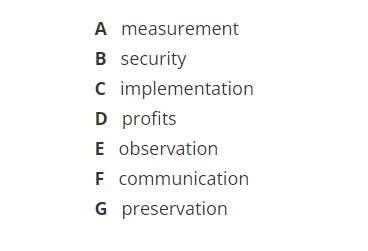
32 – 36Complete the summary using the list of words A-G below. Write the correct letter, A-G, in boxes 30-34 on your answer sheet.
Jeremy Bentham
Questions
37 – 40Do the following statements agree with the claims of the writer in Reading Passage 3?
In boxes 35-40 on your answer sheet, write
YES if the statement agrees with the claims of the writer
NO if the statement contradicts the claims of the writer
NOT GIVEN if it is impossible to say what the writer thinks about this
- 27
One strength of The Happiness Industry is its discussion of the relationship between psychology and economics.
- A
Yes
BNo
CNot Given
- 28
It is more difficult to measure some emotions than others.
- A
Yes
BNo
CNot Given
- 29
Watson’s ideas on behaviourism were supported by research on humans he carried out before 1915.
- A
Yes
BNo
CNot Given
- 30
Watson’s ideas have been most influential on governments outside America.
- A
Yes
BNo
CNot Given
- 31
The need for happiness is linked to industrialisation.
- A
Yes
BNo
CNot Given
- 32
A main aim of government should be to increase the happiness of the population.
- A
Yes
BNo
CNot Given
Questions
1 – 8Do the following statements agree with the information given in Reading Passage 1?
In boxes 1-8 on your answer sheet, write
TRUE if the statement agrees with the information
FALSE if the statement contradicts the information
NOT GIVEN if there is no information on this
- 1
Clippers were originally intended to be used as passenger ships.
- A
True
BFalse
CNot Given
Giải thích đáp án
CÂU HỎI 1 – FALSE Chú ý tới từ khóa “originally intended to be used” để tìm được Paragraph 2 chứa câu trả lời. | |
CÂU HỎI | VÙNG THÔNG TIN |
Clippers were originally intended to be used as passenger ships. | The fastest commercial sailing vessels of all time were clippers, three-masted ships built to transport goods around the world, although some also took passengers. |
DỊCH NGHĨA | |
Những chiếc thuyền ba cột buồm ban đầu được dự định sử dụng làm tàu chở khách. | Những chiếc thuyền buồm thương mại nhanh nhất mọi thời đại là những chiếc thuyền ba cột buồm được chế tạo để vận chuyển hàng hóa đi khắp thế giới, mặc dù một số cũng chở hành khách |
Giải thích: đoạn thông tin cho thấy những chiếc thuyền được đóng với mục tiêu chở hàng, chỉ đôi lúc chở người => chở người không phải mục đích đầu => nhận định đưa ra sai ⇒ FALSE | |
- 2
Cutty Sark was given the name of a character in a poem.
Bạn chưa trả lời câu hỏi này
- A
True
BFalse
CNot Given
Giải thích đáp án
CÂU HỎI 2 – FALSE Chú ý tới từ khóa “character, poem” để tìm được Paragraph 3 chứa câu trả lời. | |
CÂU HỎI | VÙNG THÔNG TIN |
Cutty Sark was given the name of a character in a poem | Cutty Sark’s unusual name comes from the poem Tam O’Shanter by the Scottish poet Robert Burns. Tam, a farmer, is chased by a witch called Nannie, who is wearing a ‘cutty sark’ – an old Scottish name for a short nightdress. |
DỊCH NGHĨA | |
Cutty Sark được đặt tên cho một nhân vật trong một bài thơ. | Cái tên lạ thường của Cutty Sark xuất phát từ bài thơ Tam O’Shanter của nhà thơ người Scotland Robert Burns. Tam, một nông dân, bị truy đuổi bởi một phù thủy tên là Nannie, người đang mặc một chiếc ‘cutty sark’ – một tên gọi cũ của Scotland cho một chiếc váy ngủ ngắn. |
Giải thích: thông tin bài khóa cho thấy chiếc thuyền Cutty Sark được đặt tên theo tên gọi chiếc váy ngủ của Scotland, không phải nhân vật trong thơ => nhận định đưa ra sai ⇒ FALSE | |
- 3
The contract between John Willis and Scott & Linton favoured Willis.
Bạn chưa trả lời câu hỏi này
- A
True
BFalse
CNot Given
Giải thích đáp án
CÂU HỎI 3 – TRUE Chú ý tới từ khóa “John Willis, Scott and Linton” để tìm được Paragraph 4 chứa câu trả lời. | |
CÂU HỎI | VÙNG THÔNG TIN |
The contract between John Willis and Scott & Linton favored Willis. | To carry out construction, Willis chose a new shipbuilding firm, Scott & Linton, and ensured that the contract with them put him in a very strong position. |
DỊCH NGHĨA | |
Hợp đồng giữa John Willis và Scott & Linton có lợi cho Willis. | Để tiến hành xây dựng, Willis đã chọn một công ty đóng tàu mới, Scott & Linton, và đảm bảo rằng hợp đồng với họ sẽ giúp anh có một vị thế rất vững chắc. |
Giải thích: Hợp đồng giữa Willis và công ty Scott & Linton đã giúp Willis khẳng định vị thế => hợp đồng có lợi cho Willis => nhận định đưa ra đúng ⇒ TRUE | |
- 4
John Willis wanted Cutty Sark to be the fastest tea clipper travelling between the UK and China.
Bạn chưa trả lời câu hỏi này
- A
True
BFalse
CNot Given
Giải thích đáp án
CÂU HỎI 4 – TRUE Chú ý tới từ khóa “fastest tea clipper” để tìm được Paragraph 5 chứa câu trả lời. | |
CÂU HỎI | VÙNG THÔNG TIN |
John Willis wanted Cutty Sark to be the fastest tea clipper traveling between the UK and China. | Willis’s company was active in the tea trade between China and Britain, where speed could bring shipowners both profits and prestige, so Cutty Sark was designed to make the journey more quickly than any other ship. |
DỊCH NGHĨA | |
John Willis muốn Cutty Sark trở thành chiếc thuyền ba cột buồm trở trà nhanh nhất đi lại giữa Vương quốc Anh và Trung Quốc. | Công ty của Willis hoạt động trong lĩnh vực buôn bán trà giữa Trung Quốc và Anh, nơi tốc độ có thể mang lại lợi nhuận và uy tín cho các chủ tàu, vì vậy Cutty Sark được thiết kế để thực hiện hành trình nhanh hơn bất kỳ con tàu nào khác. |
Giải thích: Willis muốn con tàu của ông ấy chở trà cho Anh và Trung Quốc nhanh hơn bất kì con tàu nào khác => nhận định đưa ra đúng ⇒ TRUE | |
- 5
Despite storm damage, Cutty Sark beat Thermopylae back to London.
Bạn chưa trả lời câu hỏi này
- A
True
BFalse
CNot Given
Giải thích đáp án
CÂU HỎI 5 – FALSE Chú ý tới từ khóa “storm damage, Thermopylae” để tìm được Paragraph 5 chứa câu trả lời. | |
CÂU HỎI | VÙNG THÔNG TIN |
Despite storm damage, Cutty Sark beat Thermopylae back to London. | Crossing the Indian Ocean, Cutty Sark gained a lead of over 400 miles, but then her rudder was severely damaged in stormy seas, making her impossible to steer. The ship’s crew had the daunting task of repairing the rudder at sea, and only succeeded at the second attempt. Cutty Sark reached London a week after Thermopylae. |
DỊCH NGHĨA | |
Bất chấp thiệt hại do bão, Cutty Sark đã đánh bại Thermopylae để trở về London. | Băng qua Ấn Độ Dương, Cutty Sark đã vượt lên dẫn trước hơn 400 dặm, nhưng sau đó bánh lái của nó bị hư hại nghiêm trọng trong cơn bão biển, khiến nó không thể lái được. Thủy thủ đoàn của con tàu có nhiệm vụ khó khăn là sửa chữa bánh lái trên biển và chỉ thành công ở lần thử thứ hai. Cutty Sark đến London một tuần sau Thermopylae. |
Giải thích: Đoạn thông tin cho thấy, chiếc Cutty Sark đã bị hư hỏng nghiêm trọng sau cơn bão và đã về đích sau Thermopylae một tuần => nhận định đưa ra sai ⇒ FALSE | |
- 6
The opening of the Suez Canal meant that steam ships could travel between Britain and China faster than clippers.
Bạn chưa trả lời câu hỏi này
- A
True
BFalse
CNot Given
Giải thích đáp án
CÂU HỎI 6 – TRUE Chú ý tới từ khóa “opening, Suez Canal” để tìm được Paragraph 6 chứa câu trả lời. | |
CÂU HỎI | VÙNG THÔNG TIN |
The opening of the Suez Canal meant that steam ships could travel between Britain and China faster than clippers. | Steam ships posed a growing threat to clippers, as their speed and cargo capacity increased. In addition, the opening of the Suez Canal in 1869, the same year that Cutty Sark was launched, had a serious impact… Steam ships reduced the journey time between Britain and China by approximately two months. |
DỊCH NGHĨA | |
Việc mở kênh đào Suez có nghĩa là tàu chạy bằng hơi nước có thể đi lại giữa Anh và Trung Quốc nhanh hơn những chiếc thuyền ba cột buồm. | Tàu hơi nước là mối đe dọa ngày càng tăng đối với những chiếc thuyền ba cột buồm, khi tốc độ và sức chứa hàng hóa của chúng tăng lên. Ngoài ra, việc mở kênh đào Suez vào năm 1869, cùng năm mà Cutty Sark được hạ thủy, đã có tác động nghiêm trọng… Tàu chạy bằng hơi nước đã giảm thời gian hành trình giữa Anh và Trung Quốc khoảng hai tháng. |
Giải thích: Đoạn thông tin cho thấy những chiếc tàu chạy bằng hơi nước đã có thể rút ngắn thời gian vận chuyển khi mở kênh đào => tàu bằng hơi nước có thể đi lại nhanh hơn => nhận định đưa ra đúng ⇒ TRUE | |
- 7
Steam ships sometimes used the ocean route to travel between London and China.
Bạn chưa trả lời câu hỏi này
- A
True
BFalse
CNot Given
Giải thích đáp án
CÂU HỎI 7 – NOT GIVEN Chú ý tới từ khóa “ocean route, London, China” để tìm được Paragraph 6 chứa câu trả lời. | |
CÂU HỎI | VÙNG THÔNG TIN |
Steam ships sometimes used the ocean route to travel between London and China. | While steam ships could make use of the quick, direct route between the Mediterranean and the Red Sea, the canal was of no use to sailing ships, which needed the much stronger winds of the oceans, and so had to sail a far greater distance. |
DỊCH NGHĨA | |
Tàu hơi nước đôi khi sử dụng tuyến đường biển để di chuyển giữa London và Trung Quốc. | Trong khi tàu chạy bằng hơi nước có thể tận dụng tuyến đường trực tiếp, nhanh chóng giữa Địa Trung Hải và Biển Đỏ, thì kênh đào này không có tác dụng đối với tàu buồm, vốn cần gió mạnh hơn nhiều của đại dương, và do đó phải đi một quãng đường xa hơn. |
Giải thích: Đoạn thông tin có đề cập tới việc thuyền dùng tuyến đường biển để di chuyển nhưng không hề đề cập tới việc thuyền di chuyển từ đâu tới đâu ⇒ không đủ thông tin để xác định nhận định là đúng hay sai => NOT GIVEN | |
- 8
Captain Woodget put Cutty Sark at risk of hitting an iceberg.
Bạn chưa trả lời câu hỏi này
- A
True
BFalse
CNot Given
Giải thích đáp án
CÂU HỎI 8 – TRUE Chú ý tới từ khóa “Captain Woodget, Cutty Sark, iceberg” để tìm được Paragraph 8 chứa câu trả lời. | |
CÂU HỎI | VÙNG THÔNG TIN |
Captain Woodget put Cutty Sark at risk of hitting an iceberg. | As a sailing ship, Cutty Sark depended on the strong trade winds of the southern hemisphere, and Woodget took her further south than any previous captain, bringing her dangerously close to icebergs off the southern tip of South America. |
DỊCH NGHĨA | |
Thuyền trưởng Woodget khiến Cutty Sark có nguy cơ va phải một tảng băng trôi. | Là một con tàu buồm, Cutty Sark phụ thuộc vào những cơn gió mậu dịch mạnh ở Nam bán cầu, và Woodget đã đưa chiếc thuyền đi xa hơn về phía nam so với bất kỳ thuyền trưởng nào trước đó, đưa nó đến gần những tảng băng trôi ngoài khơi cực nam của Nam Mỹ một cách nguy hiểm. |
Giải thích: Đoạn thông tin cho thấy thuyền trưởng Woodget đã đẩy chiếc thuyền vào nguy cơ đâm vào nhưng tảng băng => nhận định đưa ra đúng ⇒ TRUE | |
Questions
9 – 13Complete the sentences below. Choose ONE WORD ONLY from the passage for each answer. Write your answers in boxes 9-13 on your answer sheet.
Giải thích đáp án
CÂU HỎI 9 – WOOL Chỗ trống cần điền đứng sau động từ “carried” ⇒ cần điền danh từ | |
CÂU HỎI | VÙNG THÔNG TIN |
After 1880, Cutty Sark carried wool as its main cargo during its most successful time. | This marked a turnaround and the beginning of the most successful period in Cutty Sark’s working life, transporting wool from Australia to Britain. |
CÂU HỎI 10 – NAVIGATOR Chỗ trống cần điền đứng sau mạo từ “a” ⇒ cần điền danh từ | |
CÂU HỎI | VÙNG THÔNG TIN |
As a captain and navigator, Woodget was very skilled. | The ship’s next captain, Richard Woodget, was an excellent navigator, who got the best out of both his ship and his crew. |
CÂU HỎI 11 – GALE Chỗ trống cần điền đứng sau mạo từ “a” ⇒ cần điền danh từ | |
CÂU HỎI | VÙNG THÔNG TIN |
Ferreira went to Falmouth to repair damage that a gale had caused. | Badly damaged in a gale in 1922, she was put into Falmouth harbor in southwest England, for repairs. |
CÂU HỎI 12 – TRAINING Chỗ trống cần điền đứng sau giới từ “for” ⇒ cần điền danh từ | |
CÂU HỎI | VÙNG THÔNG TIN |
Between 1923 and 1954, Cutty Sark was used for training | Badly damaged in a gale in 1922, she was put into Falmouth harbor in southwest England, for repairs… Dowman used Cutty Sark as a training ship, and she continued in this role after his death. |
CÂU HỎI 13 – FIRE Chỗ trống cần điền đứng sau giới từ “by” ⇒ cần điền danh từ | |
CÂU HỎI | VÙNG THÔNG TIN |
Cutty Sark has twice been damaged by fire in the 21st century. | The ship suffered from fire in 2007, and again, less seriously, in 2014, but now Cutty Sark attracts a quarter of a million visitors a year. |
Questions
14 – 17Complete the summary below. Write ONE WORD ONLY from the passage for each answer. Write your answers in boxes 14-17 on your answer sheet.
Why soil degradation could be a disaster for humans
Giải thích đáp án
CÂU HỎI 14 – MINERALS Chỗ trống cần điền đứng trước từ “and” và phía sau đó là danh từ “minerals” ⇒ cần điền danh từ/ cụm danh từ | |
CÂU HỎI | VÙNG THÔNG TIN |
Healthy soil contains a large variety of bacteria and other microorganisms, as well as plant remains and minerals | A single gram of healthy soil might contain 100 million bacteria, as well as other microorganisms such as viruses and fungi, living amid decomposing plants and various minerals. |
CÂU HỎI 15 – CARBON Chỗ trống cần điền đứng sau động từ “storing” ⇒ cần điền danh từ | |
CÂU HỎI | VÙNG THÔNG TIN |
It provides us with food and also with antibiotics, and its function in storing carbonhas a significant effect on the climate. | …soils do not just grow our food, but are the source of nearly all our existing antibiotics, and could be our best hope in the fight against antibiotic-resistant bacteria. Soil is also an ally against climate change: as microorganisms within soil digest dead animals and plants, they lock in their carbon content, holding three times the amount of carbon as does the entire atmosphere |
CÂU HỎI 16 – WATER Chỗ trống cần điền đứng sau động từ “holds” ⇒ cần điền danh từ | |
CÂU HỎI | VÙNG THÔNG TIN |
In addition, it prevents damage to property and infrastructure because it holds water. If these microorganisms are lost, soil may lose its special properties. | Soils also store water, preventing flood damage: in the UK, damage to buildings, roads and bridges from floods caused by soil degradation costs £233 million every year. |
CÂU HỎI 17 – AGRICULTURE Chỗ trống cần điền đứng sau mạo từ “the” ⇒ cần điền danh từ | |
CÂU HỎI | VÙNG THÔNG TIN |
The main factor contributing to soil degradation is the agriculturecarried out by humans. | Agriculture is by far the biggest problem. In the wild, when plants grow they remove nutrients from the soil, but then when the plants die and decay these nutrients are returned directly to the soil. |
Questions
18 – 21Complete each sentence with the correct ending, A-F, below. Match the correct letter, A-F, with questions 18-21.
Bạn chưa trả lời câu hỏi này
C. may not be put back into the soil.
Bạn chưa trả lời câu hỏi này
E. may cause damage to different aspects of the environment.
Bạn chưa trả lời câu hỏi này
A. may improve the number and quality of plants growing there.
Bạn chưa trả lời câu hỏi này
D. may help governments to be more aware of soil-related issues.
Giải thích đáp án
CÂU HỎI 18 – C | |
CÂU HỎI | VÙNG THÔNG TIN |
Nutrients contained in the unused parts of harvested crops may not be put back into the soil | …when the plants die and decay these nutrients are returned directly to the soil. Humans tend not to returnunused parts of harvested crops directly to the soil to enrich it, meaning that the soil gradually becomes less fertile |
CÂU HỎI 19 – E | |
CÂU HỎI | VÙNG THÔNG TIN |
Synthetic fertilizers produced with the Haber-Bosch process may cause damage to different aspects of the environment. | “…Chemical fertilizers can release polluting nitrous oxide into the atmosphere and excess is often washed away with the rain, releasing nitrogen into rivers. More recently, we have found that indiscriminate use of fertilizers hurts the soil itself…” |
CÂU HỎI 20 – A | |
CÂU HỎI | VÙNG THÔNG TIN |
Addition of a mixture developed by Pius Floris to the soil may improve the number and quality of plants growing there. | When they applied Floris’s mix to the desert-like test plots, a good crop of plants emerged that were not just healthy at the surface, but had roots strong enoughto pierce dirt as hard as rock”
|
CÂU HỎI 21 – D | |
CÂU HỎI | VÙNG THÔNG TIN |
The idea of zero net soil degradation may help governments to be more aware of soil-related issues. | “We need ways of presenting the problem that bring it home to governments and the wider public […] Chasek and her colleagues have proposed a goal of ‘zero net land degradation’”
|
Questions
22 – 26Reading Passage 2 has seven paragraphs, A-G. Which section contains the following information? Match the correct letter, A-G, with questions 22-26. NB You may use any letter more than once.
Bạn chưa trả lời câu hỏi này
Paragraph E
Bạn chưa trả lời câu hỏi này
Paragraph C
Bạn chưa trả lời câu hỏi này
Paragraph F
Bạn chưa trả lời câu hỏi này
Paragraph G
Bạn chưa trả lời câu hỏi này
Paragraph F
Giải thích đáp án
CÂU HỎI 22 – PARAGRAPH E Chú ý tới từ khóa “soil-improvement project” để tìm được Paragraph E chứa câu trả lời. | |
CÂU HỎI | VÙNG THÔNG TIN |
a reference to one person’s motivation for a soil-improvement project | One of the people looking for a solution to his problem is Pius Floris, who started out running a tree-care business in the Netherlands, and now advises some of the world’s top soil scientists. He came to realize that the best way to ensure his trees flourished was to take care of the soil, and has developed a cocktail of beneficial bacteria, fungi and humus* to do this. |
DỊCH NGHĨA | |
Đề cập đến động lực của một người để làm một dự án cải tạo đất | Một trong những người đang tìm kiếm giải pháp cho vấn đề của anh ấy là Pius Floris, người bắt đầu điều hành một doanh nghiệp chăm sóc cây cối ở Hà Lan, và hiện đang cố vấn cho một số nhà khoa học đất hàng đầu thế giới. Anh ấy nhận ra rằng cách tốt nhất để đảm bảo cây của anh ấy phát triển tốt là chăm sóc đất và đã phát triển một hỗn hợp vi khuẩn, nấm và mùn có lợi để làm điều này. |
CÂU HỎI 23 – PARAGRAPH C Chú ý tới từ khóa “development of farming” để tìm được Paragraph C chứa câu trả lời. | |
CÂU HỎI | VÙNG THÔNG TIN |
an explanation of how soil stayed healthy before the development of farming | Humans tend not to return unused parts of harvested crops directly to the soil to enrich it, meaning that the soil gradually becomes less fertile. In the past we developed strategies to get around the problem, such as regularly varying the types of crops grown, or leaving fields uncultivated for a season. |
DỊCH NGHĨA | |
giải thích về cách giữ đất tốt trước khi phát triển nông nghiệp | Con người có xu hướng không trả lại những phần chưa sử dụng của cây trồng đã thu hoạch trực tiếp vào đất để làm giàu đất, nghĩa là đất dần trở nên kém màu mỡ hơn. Trước đây, chúng tôi đã phát triển các chiến lược để giải quyết vấn đề, chẳng hạn như thường xuyên thay đổi các loại cây được trồng hoặc để các cánh đồng không được canh tác trong một mùa. |
CÂU HỎI 24 – PARAGRAPH F Chú ý tới từ khóa “soil degradation” để tìm được Paragraph F chứa câu trả lời. | |
CÂU HỎI | VÙNG THÔNG TIN |
examples of different ways of collecting information on soil degradation | In an attempt to unify the different approaches, the UN has created the Global Soil Map project. Researchers from nine countries are working together to create a map linked to a database that can be fed measurements from field surveys, drone surveys, satellite imagery, lad analyses and so on to provide real-time data on the state of the soil. |
DỊCH NGHĨA | |
ví dụ về các cách khác nhau để thu thập thông tin về suy thoái đất
| Trong nỗ lực thống nhất các cách tiếp cận khác nhau, Liên hợp quốc đã tạo ra dự án Bản đồ đất toàn cầu. Các nhà nghiên cứu từ chín quốc gia đang làm việc cùng nhau để tạo ra một bản đồ được liên kết với cơ sở dữ liệu có thể cung cấp các phép đo từ các cuộc khảo sát thực địa, khảo sát bằng máy bay không người lái, hình ảnh vệ tinh, phân tích trẻ em, v.v. để cung cấp dữ liệu thời gian thực về trạng thái của đất. |
CÂU HỎI 25 – PARAGRAPH G Chú ý tới từ khóa “some types of soil” để tìm được Paragraph G chứa câu trả lời. | |
CÂU HỎI | VÙNG THÔNG TIN |
a suggestion for a way of keeping some types of soil safe in the near future | Several researchers are agitating for the immediate creation of protected zones for endangered soils. |
DỊCH NGHĨA | |
đề xuất biện pháp giữ an toàn cho một số loại đất trong thời gian tới | Một số nhà nghiên cứu đang vận động để tạo ra các khu vực được bảo vệ ngay lập tức cho các loại đất đang bị đe dọa. |
CÂU HỎI 26 – PARAGRAPH F Chú ý tới từ khóa “reason, overview, soil degradation” để tìm được Paragraph F chứa câu trả lời. | |
CÂU HỎI | VÙNG THÔNG TIN |
a reason why it is difficult to provide an overview of soil degradation | To assess our options on a global scale we first need an accurate picture of what types of soil are out there, and the problems they face. That’s not easy. For one thing, there is no agreed international system for classifying soil. |
DỊCH NGHĨA | |
lý do tại sao khó đưa ra cái nhìn tổng quan về suy thoái đất | Để đánh giá các lựa chọn của chúng tôi trên quy mô toàn cầu, trước tiên chúng tôi cần có một cái nhìn chính xác về các loại đất hiện có và các vấn đề mà chúng gặp phải. Điều đó không dễ dàng. Thứ nhất, không có hệ thống quốc tế thống nhất để phân loại đất. |
Questions
Choose the correct letter, A, B, C or D. Write the correct letter in boxes 27-29 on your answer sheet.
- 27
What is the reviewer’s attitude to advocates of positive psychology?
Bạn chưa trả lời câu hỏi này
Giải thích đáp án
CÂU HỎI 27 – PARAGRAPH 2 | |
CÂU HỎI | VÙNG THÔNG TIN |
27. What is the reviewer’s attitude to advocates of positive psychology? A. They are wrong to reject the ideas of Bentham. B. They are over-influenced by their study of Bentham’s theories. C. They have a fresh new approach to ideas on human happiness. D. They are ignorant about the ideas they should be considering. | “Those who think in this way are oblivious to the vast philosophical literature in which the meaning and value of happiness have been explored and questioned, and write as if nothing of any importance had been thought on the subject until it came to their attention.” |
DỊCH NGHĨA | |
27. Người đánh giá có thái độ như thế nào đối với những người ủng hộ tâm lý học tích cực? A. Họ đã sai khi bác bỏ những ý tưởng của Bentham. B. Họ bị ảnh hưởng quá mức bởi việc nghiên cứu các lý thuyết của Bentham. C. Họ có một cách tiếp cận mới đối với những ý tưởng về hạnh phúc của con người. D. Họ không biết gì về những ý tưởng mà họ nên xem xét.
| “Những người nghĩ theo cách này không biết gì về tài liệu triết học rộng lớn trong đó ý nghĩa và giá trị của hạnh phúc đã được khám phá và đặt câu hỏi, và viết như thể không có gì quan trọng được nghĩ đến về chủ đề này cho đến khi nó được họ chú ý.” |
| |
- 28
The reviewer refers to the Greek philosopher Aristotle in order to suggest that happiness
Bạn chưa trả lời câu hỏi này
Giải thích đáp án
CÂU HỎI 28 – PARAGRAPH 2 | |
CÂU HỎI | VÙNG THÔNG TIN |
28. The reviewer refers to the Greek philosopher Aristotle in order to suggest that happiness A. may not be just pleasure and the absence of pain. B. should not be the main goal of humans. C. is not something that should be fought for. D. is not just an abstract concept. | For Bentham it was obvious that the human good consists of pleasure and the absence of pain. The Greek philosopher Aristotle may have identified happiness with self-realization in the 4th century BC and thinkers throughout the ages may have struggled to reconcile the pursuit of happiness with other human values.
|
DỊCH NGHĨA | |
28. Người đánh giá đề cập đến nhà triết học Hy Lạp Aristotle để nói rằng hạnh phúc A. có thể không chỉ là niềm vui và sự vắng mặt của nỗi đau. B. không nên là mục tiêu chính của con người. C. không phải là thứ nên tranh giành. D. không chỉ là một khái niệm trừu tượng. | Đối với Bentham, rõ ràng là lợi ích của con người bao gồm niềm vui và sự vắng mặt của nỗi đau. Nhà triết học Hy Lạp Aristotle có thể đã xác định hạnh phúc là sự tự nhận thức vào thế kỷ thứ 4 trước Công nguyên và các nhà tư tưởng trong suốt các thời đại có thể đã đấu tranh để dung hòa việc theo đuổi hạnh phúc với các giá trị khác của con người. |
| |
- 29
According to Davies, Bentham’s suggestion for linking the price of goods to happiness was significant because
Bạn chưa trả lời câu hỏi này
Giải thích đáp án
CÂU HỎI 29 – PARAGRAPH 4 | |
CÂU HỎI | VÙNG THÔNG TIN |
29. According to Davies, Bentham’s suggestion for linking the price of goods to happiness was significant because A. It was the first successful way of assessing happiness. B. it established a connection between work and psychology. C. It was the first successful example of psychological research. D. it involved consideration of the rights of consumers. | “By associating money so closely to inner experience, Davies writes, Bentham ‘set the stage for the entangling of psychological research and capitalism that would shape the business practices of the twentieth century’.”
|
DỊCH NGHĨA | |
29. Theo Davies, gợi ý của Bentham về việc liên kết giá hàng hóa với hạnh phúc là rất quan trọng bởi vì A. Đó là cách thành công đầu tiên để đánh giá hạnh phúc. B. nó thiết lập mối liên hệ giữa công việc và tâm lý học. C. Đó là ví dụ thành công đầu tiên về nghiên cứu tâm lý học. D. nó liên quan đến việc xem xét các quyền của người tiêu dùng.
| “Bằng cách liên kết tiền chặt chẽ với trải nghiệm nội tâm, Davies viết, Bentham đã ‘tạo tiền đề cho sự vướng mắc của nghiên cứu tâm lý và chủ nghĩa tư bản vốn sẽ định hình các hoạt động kinh doanh của thế kỷ XX’.” |
| |
Questions
30 – 34Complete the summary using the list of words A-G below. Write the correct letter, A-G, in boxes 30-34 on your answer sheet.
Jeremy Bentham
Giải thích đáp án
CÂU HỎI 30 – F Chỗ trống cần điền đứng sau động từ “improve” ⇒ cần điền danh từ | |
CÂU HỎI | VÙNG THÔNG TIN |
Jeremy Bentham was active in other areas besides philosophy. In the 1790s he suggested a type of technology to improve communityfor different Government departments. | In the 1790s, he wrote to the Home Office suggesting that the departments of government be linked together through a set of ‘conversation tubes’, and to the Bank of England with a design for a printing device that could produce unforgeable banknotes. |
CÂU HỎI 31 – B Chỗ trống cần điền đứng sau động từ “increase” ⇒ cần điền danh từ | |
CÂU HỎI | VÙNG THÔNG TIN |
He developed a new way of printing banknotes to increase security and also designed a method for the preservation of food. | In the 1790s, he wrote to the Home Office suggesting that the departments of government be linked together through a set of ‘conversation tubes’, and to the Bank of England with a design for a printing device that could produce unforgeable banknotes.He drew up plans for a ‘frigidarium’ to keep provisions such as meat, fish, fruit and vegetables fresh. |
CÂU HỎI 32 – G Chỗ trống cần điền đứng sau mạo từ “the” ⇒ cần điền danh từ | |
CÂU HỎI | VÙNG THÔNG TIN |
He developed a new way of printing banknotes to increase security and also designed a method for the preservation of food. | “He drew up plans for a “frigidarium” to keep provisions such as meat, fish, fruit and vegetables fresh.”
|
CÂU HỎI 33 – E Chỗ trống cần điền đứng sau mạo từ “the” ⇒ cần điền danh từ | |
CÂU HỎI | VÙNG THÔNG TIN |
He also drew up plans for a prison which allowed the observation of prisoners at all times, and believed the same design could be used for other institutions as well. | “in which prisoners would be kept in solitary confinement while being visible at all time to the guards”
|
CÂU HỎI 34 – A Chỗ trống cần điền đứng sau tính từ sở hữu “its” ⇒ cần điền danh từ | |
CÂU HỎI | VÙNG THÔNG TIN |
When researching happiness, he investigated possibilities for its measurement, and suggested some methods of doing this. | If happiness is to be regarded as a science, it has to be measured, and Bentham suggested two ways in which this might be done. |
Questions
35 – 40Do the following statements agree with the claims of the writer in Reading Passage 3?
In boxes 35-40 on your answer sheet, write
YES if the statement agrees with the claims of the writer
NO if the statement contradicts the claims of the writer
NOT GIVEN if it is impossible to say what the writer thinks about this
- 35
One strength of The Happiness Industry is its discussion of the relationship between psychology and economics.
Bạn chưa trả lời câu hỏi này
Giải thích đáp án
CÂU HỎI 35 – YES Chú ý tới từ khóa “The Happiness Industry” để tìm được Paragraph 5 chứa câu trả lời. | |
CÂU HỎI | VÙNG THÔNG TIN |
One strength of The Happiness Industry is its discussion of the relationship between psychology and economics. | “The Happiness Industry describes how the project of a science of happiness has become integral to capitalism. We learn much that is interesting about how economic problems are being redefined and treated as psychological maladies”
|
DỊCH NGHĨA | |
Một điểm mạnh của The Happiness Industry là sự thảo luận về mối quan hệ giữa tâm lý học và kinh tế học. | “Ngành Công nghiệp Hạnh phúc mô tả dự án khoa học về hạnh phúc đã trở thành một phần không thể thiếu đối với chủ nghĩa tư bản như thế nào. Chúng tôi học được nhiều điều thú vị về cách các vấn đề kinh tế đang được định nghĩa lại và đối xử như những căn bệnh tâm lý” |
Giải thích: đoạn văn cho thấy nội dung chính của cuốn sách và nội dung gây thú vị với bạn đọc=> nhận định đưa ra đúng ⇒ YES | |
- 36
It is more difficult to measure some emotions than others.
Bạn chưa trả lời câu hỏi này
Giải thích đáp án
CÂU HỎI 36 – NOT GIVEN Chú ý tới từ khóa “measure some emotions” để tìm được Paragraph 5 chứa câu trả lời. | |
CÂU HỎI | VÙNG THÔNG TIN |
It is more difficult to measure some emotions than others. | “In addition, Davies shows how the belief that inner states of pleasure and displeasure can be objectively measured has informed management studies and advertising”
|
DỊCH NGHĨA | |
Một số cảm xúc thì khó đo lường hơn những cảm xúc khác. | “Ngoài ra, Davies cho thấy niềm tin rằng các trạng thái hài lòng và không hài lòng bên trong có thể được đo lường một cách khách quan đã ảnh hưởng đến các nghiên cứu quản lý và quảng cáo như thế nào |
Giải thích: đoạn văn chỉ đề cập về việc cảm giác hài lòng và không hài lòng có thể đo lường được, nhưng không đề cập tới mức độ khó dễ của việc đo lường=> không đủ thông tin để xác định nhận định là đúng hay sai ⇒ NOT GIVEN | |
- 37
Watson’s ideas on behaviourism were supported by research on humans he carried out before 1915.
Bạn chưa trả lời câu hỏi này
Giải thích đáp án
CÂU HỎI 37 – NO Chú ý tới từ khóa “ideas on behaviorism” để tìm được Paragraph 5 chứa câu trả lời. | |
CÂU HỎI | VÙNG THÔNG TIN |
Watson’s ideas on behaviorism were supported by research on humans he carried out before 1915. | Watson had no factual basis for his view of human action. When he became president of the American Psychological Association in 1915, he had never even studied a single human being: his research had been confined to experiments on white rats. |
DỊCH NGHĨA | |
Ý tưởng của Watson về chủ nghĩa hành vi được hỗ trợ bởi nghiên cứu về con người mà ông thực hiện trước năm 1915. | Watson không có cơ sở thực tế nào cho quan điểm của mình về hành động của con người. Khi trở thành chủ tịch của Hiệp hội Tâm lý học Hoa Kỳ vào năm 1915, ông thậm chí chưa bao giờ nghiên cứu một con người nào: nghiên cứu của ông chỉ giới hạn trong các thí nghiệm trên chuột bạch. |
Giải thích: bài khóa cho thấy Watson chưa bao giờ thí nghiệm trên người mà chỉ trên chuột (research on white rats) => nhận định đưa ra sai⇒ NO | |
- 38
Watson’s ideas have been most influential on governments outside America.
Bạn chưa trả lời câu hỏi này
Giải thích đáp án
CÂU HỎI 38 – NOT GIVEN Chú ý tới từ khóa “influential on governments” để tìm được Paragraph 5 chứa câu trả lời. | |
CÂU HỎI | VÙNG THÔNG TIN |
Watson’s ideas have been most influential on governments outside America. | Yet Watson’s reductive model is now widely applied, with ‘behavior change’ becoming the goal of governments: in Britain, a ‘Behaviour Insights Team’ has been established by the government to study how people can be encouraged, at minimum cost to the public purse, to live in what are considered to be socially desirable ways
|
DỊCH NGHĨA | |
Ý tưởng của Watson có ảnh hưởng lớn nhất đối với các chính phủ bên ngoài nước Mỹ | Tuy nhiên, mô hình rút gọn của Watson hiện được áp dụng rộng rãi, với việc ‘thay đổi hành vi’ trở thành mục tiêu của các chính phủ: ở Anh, một ‘Nhóm hiểu biết về hành vi’ đã được thành lập bởi chính phủ để nghiên cứu làm thế nào để khuyến khích mọi người, với chi phí tối thiểu đối với ngân sách công, sống theo những cách được coi là mong muốn về mặt xã hội đối với một con người’ |
Giải thích: Đoạn văn đề cập đến việc khuôn mẫu của Watson trở thành mục tiêu của nhiều chính phủ và lấy ví dụ tại Anh nhưng không đề cập đến thông tin về sự ảnh hưởng của nó tới các nước ngoài nước Mỹ => không đủ thông tin để xác định nhận định là đúng hay sai ⇒ NOT GIVEN | |
- 39
The need for happiness is linked to industrialisation.
Bạn chưa trả lời câu hỏi này
Giải thích đáp án
CÂU HỎI 39 – YES Chú ý tới từ khóa “need for happiness, industrialization” để tìm được Paragraph 6 chứa câu trả lời. | |
CÂU HỎI | VÙNG THÔNG TIN |
The need for happiness is linked to industrialisation. | Modern industrial societies appear to need the possibility of ever- increasing happiness to motivate them in their labors.
|
DỊCH NGHĨA | |
Nhu cầu hạnh phúc gắn liền với quá trình công nghiệp hóa. | Các xã hội công nghiệp hiện đại dường như cần khả năng hạnh phúc ngày càng tăng để thúc đẩy họ lao động. |
Giải thích: Xã hội công nghiệp hiện đại cần gia tăng hạnh phúc để thúc đẩy họ trong công việc => sự cần thiết của hạnh phúc đi liền với công nghiệp hóa => nhận định đưa ra đúng ⇒ YES | |
- 40
A main aim of government should be to increase the happiness of the population.
Bạn chưa trả lời câu hỏi này
Giải thích đáp án
CÂU HỎI 40 – NO Chú ý tới từ khóa “A main aim of the government” để tìm được Paragraph 6 chứa câu trả lời. | |
CÂU HỎI | VÙNG THÔNG TIN |
A main aim of the government should be to increase the happiness of the population. | But whatever its intellectual pedigree, the idea that governments should be responsible for promoting happiness is always a threat to human freedom. |
DỊCH NGHĨA | |
Mục tiêu chính của chính phủ nên là nâng cao mức độ hạnh phúc của người dân. | Nhưng bất kể nguồn gốc trí tuệ của nó là gì, ý tưởng cho rằng các chính phủ phải chịu trách nhiệm thúc đẩy hạnh phúc luôn là mối đe dọa đối với tự do của con người. |
Giải thích: bài khóa cho rằng việc chính phủ phải tăng sự hạnh phúc là mối đe dọa với sự tự do => gia tăng sự hạnh phúc không thể là mục tiêu chính của chính phủ được=> nhận định đưa ra sai ⇒ ĐÁP ÁN NO | |
