
IELTS Handbook 10 – Test 3 – R
09/11/2024 2024-11-09 20:46IELTS Handbook 10 – Test 3 – R
READING PASSAGE 1
The Context, Meaning and Scope of Tourism
A
Travel has existed since the beginning of time, when primitive man set out, often traversing great distances in search of game, which provided the food and clothing necessary for his survival. Throughout the course of history, people have travelled for purposes of trade, religious conviction, economic gain, war, migration and other equally compelling motivations. In the Roman era, wealthy aristocrats and high government officials also travelled for pleasure. Seaside resorts located at Pompeii and Herculaneum afforded citizens the opportunity to escape to their vacation villas in order to avoid the summer heat of Rome. Travel, except during the Dark Ages, has continued to grow and, throughout recorded history, has played a vital role in the development of civilisations and their economies.
B
Tourism in the mass form as we know it today is a distinctly twentieth-century phenomenon. Historians suggest that the advent of mass tourism began in England during the industrial revolution with the rise of the middle class and the availability of relatively inexpensive transportation. The creation of the commercial airline industry following the Second World War and the subsequent development of the jet aircraft in the 1950s signalled the rapid growth and expansion of international travel. This growth led to the development of a major new industry: tourism. In turn, international tourism became the concern of a number of world governments since it not only provided new employment opportunities but also produced a means of earning foreign exchange.
C
Tourism today has grown significantly in both economic and social importance. In most industrialised countries over the past few years the fastest growth has been seen in the area of services. One of the largest segments of the service industry, although largely unrecognised as an entity in some of these countries, is travel and tourism. According to the World Travel and Tourism Council (1992), Travel and tourism is the largest industry in the world on virtually any economic measure including value-added capital investment, employment and tax contributions. In 1992 ‘the industry’s gross output was estimated to be $3.5 trillion, over 12 per cent of all consumer spending. The travel and tourism industry is the world’s largest employer the almost 130 million jobs, or almost 7 per cent of all employees. This industry is the world’s leading industrial contributor, producing over 6 per cent of the world’s national product and accounting for capital investment in excess of $422 billion m direct indirect and personal taxes each year. Thus, tourism has a profound impact both on the world economy and, because of the educative effect of travel and the effects on employment, on society itself.
D
However, the major problems of the travel and tourism industry that have hidden, or obscured, its economic impact are the diversity and fragmentation of the industry itself. The travel industry includes: hotels, motels and other types of accommodation; restaurants and other food services; transportation services and facilities; amusements, attractions and other leisure facilities; gift shops and a large number of other enterprises. Since many of these businesses also serve local residents, the impact of spending by visitors can easily be overlooked or underestimated. In addition, Meis (1992) points out that the tourism industry involves concepts that have remained amorphous to both analysts and decision makers. Moreover, in all nations this problem has made it difficult for the industry to develop any type of reliable or credible tourism information base in order to estimate the contribution it makes to regional, national and global economies. However, the nature of this very diversity makes travel and tourism ideal vehicles for economic development in a wide variety of countries, regions or communities.
E
Once the exclusive province of the wealthy, travel and tourism have become an institutionalised way of life for most of the population. In fact, McIntosh and Goeldner (1990) suggest that tourism has become the largest commodity in international trade for many nations and, for a significant number of other countries, it ranks second or third. For example, tourism is the major source of income in Bermuda, Greece, Italy, Spain, Switzerland and most Caribbean countries. In addition, Hawkins and Ritchie, quoting from data published by the American Express Company, suggest that the travel and tourism industry is the number one ranked employer in the Bahamas, Brazil, Canada, France, (the former) West Germany, Hong Kong, Italy, Jamaica, Japan, Singapore, the United Kingdom and the United States. However, because of problems of definition, which directly affect statistical measurement, it is not possible with any degree of certainty to provide precise, valid or reliable data about the extent of world-wide tourism participation or its economic impact. In many cases, similar difficulties arise when attempts are made to measure domestic tourism.
Questions
1 – 4Reading Passage 1 has five paragraphs, A-E. Choose the correct heading for paragraphs B-E from the list of headings below.
i Economic and social significance of tourism
ii The development of mass tourism
iii Travel for the wealthy
iv Earning foreign exchange through tourism
v Difficulty in recognising the economic effects of tourism
vi The contribution of air travel to tourism
vii The world impact of tourism
viii The history of travel
Questions
5 – 10Do the following statements agree with the information given in Reading Passage 1?
TRUE if the statement agrees with the information
FALSE if the statement contradicts the information
NOT GIVEN if there is no information on this
- 5
The largest employment figures in the world are found in the travel and tourism industry.
- A
True
BFalse
CNot Given
- 6
Tourism contributes over six per cent of the Australian gross national product.
- A
True
BFalse
CNot Given
- 7
Tourism has a social impact because it promotes recreation.
- A
True
BFalse
CNot Given
- 8
Two main features of the travel and tourism industry make its economic significance difficult to ascertain.
- A
True
BFalse
CNot Given
- 9
Visitor spending is always greater than the spending of residents in tourist areas.
- A
True
BFalse
CNot Given
- 10
It is easy to show statistically how tourism affects individual economies.
- A
True
BFalse
CNot Given
Questions
11 – 13Complete the sentences below. Choose NO MORE THAN THREE WORDS from the passage for each answer.
READING PASSAGE 2
Autumn leaves
Canadian writer Jay Ingram investigates the mystery of why leaves turn red in the fall
A
One of the most captivating natural events of the year in many areas throughout North America is the turning of the leaves in the fall. The colours are magnificent, but the question of exactly why some trees turn yellow or orange, and others red or purple, is something which has long puzzled scientists.
B
Summer leaves are green because they are full of chlorophyll, the molecule that captures sunlight converts that energy into new building materials for the tree. As fall approaches in the northern hemisphere, the amount of solar energy available declines considerably. For many trees – evergreen conifers being an exception – the best strategy is to abandon photosynthesis* until the spring. So rather than maintaining the now redundant leaves throughout the winter, the tree saves its precious resources and discards them. But before letting its leaves go, the tree dismantles their chlorophyll molecules and ships their valuable nitrogen back into the twigs. As chlorophyll is depleted, other colours that have been dominated by it throughout the summer begin to be revealed. This unmasking explains the autumn colours of yellow and orange, but not the brilliant reds and purples of trees such as the maple or sumac.
C
The source of the red is widely known: it is created by anthocyanins, water-soluble plant pigments reflecting the red to blue range of the visible spectrum. They belong to a class of sugar-based chemical compounds also known as flavonoids. What’s puzzling is that anthocyanins are actually newly minted, made in the leaves at the same time as the tree is preparing to drop them. But it is hard to make sense of the manufacture of anthocyanins – why should a tree bother making new chemicals in its leaves when it’s already scrambling to withdraw and preserve the ones already there?
D
Some theories about anthocyanins have argued that they might act as a chemical defence against attacks by insects or fungi, or that they might attract fruit-eating birds or increase a leafs tolerance to freezing. However there are problems with each of these theories, including the fact that leaves are red for such a relatively short period that the expense of energy needed to manufacture the anthocyanins would outweigh any anti-fungal or anti-herbivore activity achieved.
E
It has also been proposed that trees may produce vivid red colours to convince herbivorous insects that they are healthy and robust and would be easily able to mount chemical defences against infestation. If insects paid attention to such advertisements, they might be prompted to lay their eggs on a duller, and presumably less resistant host. The flaw in this theory lies in the lack of proof to support it. No one has as yet ascertained whether more robust trees sport the brightest leaves, or whether insects make choices according to colour intensity.
F
Perhaps the most plausible suggestion as to why leaves would go to the trouble of making anthocyanins when they’re busy packing up for the winter is the theory known as the ‘light screen’ hypothesis. It sounds paradoxical, because the idea behind this hypothesis is that the red pigment is made in autumn leaves to protect chlorophyll, the light-absorbing chemical, from too much light. Why does chlorophyll need protection when it is the natural world’s supreme light absorber? Why protect chlorophyll at a time when the tree is breaking it down to salvage as much of it as possible?
G
Chlorophyll, although exquisitely evolved to capture the energy of sunlight, can sometimes be overwhelmed by it, especially in situations of drought, low temperatures, or nutrient deficiency. Moreover, the problem of oversensitivity to light is even more acute in the fall, when the leaf is busy preparing for winter by dismantling its internal machinery. The energy absorbed by the chlorophyll molecules of the unstable autumn leaf is not immediately channelled into useful products and processes, as it would be in an intact summer leaf. The weakened fall leaf then becomes vulnerable to the highly destructive effects of the oxygen created by the excited chlorophyll molecules.
H
Even if you had never suspected that this is what was going on when leaves turn red, there are clues out there. One is straightforward: on many trees, the leaves that are the reddest are those on the side of the tree which gets most sun. Not only that, but the red is brighter on the upper side of the leaf. It has also been recognised for decades that the best conditions for intense red colours are dry, sunny days and cool nights, conditions that nicely match those that make leaves susceptible to excess light. And finally, trees such as maples usually get much redder the more north you travel in the northern hemisphere. It’s colder there, they’re more stressed, their chlorophyll is more sensitive and it needs more sunblock.
I
What is still not fully understood, however, is why some trees resort to producing red pigments while others don’t bother, and simply reveal their orange or yellow hues. Do these trees have other means at their disposal to prevent overexposure to light in autumn? Their story, though not as spectacular to the eye, will surely turn out to be as subtle and as complex.
——-
* photosynthesis: the production of new material from sunlight, water and carbon dioxide.
Questions
14 – 18Reading Passage 2 has nine paragraphs, A-l. Which paragraph contains the following information?
NB You may use any letter more than once.
Questions
19 – 22Complete the notes below. Choose ONE WORD ONLY from the passage for each answer.
Questions
23 – 25Do the following statements agree with the information given in Reading Passage 2?
TRUE if the statement agrees with the information
FALSE if the statement contradicts the information
NOT GIVEN if there is no information on this
- 23
It is likely that the red pigments help to protect the leaf from freezing temperatures.
- A
True
BFalse
CNot Given
- 24
The ‘light screen’ hypothesis would initially seem to contradict what is known about chlorophyll.
- A
True
BFalse
CNot Given
- 25
Leaves which turn colours other than red are more likely to be damaged by sunlight.
- A
True
BFalse
CNot Given
Question
26Choose the correct letter A, B, C or D.
READING PASSAGE 3
Beyond the blue horizon
Ancient voyagers who settled the far-flung islands of the Pacific Ocean
An important archaeological discovery on the island of Efate in the Pacific archipelago of Vanuatu has revealed traces of an ancient seafaring people, the distant ancestors of today’s Polynesians. The site came to light only by chance. An agricultural worker, digging in the grounds of a derelict plantation, scraped open a grave – the first of dozens in a burial ground some 3,000 years old. It is the oldest cemetery ever found in the Pacific islands, and it harbors the remains of an ancient people archaeologists call the Lapita.
They were daring blue-water adventurers who used basic canoes to rove across the ocean. But they were not just explorers. They were also pioneers who carried with them everything they would need to build new lives – their livestock, taro seedlings and stone tools. Within the span of several centuries, the Lapita stretched the boundaries of their world from the jungle-clad volcanoes of Papua New Guinea to the loneliest coral outliers of Tonga.
The Lapita left precious few clues about themselves, but Efate expands the volume of data available to researchers dramatically. The remains of 62 individuals have been uncovered so far, and archaeologists were also thrilled to find six complete Lapita pots. Other items included a Lapita burial urn with modeled birds arranged on the rim as though peering down at the human remains sealed inside. ‘It’s an important discovery,’ says Matthew Spriggs, professor of archaeology at the Australian National University and head of the international team digging up the site, ‘for it conclusively identifies the remains as Lapita.’
DNA teased from these human remains may help answer one of the most puzzling questions in Pacific anthropology: did all Pacific islanders spring from one source or many? Was there only one outward migration from a single point in Asia, or several from different points? ‘This represents the best opportunity we’ve had yet,’ says Spriggs, ‘to find out who the Lapita actually were, where they came from, and who their closest descendants are today.’
There is one stubborn question for which archaeology has yet to provide any answers: how did the Lapita accomplish the ancient equivalent of a moon landing, many times over? No-one has found one of their canoes or any rigging, which could reveal how the canoes were sailed. Nor do the oral histories and traditions of later Polynesians offer any insights, for they turn into myths long before they reach as far back in time as the Lapita.
‘All we can say for certain is that the Lapita had canoes that were capable of ocean voyages, and they had the ability to sail them,’ says Geoff Irwin, a professor of archaeology at the University of Auckland. Those sailing skills, he says, were developed and passed down over thousands of years by earlier mariners who worked their way through the archipelagoes of the western Pacific, making short crossings to nearby islands. The real adventure didn’t begin, however, until their Lapita descendants sailed out of sight of land, with empty horizons on every side. This must have been as difficult for them as landing on the moon is for us today. Certainly it distinguished them from their ancestors, but what gave them the courage to launch out on such risky voyages?
The Lap it as thrust into the Pacific was eastward, against the prevailing trade winds, Irwin notes. Those nagging headwinds, he argues, may have been the key to their success. ‘They could sail out for days into the unknown and assess the area, secure in the knowledge that if they didn’t find anything, they could turn about and catch a swift ride back on the trade winds. This is what would have made the whole thing work.’ Once out there, skilled seafarers would have detected abundant leads to follow to land: seabirds, coconuts and twigs carried out to sea by the tides, and the afternoon pile-up of clouds on the horizon which often indicates an island in the distance.
For returning explorers, successful or not, the geography of their own archipelagoes would have provided a safety net. Without this to go by, overshooting their home ports, getting lost and sailing off into eternity would have been all too easy. Vanuatu, for example, stretches more than 500 miles in a northwest-southeast trend, its scores of intervisible islands forming a backstop for mariners riding the trade winds home.
All this presupposes one essential detail, says Atholl Anderson, professor of prehistory at the Australian National University: the Lapita had mastered the advanced art of sailing against the wind. ‘And there’s no proof they could do any such thing,’ Anderson says. ‘There has been this assumption they did, and people have built canoes to re-create those early voyages based on that assumption. But nobody has any idea what their canoes looked like or how they were rigged.’
Rather than give all the credit to human skill, Anderson invokes the winds of chance. El Nino, the same climate disruption that affects the Pacific today, may have helped scatter the Lapita, Anderson suggests. He points out that climate data obtained from slow-growing corals around the Pacific indicate a series of unusually frequent El Ninos around the time of the Lapita expansion. By reversing the regular east-to-west flow of the trade winds for weeks at a time, these super El Ninos might have taken the Lapita on long unplanned voyages.
However they did it, the Lapita spread themselves a third of the way across the Pacific, then called it quits for reasons known only to them. Ahead lay the vast emptiness of the central Pacific and perhaps they were too thinly stretched to venture farther. They probably never numbered more than a few thousand in total, and in their rapid migration eastward they encountered hundreds of islands – more than 300 in Fiji alone.
Questions
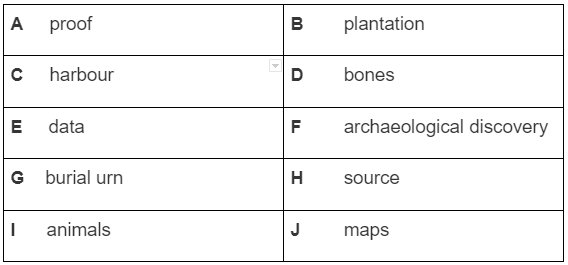
27 – 31Complete the summary using the list of words and phrases, A-J, below.
Questions
32 – 35Choose the correct letter A, B, C or D.
- 32
According to the writer, there are difficulties explaining how the Lapita accomplished their journeys because
- A
the canoes that have been discovered offer relatively few clues.
Barchaeologists have shown limited interest in this area of research.
Clittle information relating to this period can be relied upon for accuracy.
Dtechnological advances have altered the way such achievements are viewed.
- 33
According to the sixth paragraph, what was extraordinary about the Lapita?
- A
They sailed beyond the point where land was visible.
BTheir cultural heritage discouraged the expression of fear.
CThey were able to build canoes that withstood ocean voyages.
DTheir navigational skills were passed on from one generation to the next.
- 34
What does ‘This’ refer to in the seventh paragraph?
- A
the Lapita’s seafaring talent
Bthe Lapita s ability to detect signs of land
Cthe Lapita’s extensive knowledge of the region
Dthe Lapita’s belief they would be able to return home
- 35
According to the eighth paragraph, how was the geography of the region significant?
- A
It played an important role in Lapita culture.
BIt meant there were relatively few storms at sea.
CIt provided a navigational aid for the Lapita.
DIt made a large number of islands habitable.
Questions
36 – 40Do the following statements agree with the views of the writer in Reading Passage 3?
YES if the statement agrees with the views of the writer
NO if the statement contradicts the views of the writer
NOT GIVEN if it is impossible to say what the writer thinks about this
- 36
It is now clear that the Lapita could sail into a prevailing wind.
- A
Yes
BNo
CNot Given
- 37
Extreme climate conditions may have played a role in Lapita migration.
- A
Yes
BNo
CNot Given
- 38
The Lapita learnt to predict the duration of El Ninos.
- A
Yes
BNo
CNot Given
- 39
It remains unclear why the Lapita halted their expansion across the Pacific.
- A
Yes
BNo
CNot Given
- 40
It is likely that the majority of Lapita settled on Fiji.
- A
Yes
BNo
CNot Given
Questions
1 – 4Reading Passage 1 has five paragraphs, A-E. Choose the correct heading for paragraphs B-E from the list of headings below.
i Economic and social significance of tourism
ii The development of mass tourism
iii Travel for the wealthy
iv Earning foreign exchange through tourism
v Difficulty in recognising the economic effects of tourism
vi The contribution of air travel to tourism
vii The world impact of tourism
viii The history of travel
ii The development of mass tourism
Bạn chưa trả lời câu hỏi này
i Economic and social significance of tourism
Bạn chưa trả lời câu hỏi này
v Difficulty in recognising the economic effects of tourism
Bạn chưa trả lời câu hỏi này
vii The world impact of tourism
Giải thích đáp án
PARAGRAPH B – HEADING (ii) Chú ý tới từ khóa “development” trong heading. | |
HEADING | VÙNG THÔNG TIN |
The development of mass tourism | Historians suggest that the advent of mass tourism began in England during the industrial revolution with the rise of the middle class and the availability of relatively inexpensive transportation. |
DỊCH NGHĨA | |
Sự phát triển của du lịch đại chúng | |
Giải thích: Trong đoạn văn đề cập đến
=> Heading: ii | |
PARAGRAPH C – HEADING (i) Chú ý tới từ khóa “Economic and social significance” trong heading. | |
HEADING | VÙNG THÔNG TIN |
Economic and social significance of tourism | Tourism today has grown significantly in both economic and social importance… tourism has a profound impact both on the world economy and, because of the educative effect of travel and the effects on employment, on society itself |
DỊCH NGHĨA | |
Ý nghĩa kinh tế và xã hội của du lịch | |
Giải thích: Trong đoạn văn đề cập đến sức ảnh hưởng của du lịch tới kinh tế và xã hội
=> heading: i | |
PARAGRAPH D – HEADING (v) Chú ý tới từ khóa “difficulty” trong heading. | |
HEADING | VÙNG THÔNG TIN |
Difficulty in recognising the economic effects of tourism | “The major problems of the travel and tourism industry that have hidden, or obscured, its economic impact are the diversity and fragmentation of the industry itself” |
DỊCH NGHĨA | |
Khó khăn trong việc nhận ra các tác động kinh tế của du lịch | |
Giải thích: Trong đoạn văn đề cập đến khó khăn trong việc nhận ra tác động lên nền kinh tế của du lịch là do chúng:
=> heading: v | |
PARAGRAPH E – HEADING (vii) Chú ý tới từ khóa “world impact” trong heading. | |
HEADING | VÙNG THÔNG TIN |
The world impact of tourism | travel and tourism have become an institutionalized way of life for most of the population. In fact, McIntosh and Goeldner (1990) suggest that tourism has become the largest commodity in international trade for many nations and, for a significant number of other countries, it ranks second or third. |
DỊCH NGHĨA | |
Tác động của du lịch trên thế giới | |
Giải thích: Trong đoạn văn đề cập đến
=> du lịch có tác động mạnh mẽ đối với nền kinh tế của mọi quốc gia trên thế giới =>heading: vii | |
Questions
5 – 10Do the following statements agree with the information given in Reading Passage 1?
TRUE if the statement agrees with the information
FALSE if the statement contradicts the information
NOT GIVEN if there is no information on this
- 5
The largest employment figures in the world are found in the travel and tourism industry.
Bạn chưa trả lời câu hỏi này
- A
True
BFalse
CNot Given
Giải thích đáp án
CÂU HỎI 5 – TRUE Chú ý tới từ khóa “the largest employment” để tìm được Paragraph C chứa câu trả lời. | |
CÂU HỎI | VÙNG THÔNG TIN |
The largest employment figures in the world are found in the travel and tourism industry. | The travel and tourism industry is the world’s largest employer the almost 130 million jobs, or almost 7 per cent of all employees |
DỊCH NGHĨA | |
Số liệu việc làm lớn nhất trên thế giới được tìm thấy trong ngành du lịch và lữ hành. | Ngành công nghiệp du lịch và lữ hành là nhà tuyển dụng lớn nhất thế giới với gần 130 triệu việc làm, hay gần 7% tổng số nhân viên |
Giải thích: bài khóa có đề cập đến ngành du lịch là ngành có số lượng nhân viên lớn nhất⇒ TRUE | |
- 6
Tourism contributes over six per cent of the Australian gross national product.
Bạn chưa trả lời câu hỏi này
- A
True
BFalse
CNot Given
Giải thích đáp án
CÂU HỎI 6 – NOT GIVEN Chú ý tới từ khóa “ six percent” để tìm được Paragraph C chứa câu trả lời. | |
CÂU HỎI | VÙNG THÔNG TIN |
Tourism contributes over six per cent of the Australian gross national product. | This industry is the world’s leading industrial contributor, producing over 6 percent of the world’s national product and accounting for capital investment in excess of $422 billion m direct indirect and personal taxes each year. |
DỊCH NGHĨA | |
Du lịch đóng góp hơn 6% tổng sản phẩm quốc dân của Úc. | Ngành này là ngành đóng góp công nghiệp hàng đầu trên thế giới, sản xuất hơn 6% sản phẩm quốc dân của thế giới và chiếm đầu tư vốn vượt quá 422 tỷ đô la Mỹ trực tiếp và thuế cá nhân mỗi năm. |
Giải thích: bài khóa không hề đề cập tới Australia và các vấn đề liên quan tới nước đó ⇒NOT GIVEN | |
- 7
Tourism has a social impact because it promotes recreation.
Bạn chưa trả lời câu hỏi này
- A
True
BFalse
CNot Given
Giải thích đáp án
CÂU HỎI 7 – NOT GIVEN Chú ý tới từ khóa “social impact” để tìm được Paragraph C chứa câu trả lời. | |
CÂU HỎI | VÙNG THÔNG TIN |
Tourism has a social impact because it promotes recreation. | Tourism today has grown significantly in both economic and social importance. In most industrialized countries over the past few years the fastest growth has been seen in the area of services. |
DỊCH NGHĨA | |
Du lịch có tác động đến xã hội vì nó thúc đẩy hoạt động giải trí | Du lịch ngày nay đã phát triển đáng kể ở cả 2 mặt về kinh tế và xã hội. Ở các nước công nghiệp phát triển nhất trong vài năm qua thì tốc độ tăng trưởng nhanh nhất là ở các lĩnh vực dịch vụ. |
Giải thích: Bài khóa chỉ nhắc tới tầm quan trọng của du lịch trong việc thúc đẩy kinh tế – xã hội (Tourism today has grown significantly in both economic and social importance.) chứ không đề cập tới hoạt động giải trí ⇒ NOT GIVEN | |
- 8
Two main features of the travel and tourism industry make its economic significance difficult to ascertain.
Bạn chưa trả lời câu hỏi này
- A
True
BFalse
CNot Given
Giải thích đáp án
CÂU HỎI 8 – TRUE Chú ý tới từ khóa “two main features” để tìm được Paragraph D chứa câu trả lời. | |
CÂU HỎI | VÙNG THÔNG TIN |
Two main features of the travel and tourism industry make its economic significance difficult to ascertain. | The major problems of the travel and tourism industry that have hidden, or obscured, its economic impact are the diversity and fragmentation of the industry itself. |
DỊCH NGHĨA | |
Hai đặc điểm chính của ngành du lịch và lữ hành làm cho ý nghĩa kinh tế của nó trở nên khó xác định. | Những vấn đề lớn của ngành công nghiệp du lịch là sự đa dạng và sự phân mảnh của các ngành công nghiệp mà ở đó do tác động kinh tế nó bị che dấu hay ẩn khuất. |
Giải thích: Bài khóa có cho rằng những vấn đề về du lịch làm mờ đi ý nghĩa vào nền kinh tế của nó ⇒ TRUE | |
- 9
Visitor spending is always greater than the spending of residents in tourist areas.
Bạn chưa trả lời câu hỏi này
- A
True
BFalse
CNot Given
Giải thích đáp án
CÂU HỎI 9 – NOT GIVEN Chú ý tới từ khóa “visitor spending” để tìm được Paragraph D chứa câu trả lời. | |
CÂU HỎI | VÙNG THÔNG TIN |
Visitor spending is always greater than the spending of residents in tourist areas. | Since many of these businesses also serve local residents, the impact of spending by visitors can easily be overlooked or underestimated. |
DỊCH NGHĨA | |
Chi tiêu của du khách luôn lớn hơn chi tiêu của cư dân tại các khu du lịch. | Vì các cơ sở kinh doanh này cũng phục vụ cư dân địa phương, nên tác động do việc chi tiêu của du khách mang lại có thể dễ dàng bị bỏ qua hoặc đánh giá thấp. |
Giải thích: bài khóa chỉ nói về việc du lịch thúc đẩy tăng trưởng kinh tế địa phương chứ không hề chỉ ra khách hay dân ai tiêu nhiều hơn⇒ NOT GIVEN | |
- 10
It is easy to show statistically how tourism affects individual economies.
Bạn chưa trả lời câu hỏi này
- A
True
BFalse
CNot Given
Giải thích đáp án
CÂU HỎI 10 – FALSE Chú ý tới từ khóa “statistically” để tìm được Paragraph E chứa câu trả lời. | |
CÂU HỎI | VÙNG THÔNG TIN |
It is easy to show statistically how tourism affects individual economies. | However, because of problems of definition, which directly affect statistical measurement, it is not possible with any degree of certainty to provide precise, valid or reliable data about the extent of world-wide tourism participation or its economic impact. |
DỊCH NGHĨA | |
Có thể dễ dàng thống kê được du lịch ảnh hưởng như thế nào đến nền kinh tế của mỗi quốc gia. | Tuy nhiên, do việc khó khăn trong định nghĩa chính xác du lịch là gì đã ảnh hưởng trực tiếp đến các phương pháp thống kê nên khó mà đưa ra một dữ liệu chính xác và đáng tin cậy về sự mở rộng và ảnh hưởng của du lịch đối với nền kinh tế toàn cầu. |
Giải thích: bài khóa cho thấy không khả thi để đo lường sự tác động của nền du lịch vào nền kinh tế (it is not possible with any degree of certainty to provide precise, valid or reliable data about the extent of world-wide tourism participation or its economic impact) ⇒ FALSE | |
Questions
11 – 13Complete the sentences below. Choose NO MORE THAN THREE WORDS from the passage for each answer.
Giải thích đáp án
CÂU HỎI 11 – SOURCE OF INCOME Chỗ trống cần điền đứng sau tính từ “important” ⇒ cần điền danh từ | |
CÂU HỎI | VÙNG THÔNG TIN |
In Greece, tourism is the most important source of income | For example, tourism is the major source of income in Bermuda, Greece, Italy, Spain, Switzerland and most Caribbean countries. |
CÂU HỎI 12 – EMPLOYER Chỗ trống cần điền đứng sau tính từ “major” ⇒ cần điền danh từ | |
CÂU HỎI | VÙNG THÔNG TIN |
The travel and tourism industry in Jamaica is the major employer | . In addition, Hawkins and Ritchie, quoting from data published by the American Express Company, suggest that the travel and tourism industry is the number one ranked employerin the Bahamas, Brazil, Canada, France, (the former) West Germany, Hong Kong, Italy, Jamaica, Japan, Singapore, the United Kingdom and the United States. |
CÂU HỎI 13 – DOMESTIC TOURISM Chỗ trống cần điền đứng sau cụm từ “the measurements of” ⇒ cần điền danh từ | |
CÂU HỎI | VÙNG THÔNG TIN |
The problems associated with measuring international tourism are often reflected in the measurement of domestic tourism | In many cases, similar difficulties arise when attempts are made to measure domestic tourism. |
Questions
14 – 18Reading Passage 2 has nine paragraphs, A-l. Which paragraph contains the following information?
NB You may use any letter more than once.
Bạn chưa trả lời câu hỏi này
Paragraph C
Bạn chưa trả lời câu hỏi này
Paragraph B
Bạn chưa trả lời câu hỏi này
Paragraph H
Bạn chưa trả lời câu hỏi này
Paragraph B
Bạn chưa trả lời câu hỏi này
Paragraph E
Giải thích đáp án
CÂU HỎI 14 – PARAGRAPH C Chú ý tới từ khóa “red colouration of leaves” để tìm được Paragraph C chứa câu trả lời. | |
CÂU HỎI | VÙNG THÔNG TIN |
a description of the substance responsible for the red colouration of leaves. | The source of the red is widely known: it is created by anthocyanins, water-soluble plant pigments reflecting the red to blue range of the visible spectrum. They belong to a class of sugar-based chemical compounds also known as flavonoids. |
DỊCH NGHĨA | |
mô tả về chất tạo ra màu đỏ của lá
| Nguồn gốc của chất đỏ được biết đến rộng rãi với tên gọi là anthocyanins, nó được tạo ra bởi chất sắc – các chất hòa tan trong nước phản chiếu màu đỏ đến xanh dương của phổ có thể nhìn thấy. Chúng thuộc về một nhóm các hợp chất hóa học có đường được biết đến với tên gọi là flavonoids. |
CÂU HỎI 15 – PARAGRAPH B Chú ý tới từ khóa “in the autumn” để tìm được Paragraph B chứa câu trả lời. | |
CÂU HỎI | VÙNG THÔNG TIN |
the reason why trees drop their leaves in the autumn. | As fall approaches in the northern hemisphere, the amount of solar energy available declines considerably. For many trees-evergreen conifers being an exception-the best strategy is to abandon photosynthesis until the spring. So rather than maintaining the now redundant leaves throughout the winter, the tree saves its precious resources and discards them |
DỊCH NGHĨA | |
lý do cây rụng lá vào mùa thu. | Khi mùa thu đến ở nửa bán cầu bắc, lượng năng lượng mặt trời có sẵn giảm đi đáng kể. Với nhiều cây – cây bạch tùng bách xanh là một ngoại lệ – chiến lược tốt nhất là bỏ qua việc quang hợp cho tới mùa xuân. Vì vậy, thay vì giữ lại những chiếc lá thừa trong suốt mùa đông, cây tiết kiệm tài nguyên của nó và loại bỏ lá thừa đi. |
CÂU HỎI 16 – PARAGRAPH H Chú ý tới từ khóa “purpose of red leaves” để tìm được Paragraph H chứa câu trả lời. | |
CÂU HỎI | VÙNG THÔNG TIN |
some evidence to confirm a theory about the purpose of the red leaves. | Even if you had never suspected that this is what was going on when leaves turn red, there are clues out there. One is straightforward: on many trees, the leaves that are the reddest are those on the side of the tree which gets the most sun. Not only that, but the red is brighter on the upper side of the leaf. It has also been recognised for decades that the best conditions for intense red colors are dry, sunny days and cool nights, conditions that nicely match those that make leaves susceptible to excess light. And finally, trees such as maples usually get much redder the more north you travel in the northern hemisphere. |
DỊCH NGHĨA | |
một số bằng chứng để xác nhận một giả thuyết về mục đích của những chiếc lá đỏ. | Ngay cả khi bạn chưa bao giờ nghi ngờ rằng đây là điều đang xảy ra khi những chiếc lá chuyển sang màu đỏ, thì vẫn có manh mối. Một điều rất đơn giản: trên nhiều cây, những chiếc lá đỏ nhất là những chiếc lá ở phía thân cây nhận được nhiều ánh nắng mặt trời nhất. Không chỉ vậy, màu đỏ còn sáng hơn ở mặt trên của lá. Trong nhiều thập kỷ, người ta cũng đã nhận ra rằng điều kiện tốt nhất để tạo ra màu đỏ đậm là ngày khô ráo, nắng và đêm mát mẻ, điều kiện phù hợp tuyệt vời với những điều kiện khiến lá cây nhạy cảm với ánh sáng dư thừa. Và cuối cùng, những cây như cây phong thường đỏ hơn nhiều khi bạn càng đi về phía bắc ở bán cầu bắc.
(tác giả cung cấp ba lí do về mục đích của chiếc lá đỏ) |
CÂU HỎI 17 – PARAGRAPH B Chú ý tới từ khóa “chlorophyll” để tìm được Paragraph B chứa câu trả lời. | |
CÂU HỎI | VÙNG THÔNG TIN |
an explanation of the function of chlorophyll. | summer leaves are green because they are full of chlorophyll, the molecule that captures sunlight and converts that energy into new building materials for the tree |
DỊCH NGHĨA | |
giải thích về chức năng của diệp lục. | Lá mùa hạ xanh vì chúng chứa đầy các chất diệp lục, phân tử hấp thụ ánh sáng và chuyển hóa năng lượng đó thành chất mới cho cây. |
CÂU HỎI 18 – PARAGRAPH E Chú ý tới từ khóa “red colouration in leaves” để tìm được Paragraph E chứa câu trả lời. | |
CÂU HỎI | VÙNG THÔNG TIN |
a suggestion that the red colouration in leaves could serve as a warning signal. | It has also been proposed that trees may produce vivid red colors to convince herbivorous insects that they are healthy and robust and would be easily able to mount chemical defenses against infestation |
DỊCH NGHĨA | |
gợi ý rằng màu đỏ trên lá có thể dùng như một tín hiệu cảnh báo. | Người ta cũng đề xuất rằng cây cối có thể tạo ra màu đỏ sặc sỡ để thuyết phục các loài côn trùng ăn cỏ rằng chúng khỏe mạnh và cường tráng và có thể dễ dàng xây dựng hệ thống phòng thủ hóa học chống lại sự xâm nhập của chúng. |
Questions
19 – 22Complete the notes below. Choose ONE WORD ONLY from the passage for each answer.
Giải thích đáp án
CÂU HỎI 19 – SUN(LIGHT) Chỗ trống cần điền đứng sau mạo từ “the” ⇒ cần điền danh từ | |
CÂU HỎI | VÙNG THÔNG TIN |
The most vividly coloured red leaves are found on the side of the tree facing the sun(light) | On many trees, the leaves that are the reddest are those on the side of the tree which gets the mostsun. |
CÂU HỎI 20 – UPPER Chỗ trống cần điền đứng sau mạo từ “the”, trước danh từ “surfaces” ⇒ cần điền tính từ | |
CÂU HỎI | VÙNG THÔNG TIN |
The uppersurfaces of leaves contain the most red pigment. | Not only that, but the red is brighter on the upperside of the leaf |
CÂU HỎI 21 – DRY Chỗ trống cần điền đứng sau động từ tobe “are” ⇒ cần điền tính từ | |
CÂU HỎI | VÙNG THÔNG TIN |
Red leaves are most abundant when daytime weather conditions are dryand sunny. | It has been recognised for decades that the best conditions for intense red colors are dry, sunny days and cool nights |
CÂU HỎI 22 – NORTH Chỗ trống cần điền đứng sau trạng từ “further” ⇒ cần điền danh từ | |
CÂU HỎI | VÙNG THÔNG TIN |
The intensity of the red color of leaves increases as you go further north | And finally, trees such as maples usually get much redder the more north you travel in the northern hemisphere |
Questions
23 – 25Do the following statements agree with the information given in Reading Passage 2?
TRUE if the statement agrees with the information
FALSE if the statement contradicts the information
NOT GIVEN if there is no information on this
- 23
It is likely that the red pigments help to protect the leaf from freezing temperatures.
Bạn chưa trả lời câu hỏi này
- A
True
BFalse
CNot Given
Giải thích đáp án
CÂU HỎI 23 – FALSE Chú ý tới từ khóa “the red pigments” để tìm được Paragraph F chứa câu trả lời. | |
CÂU HỎI | VÙNG THÔNG TIN |
It is likely that the red pigments help to protect the leaf from freezing temperatures. | It sounds paradoxical, because the idea behind this hypothesis is that the red pigment is made in autumn leaves to protect chlorophyll, the light-absorbing chemical, from too much light. |
DỊCH NGHĨA | |
Có khả năng là các sắc tố đỏ giúp bảo vệ lá khỏi nhiệt độ đóng băng. | Nghe có vẻ nghịch lý, bởi vì ý tưởng đằng sau giả thuyết này là sắc tố đỏ được tạo ra trong lá mùa thu để bảo vệ chất diệp lục, chất hóa học hấp thụ ánh sáng, khỏi quá nhiều ánh sáng. |
Giải thích: bài khóa cho rằng sắc tố đỏ bảo vệ chất diệp lục của lá không phải bảo vệ lá (the red pigment is made in autumn leaves to protect chlorophyll) ⇒ FALSE | |
- 24
The ‘light screen’ hypothesis would initially seem to contradict what is known about chlorophyll.
Bạn chưa trả lời câu hỏi này
- A
True
BFalse
CNot Given
Giải thích đáp án
CÂU HỎI 24 – TRUE Chú ý tới từ khóa “light screen’ hypothesis” để tìm được Paragraph F chứa câu trả lời. | |
CÂU HỎI | VÙNG THÔNG TIN |
The ‘light screen’ hypothesis would initially seem to contradict what is known about chlorophyll. | Perhaps the most plausible suggestion as to why leaves would go to the trouble of making anthocyanins when they’re busy packing up for the winter is the theory known as the ‘light screen’ hypothesis. It sounds paradoxical, because the idea behind this hypothesis is that the red pigment is made in autumn leaves to protect chlorophyll, the light-absorbing chemical, from too much light. |
DỊCH NGHĨA | |
Giả thuyết về “màn hình ánh sáng” ban đầu có vẻ mâu thuẫn với những gì đã biết về chất diệp lục.
| Có lẽ, gợi ý hợp lý nhất về lý do tại sao lá cây lại gặp khó khăn trong việc tạo sắc tố khi chúng bận rộn chuẩn bị cho mùa đông đó chính là giả thuyết được biết đến với tên gọi là “màn hình ánh sáng” (light screen). Điều đó nghe có vẻ nghịch lý, bởi lẽ ý tưởng đằng sau giả thuyết này đó là sắc đỏ được tạo ra trong lá để bảo vệ chất diệp lục – hóa chất hấp thu ánh sáng– tránh khỏi quá nhiều ánh sáng.
|
Giải thích: bài khóa cho rằng lý thuyết “màn hình ánh sáng” có vẻ nghịch lý so với những gì ta biết về chất diệp lục⇒ TRUE | |
- 25
Leaves which turn colours other than red are more likely to be damaged by sunlight.
Bạn chưa trả lời câu hỏi này
- A
True
BFalse
CNot Given
Giải thích đáp án
CÂU HỎI 25 – NOT GIVEN Chú ý tới từ khóa “Leaves which turn colors” để tìm được Paragraph I chứa câu trả lời. | |
CÂU HỎI | VÙNG THÔNG TIN |
Leaves which turn colors other than red are more likely to be damaged by sunlight. | What is still not fully understood, however, is why some trees resort to producing red pigments while others don’t bother, and simply reveal their orange or yellow hues |
DỊCH NGHĨA | |
Những lá chuyển sang màu khác ngoài màu đỏ có nhiều khả năng bị ánh sáng mặt trời làm hỏng. | Tuy nhiên, điều mà vẫn chưa được hiểu đầy đủ đó là lý do một số cây tạo ra sắc đỏ trong khi những cây khác thì không, và đơn giản là có màu vàng hay vàng cam.
|
Giải thích: bài khóa chỉ nhắc tới các màu lá chuyển khác nhau chứ không hề đề cập tới tác động của ánh sáng mặt trời⇒ NOT GIVEN | |
Question
26Choose the correct letter A, B, C or D.
Bạn chưa trả lời câu hỏi này
B how leaves turn orange and yellow in autumn
Giải thích đáp án
CÂU HỎI 26 – PARAGRAPH B | |
CÂU HỎI | VÙNG THÔNG TIN |
For which of the following questions does the writer offer an explanation? A why conifers remain green in winter B how leaves turn orange and yellow in autumn C how herbivorous insects choose which trees to lay their eggs in D why anthocyanins are restricted to certain trees | As chlorophyll is depleted, other colors that have been dominated by it throughout the summer begin to be revealed. This unmasking explains the autumn colors of yellow and orange, but not the brilliant reds and purples of trees such as the maple or sumac. |
DỊCH NGHĨA | |
Người viết đưa ra lời giải thích cho câu hỏi nào sau đây? A Tại sao cây lá kim vẫn xanh trong mùa đông B Lá chuyển sang màu cam và màu vàng vào mùa thu như thế nào C Cách côn trùng ăn cỏ chọn cây để đẻ trứng D Tại sao anthocyanins bị hạn chế ở một số cây nhất định | Khi chất diệp lục cạn kiệt, những màu khác đã bị nó chiếm ưu thế trong suốt mùa hè sẽ bắt đầu phô màu. Điều này giải thích lý do màu lá mùa thu là vàng và cam, mà không phải màu đỏ rực và tím như cây mộc và cây sumac.
|
| |
Questions
Complete the summary using the list of words and phrases, A-J, below.
Giải thích đáp án
CÂU HỎI 27 – B (PLANTATION) Chỗ trống cần điền đứng sau động từ “abandoned” ⇒ cần điền danh từ | |
CÂU HỎI | VÙNG THÔNG TIN |
A 3,000-year-old burial ground of a seafaring people called the Lapita has been found on an abandoned plantation on the Pacific island of Éfaté | The site came to light only by chance. An agricultural worker, digging in the grounds of a derelict plantation, scraped open a grave – the first of dozens in a burial ground some 3,000 years old. |
CÂU HỎI 28 – F(ARCHEOLOGICAL DISCOVERY) Chỗ trống cần điền đứng sau tính từ “significant” ⇒ cần điền danh từ | |
CÂU HỎI | VÙNG THÔNG TIN |
The cemetery, which is a significant archeological discovery, was uncovered accidentally by an agricultural worker. | An important archaeological discovery on the island of Efate in the Pacific archipelago of Vanuatu has revealed traces of ancient seafaring people, the distant ancestors of today’s Polynesians. |
CÂU HỎI 29 – I (ANIMALS) Chỗ trống cần điền đứng trước giới từ “and” dùng để nối hai hay nhiều từ hoặc cụm từ tương đồng với nhau về mặt ngữ pháp ⇒ cần điền danh từ | |
CÂU HỎI | VÙNG THÔNG TIN |
The Lapita explored and colonized many Pacific islands over several centuries. They took many things with them on their voyages including animalsand tools. | They were daring blue-water adventurers who used basic canoes to rove across the ocean. But they were not just explorers. They were also pioneers who carried with them everything they would need to build new lives – their livestock, taro seedlings and stone tools. |
CÂU HỎI 30 – G (BURIAL URN) Chỗ trống cần điền đứng sau mạo từ “the” ⇒ cần điền danh từ | |
CÂU HỎI | VÙNG THÔNG TIN |
A team of researchers, led by Matthew Spriggs from the Australian National University, are helping with the excavation of the site. Spriggs believes the burial urn which was found at the site is very important | Other items included a Lapita burial urn with modeled birds arranged on the rim as though peering down at the human remains sealed inside. ‘It’s an important discovery,’ says Matthew Spriggs. |
CÂU HỎI 31 – D (BONES) Chỗ trống cần điền đứng sau mạo từ “the” ⇒ cần điền danh từ | |
CÂU HỎI | VÙNG THÔNG TIN |
Spriggs believes the burial urn which was found at the site is very important since it confirms that the bonesfound inside are Lapita.
| ‘It’s an important discovery,’ says Matthew Spriggs, professor of archaeology at the Australian National University and head of the international team digging up the site, ‘for it conclusively identifies the remainsas Lapita.’ |
Questions
32 – 35Choose the correct letter A, B, C or D.
- 32
According to the writer, there are difficulties explaining how the Lapita accomplished their journeys because
Bạn chưa trả lời câu hỏi này
Giải thích đáp án
CÂU HỎI 32 – PARAGRAPH 5 | |
CÂU HỎI | VÙNG THÔNG TIN |
32 According to the writer, there are difficulties explaining how the Lapita accomplished their journeys because A the canoes that have been discovered offer relatively few clues. B archaeologists have shown limited interest in this area of research. C little information relating to this period can be relied upon for accuracy. D technological advances have altered the way such achievements are viewed. | There is one stubborn question for which archaeology has yet to provide any answers: how did the Lapita accomplish the ancient equivalent of a moon landing, many times over? No-one has found one of their canoes or any rigging, which could reveal how the canoes were sailed.
|
DỊCH NGHĨA | |
32 Theo người viết, có những khó khăn trong việc giải thích cách người Lapita hoàn thành cuộc hành trình của họ bởi vì
A Một chiếc ca nô được phát hiện cung cấp tương đối ít manh mối. B Các nhà khảo cổ đã cho thấy sự quan tâm hạn chế đến lĩnh vực nghiên cứu này. C Rất ít thông tin liên quan đến thời kỳ này có thể được dựa vào để đảm bảo độ chính xác. D Những tiến bộ công nghệ đã thay đổi cách nhìn nhận những thành tựu đó | Có một câu hỏi hóc búa mà ngành khảo cổ học vẫn chưa đưa ra được câu trả lời: Làm thế nào mà Lapita lại làm được việc này, nó được ví như việc đặt chân lên mặt trăng của chúng ta hiện tại, và nếu có thì bao nhiêu lần? Không ai tìm thấy một trong những chiếc ca nô của họ hoặc bất kỳ giàn khoan nào, điều mà có thể tiết lộ cách những chiếc ca nô đã được chèo lái.
|
| |
- 33
According to the sixth paragraph, what was extraordinary about the Lapita?
Bạn chưa trả lời câu hỏi này
Giải thích đáp án
CÂU HỎI 33 – PARAGRAPH 6 | |
CÂU HỎI | VÙNG THÔNG TIN |
33 According to the sixth paragraph, what was extraordinary about the Lapita? A They sailed beyond the point where land was visible. B Their cultural heritage discouraged the expression of fear. C They were able to build canoes that withstood ocean voyages. D Their navigational skills were passed on from one generation to the next. | The real adventure didn’t begin, however, until their Lapita descendants sailed out of sight of land, with empty horizons on every side. This must have been as difficult for them as landing on the moon is for us today. |
DỊCH NGHĨA | |
33 Theo đoạn thứ sáu, Lapita có gì đặc biệt?
A Họ đi thuyền vượt quá điểm có thể nhìn thấy đất liền. B Di sản văn hóa của họ không khuyến khích biểu hiện của sự sợ hãi. C Họ đã có thể chế tạo những chiếc ca nô chịu được những chuyến đi trên biển. D Kỹ năng điều hướng của họ được truyền từ thế hệ này sang thế hệ khác. | Tuy nhiên cuộc phiêu lưu thực sự đã không bắt đầu cho đến khi con cháu Lapita của họ đi thuyền ra khỏi tầm mắt của đất liền, với đường chân trời trống không ở mọi phía. Điều này chắc hẳn đã trở nên khó khăn đối với họ như việc đặt chân lên mặt trăng của chúng ta hiện nay.
|
| |
- 34
What does ‘This’ refer to in the seventh paragraph?
Bạn chưa trả lời câu hỏi này
Giải thích đáp án
CÂU HỎI 34 – PARAGRAPH 7 | |
CÂU HỎI | VÙNG THÔNG TIN |
34 What does ‘This’ refer to in the seventh paragraph? A the Lapita’s seafaring talent B the Lapita s ability to detect signs of land C the Lapita’s extensive knowledge of the region D the Lapita’s belief they would be able to return home
| They could sail out for days into the unknown and assess the area, secure in the knowledge(=believe) that if they didn’t find anything, they could turn about and catch a swift ride back on the trade winds. This is what would have made the whole thing work. |
DỊCH NGHĨA | |
34 ‘This’ ám chỉ điều gì trong đoạn thứ bảy?
A Tài năng đi biển của người Lapita B Khả năng phát hiện dấu hiệu đất liền của người Lapita C Là kiến thức sâu rộng của Lapita về khu vực D Niềm tin của người Lapita rằng họ sẽ có thể trở về nhà | Họ có thể đi thuyền trong nhiều ngày đến những nơi chưa biết và đánh giá khu vực đó, đảm bảo rằng nếu họ không tìm thấy bất cứ điều gì, họ có thể nhanh chóng quay trở lại theo chiều gió mậu dịch. Đó là toàn bộ những gì họ đã làm.
|
| |
- 35
According to the eighth paragraph, how was the geography of the region significant?
Bạn chưa trả lời câu hỏi này
Giải thích đáp án
CÂU HỎI 35 – PARAGRAPH 8 | |
CÂU HỎI | VÙNG THÔNG TIN |
35 According to the eighth paragraph, how was the geography of the region significant? A It played an important role in Lapita culture. B It meant there were relatively few storms at sea. C It provided a navigational aid for the Lapita. D It made a large number of islands habitable. | For returning explorers, successful or not, the geography of their own archipelagoes would have provided a safety net. Without this to go by, overshooting their home ports, getting lost and sailing off into eternity would have been all too easy. |
DỊCH NGHĨA | |
35 Theo đoạn thứ tám, vị trí địa lý của khu vực có ý nghĩa như thế nào? A Nó đóng một vai trò quan trọng trong văn hóa Lapita. B Có nghĩa là có tương đối ít bão trên biển. C Nó giúp cho Lapita có thể định hướng được. D Nó đã tạo ra một số lượng lớn các hòn đảo có thể sinh sống được. | Đối với những nhà thám hiểm quay trở lại, dù thành công hay không, thì vị trí địa lý của các quần đảo sẽ cung cấp một mạng lưới an toàn. Nếu không có chúng, thì việc vượt qua cảng nhà, bị lạc hay chèo thuyền vào cõi vĩnh hằng sẽ là dễ dàng xảy ra.
|
| |
Questions
36 – 40Do the following statements agree with the views of the writer in Reading Passage 3?
YES if the statement agrees with the views of the writer
NO if the statement contradicts the views of the writer
NOT GIVEN if it is impossible to say what the writer thinks about this
- 36
It is now clear that the Lapita could sail into a prevailing wind.
Bạn chưa trả lời câu hỏi này
Giải thích đáp án
CÂU HỎI 36 – NO Chú ý tới từ khóa “prevailing wind” để tìm được Paragraph 9 chứa câu trả lời. | |
CÂU HỎI | VÙNG THÔNG TIN |
It is now clear that the Lapita could sail into a prevailing wind. | All this presupposes one essential detail, says Atholl Anderson, professor of prehistory at the Australian National University: the Lapita had mastered the advanced art of sailing against the wind. ‘And there’s no proof they could do any such thing,’ |
DỊCH NGHĨA | |
Bây giờ rõ ràng rằng Lapita có thể đi theo một cơn gió thịnh hành. | Atholl Anderson, giáo sư tiền sử tại Đại học Quốc gia Úc, cho biết tất cả những điều này hàm ý một chi tiết quan trọng: đó là người Lapita đã chinh phục được nghệ thuật chèo thuyền ngược gió đỉnh cao. “Và không có bằng chứng nào chứng minh họ có thể làm bất kỳ điều gì như vậy,” |
Giải thích: Bài khóa nói rằng không có bằng chứng nào cho thấy người Lapita có thể chèo thuyền ngược gió ⇒ NO | |
- 37
Extreme climate conditions may have played a role in Lapita migration.
Bạn chưa trả lời câu hỏi này
Giải thích đáp án
CÂU HỎI 37 – YES Chú ý tới từ khóa “Extreme climate conditions” để tìm được Paragraph 10 chứa câu trả lời. | |
CÂU HỎI | VÙNG THÔNG TIN |
Extreme climate conditions may have played a role in Lapita migration. | By reversing the regular east-to-west flow of the trade winds for weeks at a time, these super El Ninos might have taken the Lapita on long unplanned voyages. |
DỊCH NGHĨA | |
Điều kiện khí hậu khắc nghiệt có thể đã đóng một vai trò trong việc di cư Lapita. | Bằng cách đảo ngược chiều hướng thường xuyên từ đông sang tây của gió mậu dịch trong nhiều tuần tại một thời điểm, những siêu El Ninos này có thể đã khiến người Lapita phải thực hiện những chuyến đi dài không có kế hoạch. |
Giải thích: Bài khóa nói rằng những siêu El Ninos đã ảnh hưởng đến người Lapita, khiến họ có những chuyến di chuyển bất ngờ ⇒ YES | |
- 38
The Lapita learnt to predict the duration of El Ninos.
Bạn chưa trả lời câu hỏi này
Giải thích đáp án
CÂU HỎI 38 – NOT GIVEN Chú ý tới từ khóa “learnt to predict” để tìm được Paragraph 10 chứa câu trả lời. | |
CÂU HỎI | VÙNG THÔNG TIN |
The Lapita learnt to predict the duration of El Nino | He points out that climate data obtained from slow-growing corals around the Pacific indicate a series of unusually frequent El Ninos around the time of the Lapita expansion. By reversing the regular east-to-west flow of the trade winds for weeks at a time, these super El Ninos might have taken the Lapita on long unplanned voyages. |
DỊCH NGHĨA | |
Người Lapita đã học cách dự đoán vòng lặp của El Nino | Ông chỉ ra rằng dữ liệu khí hậu thu được từ san hô phát triển chậm xung quanh Thái Bình Dương cho thấy một loạt El Ninos thường xuyên xảy ra bất thường trong khoảng thời gian Lapita mở rộng sự cư trú. Bằng cách đảo ngược dòng chảy thường xuyên từ đông sang tây của gió mậu dịch trong nhiều tuần tại một thời điểm, những siêu El Ninos này có thể đã đưa người Lapita đi những chuyến đi dài không có kế hoạch |
Giải thích: bài khóa có nhắc tới El Ninos nhưng không hề đề cập tới việc người Lapita học dự đoán cơn bão ⇒ NOT GIVEN | |
- 39
It remains unclear why the Lapita halted their expansion across the Pacific.
Bạn chưa trả lời câu hỏi này
Giải thích đáp án
CÂU HỎI 39 – YES Chú ý tới từ khóa “The Pacific” để tìm được Paragraph 11 chứa câu trả lời. | |
CÂU HỎI | VÙNG THÔNG TIN |
It remains unclear why the Lapita halted their expansion across the Pacific. | However they did it, the Lapita spread themselves a third of the way across the Pacific, then called it quits for reasons known only to them. Ahead lay the vast emptiness of the central Pacific and perhaps they were too thinly stretched to venture farther. |
DỊCH NGHĨA | |
Vẫn chưa rõ lý do tại sao người Lapita tạm dừng việc mở rộng cư trú của mình trên Thái Bình Dương. | Tuy nhiên, họ đã làm được điều đó, Lapita đã mở rộng 1/3 địa bàn qua Thái Bình Dương, sau đó họ đã từ bỏ vì một vài lý do mà chỉ có họ mới biết. Ở phía trước là cả 1 vùng rộng lớn của trung tâm Thái Bình Dương và có lẽ họ đã không đủ can đảm để đi xa hơn.
|
Giải thích: cả bài khóa và câu hỏi đều không rõ lý do người Lapita dừng khám phá the Pacific là ⇒ YES | |
- 40
It is likely that the majority of Lapita settled on Fiji.
Bạn chưa trả lời câu hỏi này
Giải thích đáp án
CÂU HỎI 40 – NOT GIVEN Chú ý tới từ khóa “Fiji” để tìm được Paragraph 11 chứa câu trả lời. | |
CÂU HỎI | VÙNG THÔNG TIN |
It is likely that the majority of Lapita settled in Fiji. | However they did it, the Lapita spread themselves a third of the way across the Pacific, then called it quits for reasons known only to them…They probably never numbered more than a few thousand in total, and in their rapid migration eastward they encountered hundreds of islands – more than 300 in Fiji alone. |
DỊCH NGHĨA | |
Có khả năng là phần lớn người Lapita định cư ở Fiji | Tuy nhiên, họ đã làm được điều đó, Lapita đã mở rộng 1/3 địa bàn qua Thái Bình Dương, sau đó họ đã từ bỏ vì một vài lý do mà chỉ có họ mới biết… Họ có lẽ chưa bao giờ đếm được tổng cộng hơn một nghìn hòn đảo, và khi di chuyển nhanh về phía đông, họ gặp hàng trăm hòn đảo – chỉ riêng vùng Fiji đã có hơn 300.
|
Giải thích: nhà văn chỉ đề cập tới số lượng đảo Fiji chứ không nói về số lượng người Lapita⇒ NOT GIVEN | |
