
IELTS Handbook 18 – Test 3
11/10/2024 2024-10-11 1:38IELTS Handbook 18 – Test 3
PART 1
Questions
1 – 5
Questions 1-10 Questions 1-4 Complete the form below. Write ONE WORD AND/OR A NUMBER for each answer.
Working at Milo’s Restaurants Benefits ● 1
provided for all staff ● 2
during weekdays at all Milo’s Restaurants ● 3
provided after midnight Person specification ● must be prepared to work well in a team ● must care about maintaining a high standard of 4
● must have a qualification in 5
Questions
6 – 10
Questions 5-10 Complete the table below. Write NO MORE THAN TWO WORDS for each answer.
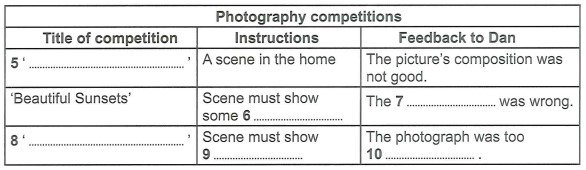
Question 6: 6
Question 7: 7
Question 8: 8
Question 9: 9
Question 10: 10
PART 2
Questions
11 – 12
Questions 11-20 Questions 11 and 12 Choose TWO letters, A-E. Which TWO warnings does Dan give about picking mushrooms?
- 1112
- ADon’t pick more than one variety of mushroom at a timeBDon’t pick mushrooms near busy roadsCDon’t eat mushrooms given to you.DDon’t eat mushrooms while picking themEDon’t pick old mushrooms
Questions
13 – 14
Questions 13 and 14 Choose TWO letters, A-E. Which TWO ideas about wild mushrooms does Dan say are correct?
- 1314
- AMushrooms should always be peeled before eatingBMushrooms eaten by animals may be unsafeCCooking destroys toxins in mushroomsDBrightly coloured mushrooms can be edibleEAll poisonous mushrooms have a bad smell.
Questions
15 – 20
Questions 15-20 Choose the correct letter, A, B or C.
- 1
Question 15. What advice does Dan give about picking mushrooms in parks?
- A
Choose wooded areas.
BDon’t disturb wildlife.
CGet there early
- 2
Question 16. Dan says it is a good idea for beginners to
- A
use a mushroom app
Bjoin a group
Ctake a reference book.
- 3
Question 17. What does Dan say is important for conservation?
- A
selecting only fully grown mushrooms
Bpicking a limited amount of mushrooms
Cavoiding areas where rare mushroom species grow
- 4
Question 18 According to Dan, some varieties of wild mushrooms are in decline because there is
- A
a huge demand for them from restaurants.
Ba lack of rain in this part of the country.
Carise in building developments locally
- 5
Question 19 Dan says that when storing mushrooms, people should
- A
keep them in the fridge for no more than two days
Bkeep them in a brown bag in a dark room
Cleave them for a period after washing them
- 6
Question 20 What does Dan say about trying new varieties of mushrooms?
- A
Experiment with different recipes
BExpect some to have a strong taste.
CCook them for a long time
PART 3
Questions
21 – 24
Questions 21-30 Questions 21 and 22 Choose TWO letters, A-E. Which TWO opinions about the Luddites do the students express?
- 78
- ATheir actions were ineffectiveBThey are still influential todayCThey have received unfair criticismDThey were proved rightETheir attitude is understandable
Questions
25 – 26
Questions 23 and 24 Choose TWO letters, A-E. Which TWO predictions about the future of work are the students doubtful about?
- 2526
- AWork will be more rewardingBUnemployment will fall.CPeople will want to delay retiringDWorking hours will be shorterEPeople will change jobs more frequently
Questions
27 – 30
Questions 25-30 What comment do the students make about each of the following jobs
Choose SIX answers from the box and write the correct letter, A-G, next to Questions 25-30.

PART 4
Questions
31 – 40
Questions 31-40 Complete the notes below. Write ONE WORD ONLY for each answer
Pockets Reason for choice of subject ● They are 31
but can be overlooked by consumers and designers. Pockets in men’s clothes ● Men started to wear 32
in the 18th century. ● A 33
sewed pockets into the lining of the garments. ● The wearer could use the pockets for small items. ● Bigger pockets might be made for men who belonged to a certain type of 34
. Pockets in women’s clothes ● Women’s pockets were less 35
than men’s. ● Women were very concerned about pickpockets. ● Pockets were produced in pairs using 36
to link them together. ● Pockets hung from the women’s 37
under skirts and petticoats. ● Items such as 38
could be reached through a gap in the material. ● Pockets, of various sizes, stayed inside clothing for many decades. ● When dresses changed shape, hidden pockets had a negative effect on the 39
of women. ● Bags called ‘pouches’ became popular, before women carried a 40
.
PART 1
Questions
1 – 4Questions 1-10 Questions 1-4 Complete the form below. Write ONE WORD AND/OR A NUMBER for each answer.
Giải thích đáp án
Breda: Hello, Wayside Camera Club, Breda speaking.
Dan: Oh, hello, um, my name’s Dan and I’d like to join your club.
Breda: That’s great, Dan. We have an application form — would you like to complete it over the phone, then you can ask any questions you might have?
Dan: Oh, yes, thanks.
Breda: OK, so what’s your family name?
Dan: It’s Green — Dan Green.
Breda: So — can I take your email address?
Dan: Yes, it’s dan1068@market.com.
Breda: Thanks. And what about your home address?
Dan: Well, I’m about ten miles away from your club in Peacetown. I live in a house there.
Breda: (Q1) OK, so what’s the house number and street? (=home address) (OK, vậy số nhà và tên phố là gì?)
Dan: It’s 52 Marrowfield Street. (52 Phố Marrowfield.)
Breda: Is that M-A double R-O-W-F-I-E-L-D? (Có phải là M-A hai chữ R-O-W-F-I-E-L-D không?)
Dan: That’s right.
Breda: … and that’s Peacetown, you said?
Dan: Uhuh.
Breda: (Q2) So how did you hear about our club (=hear about us)? Did you look on the internet?(Vậy bạn biết đến câu lạc bộ của chúng tôi như thế nào? Bạn thấy trên internet à?)
Dan: I usually do that, but this time, well, I was talking to a relative the other day and he suggested it. (Thông thường thì tôi sẽ làm vậy, nhưng lần này là do có hôm tôi nói chuyện với một người họ hàng và anh ấy đã gợi ý cho tôi về câu lạc bộ của các bạn).
Breda: Oh, is he a member too?
Dan: He belongs to another club — but he’d heard good things about yours.
Breda: OK. (Q3) So what do you hope to get from joining (=reasons for joining)? (Vậy bạn hy vọng nhận được gì khi tham gia?
Dan: Well, one thing that really interests me is the competitions that you have. I enjoy entering those.
Breda: Right. Anything else?
Dan: Well, I also like to socialise with other photographers. (Chà, tôi cũng thích giao lưu với các nhiếp ảnh gia khác nữa.)
Breda: That’s great. (Q4) So what type of membership would you like? (Vậy bạn muốn đăng ký loại hội viên nào?)
Dan: What are the options?
Breda: It’s £30 a year for full membership or £20 a year if you’re an associate.
Dan: I think I’ll go for the full membership, then. (Tôi nghĩ rằng tôi sẽ chọn gói thành viên chính thức vậy).
Breda: That’s a good idea because you can’t vote in meetings with an associate membership.
Questions
5 – 10Questions 5-10 Complete the table below. Write NO MORE THAN TWO WORDS for each answer.
Giải thích đáp án
Breda: If I could just find out a bit more about you …
Dan: OK.
Breda: So you said you wanted to compete — have you ever won any photography competitions?
Dan: Not yet, but I have entered three in the past.
Breda: Oh, that’s interesting. So why don’t you tell me something about those? Let’s start with the first one.
Dan: (Q5) Well, the theme was entitled (=title of competition) ‘Domestic Life’. (Chà, chủ đề có tên là ‘Cuộc sống gia đình’)
Breda: I see — so it had to be something related to the home?
Dan: Yeah. I chose to take a photo of a family sitting round the dinner table having a meal, and, um, I didn’t win, but I did get some feedback.
Breda: Oh, what did the judges say?
Dan: That it was too ‘busy’ as a picture.
Breda: Aha — so it was the composition of the picture that they criticised?
Dan: That’s right — and once they’d told me that, I could see my mistake.
Breda: So what was the theme of the second competition?
Dan: Well, my university was on the coast and that area gets a lot of beautiful sunsets, so that was the theme.
Breda: Oh, sunsets, that’s a great theme.
Dan: Yes. (Q6) The instructions were to capture (=show) the clouds as well (Hướng dẫn của cuộc thi là chụp cả mây nữa) —it couldn’t just be blue sky and a setting sun.
Breda: Sure, cause they give you all those amazing pinks and purples.
Dan: Yeah — and I thought I’d done that well, but the feedback was that I should have waited a bit longer to get the shot.
Breda: I see. (Q7) So the timing wasn’t right (=was wrong). (Như vậy là sự lựa chọn thời khắc đã không chính xác)
Dan: Yes — I took it too soon, basically. (Q8) And then the third competition I entered was called (=title of competition) ‘Animal Magic’. (Và sau đó cuộc thi thứ ba tôi tham gia có tên là ‘Ma thuật động vật’)
Breda: Well, that’s a difficult subject
Dan: I know! I had to take hundreds of shots.
Breda: I’m sure — because animals move all the time.
Dan: (Q9) That’s what we had to show (=must show) — there had to be some movement in the scene. (Đó chính là những gì chúng tôi phải thể hiện – phải có một số chuyển động trong khung cảnh được chụp.) (Q10) I got a great shot of a fox in the end, but I took it at night and, well, I suspected that it was a bit dark, which is what I was told (=feedback). (Cuối cùng thì tôi đã có được một bức ảnh tuyệt vời chụp một con cáo, nhưng bức ảnh được chụp vào ban đêm và tôi nghi rằng trời hơi tối, đó là những gì họ bảo với tôi).
Breda: Well Dan — you seem to be really keen and we’d be delighted to have you in our club. I’m sure we can help with all those areas that you’ve outlined.
Dan: Thanks, that’s great.
PART 2
Questions
11 – 12Questions 11-20 Questions 11 and 12 Choose TWO letters, A-E. Which TWO warnings does Dan give about picking mushrooms?
- 1112
- ADon’t pick more than one variety of mushroom at a time
Bạn chọn thiếu đáp án này
BDon’t pick mushrooms near busy roadsBạn chọn thiếu đáp án này
CDon’t eat mushrooms given to you.DDon’t eat mushrooms while picking themEDon’t pick old mushrooms
Giải thích đáp án
CÂU HỎI | TRANSCRIPT & GIẢI THÍCH |
Which TWO warnings does Dan give about picking mushrooms? A Don’t pick more than one variety of mushroom at a time. B Don’t pick mushrooms near busy roads. C Don’t eat mushrooms given to you. D Don’t eat mushrooms while picking them. E Don’t pick old mushrooms. | But of course, you have to be very careful and that’s why I always say you should never consume mushrooms picked by friends or neighbours — always remember that some poisonous mushrooms look very similar to edible ones and it’s easy for people to get confused. (Nhưng tất nhiên, bạn phải rất cẩn thận và đó là lý do tại sao tôi luôn nói rằng bạn không bao giờ được ăn nấm do bạn bè hoặc hàng xóm hái — hãy luôn nhớ rằng một số loại nấm độc trông rất giống với nấm ăn được và rất dễ khiến mọi người nhầm lẫn.) => B The other thing to avoid is mushrooms growing beside busy roads (Một điều nữa cần tránh là nấm mọc bên cạnh những con đường đông đúc) => C |
DỊCH NGHĨA | |
Dan đưa ra HAI cảnh báo nào về việc hái nấm? A Không hái nhiều loại nấm cùng lúc. B Không hái nấm gần đường đông người. C Đừng ăn nấm người khác đưa cho bạn. D Không vừa hái nấm vừa ăn. E Không hái nấm già. |
Questions
13 – 14Questions 13 and 14 Choose TWO letters, A-E. Which TWO ideas about wild mushrooms does Dan say are correct?
- 1314
- AMushrooms should always be peeled before eating
Bạn chọn thiếu đáp án này
BMushrooms eaten by animals may be unsafeCCooking destroys toxins in mushroomsBạn chọn thiếu đáp án này
DBrightly coloured mushrooms can be edibleEAll poisonous mushrooms have a bad smell.
Giải thích đáp án
CÂU HỎI | TRANSCRIPT & GIẢI THÍCH |
Which TWO ideas about wild mushrooms does Dan say are correct? A Mushrooms should always be peeled before eating. B Mushrooms eaten by animals may be unsafe. C Cooking destroys toxins in mushrooms. D Brightly coloured mushrooms can be edible. E All poisonous mushrooms have a bad smell. | Finally, just because deer or squirrels eat a particular mushroom doesn’t mean that you can. (Cuối cùng, chỉ vì hươu hoặc sóc ăn một loại nấm cụ thể không có nghĩa là bạn có thể đâu) => B Don’t listen to people who tell you that it’s only OK to eat mushrooms that are pale or dull — this is completely untrue. Some edible mushrooms are bright red, for example. (Đừng nghe lời những người nói với bạn rằng chỉ có thể ăn nấm nhạt hoặc xỉn màu – điều này hoàn toàn sai sự thật. Ví dụ, một số loại nấm ăn được có màu đỏ tươi.) => D |
DỊCH NGHĨA | |
Dan nói HAI ý kiến nào về nấm dại là đúng? A Luôn luôn gọt vỏ nấm trước khi ăn. B Nấm mà động vật ăn có thể không an toàn. C Nấu ăn phá hủy độc tố trong nấm. D Nấm có màu sắc rực rỡ có thể ăn được. E Tất cả các loại nấm độc đều có mùi hôi. |
Questions
15 – 20Questions 15-20 Choose the correct letter, A, B or C.
- 15
Question 15. What advice does Dan give about picking mushrooms in parks?
Bạn chưa trả lời câu hỏi này
- A
Choose wooded areas.
BDon’t disturb wildlife.
CGet there early
Giải thích đáp án
CÂU HỎI | TRANSCRIPT & GIẢI THÍCH |
15. What advice does Dan give about picking mushrooms in parks? A Choose wooded areas. B Don’t disturb wildlife. C Get there early. | But you need to be there first thing in the morning, as there’s likely be a lot of competition — not just from people but wildlife too. The deer often get the best mushrooms in my local park. (Nhưng điều đầu tiên bạn cần làm là đến đó vào buổi sáng, vì có thể có rất nhiều sự cạnh tranh — không chỉ từ con người mà cả động vật hoang dã. Những con nai thường chiếm được những cây nấm ngon nhất trong công viên ở khu của tôi.)
|
DỊCH NGHĨA | |
15. Dan đưa ra lời khuyên gì về việc hái nấm trong công viên? A Chọn những khu vực nhiều cây cối. B Đừng quấy rầy động vật hoang dã. C Đến sớm. |
- 16
Question 16. Dan says it is a good idea for beginners to
Bạn chưa trả lời câu hỏi này
- A
use a mushroom app
Bjoin a group
Ctake a reference book.
Giải thích đáp án
CÂU HỎI | TRANSCRIPT & GIẢI THÍCH |
16. Dan says it is a good idea for beginners to A use a mushroom app. B join a group. C take a reference book. | If you’re a complete beginner, I wouldn’t recommend going alone or relying on photos in a book, even the one I’ve written! There are some really good phone apps for identifying mushrooms, but you can’t always rely on getting a good signal in the middle of a wood. If possible, you should go with a group led by an expert — you’ll stay safe and learn a lot that way. (Nếu bạn là người hoàn toàn mới bắt đầu, tôi không khuyên bạn nên đi một mình hoặc dựa vào những bức ảnh trong sách, kể cả cuốn tôi đã viết! Có một số ứng dụng điện thoại thực sự tốt để xác định nấm, nhưng bạn không thể luôn tin tưởng vào việc có được tín hiệu tốt giữa rừng. Nếu có thể, bạn nên đi cùng một nhóm do một chuyên gia dẫn đầu—bạn sẽ được an toàn và học hỏi được nhiều điều theo cách đó.) |
DỊCH NGHĨA | |
16. Dan nói rằng người mới bắt đầu nên A sử dụng một ứng dụng nấm. B tham gia một nhóm. C mang theo 1 quyển sách tham khảo. |
- 17
Question 17. What does Dan say is important for conservation?
Bạn chưa trả lời câu hỏi này
- A
selecting only fully grown mushrooms
Bpicking a limited amount of mushrooms
Cavoiding areas where rare mushroom species grow
Giải thích đáp án
CÂU HỎI | TRANSCRIPT & GIẢI THÍCH |
17. What does Dan say is important for conservation? A selecting only fully grown mushrooms B picking a limited amount of mushrooms C avoiding areas where rare mushroom species grow | Conservation is a really important consideration and you must follow a few basic rules. You should never pick all the mushrooms in one area — collect only enough for your own needs. (Bảo tồn là một mối quan tâm rất quan trọng và bạn phải tuân thủ một vài quy tắc cơ bản. Bạn không bao giờ nên hái hết nấm trong một khu vực – chỉ nên hái đủ để đáp ứng nhu cầu của chính bạn.)
|
DỊCH NGHĨA | |
17. Dan nói điều gì là quan trọng để bảo tồn? A chỉ chọn những cây nấm đã trưởng thành hoàn toàn B hái một số lượng nấm hạn chế C tránh khu vực mọc các loài nấm quý hiếm |
- 18
Question 18 According to Dan, some varieties of wild mushrooms are in decline because there is
Bạn chưa trả lời câu hỏi này
- A
a huge demand for them from restaurants.
Ba lack of rain in this part of the country.
Carise in building developments locally
Giải thích đáp án
CÂU HỎI | TRANSCRIPT & GIẢI THÍCH |
18. According to Dan, some varieties of wild mushrooms are in decline because there is A a huge demand for them from restaurants. B a lack of rain in this part of the country. C arise in building developments locally. | There’s been a decline in some varieties of wild mushrooms in this part of the country. Restaurants are becoming more interested in locally sourced food like wild mushrooms, but the biggest problem is that so many new houses have been built in this area in the last ten years. And more water is being taken from rivers and reservoirs because of this, and mushroom habitats have been destroyed. (Đã có sự suy giảm một số loại nấm dại tại vùng này của đất nước. Các nhà hàng đang trở nên quan tâm hơn đến thực phẩm có nguồn gốc địa phương như nấm dại, nhưng vấn đề lớn nhất là có quá nhiều ngôi nhà mới được xây dựng ở khu vực này trong mười năm qua. Do điều này, đang có nhiều nước hơn bị lấy đi từ các con sông và hồ chứa, và môi trường sống của nấm đã bị phá hủy.) |
DỊCH NGHĨA | |
18. Theo Dan, một số loại nấm dại đang suy giảm vì có A nhu cầu rất lớn từ các nhà hàng. B thiếu mưa tại vùng này của đất nước. C phát sinh trong sự phát triển xây dựng tại địa phương. |
- 19
Question 19 Dan says that when storing mushrooms, people should
Bạn chưa trả lời câu hỏi này
- A
keep them in the fridge for no more than two days
Bkeep them in a brown bag in a dark room
Cleave them for a period after washing them
Giải thích đáp án
CÂU HỎI | TRANSCRIPT & GIẢI THÍCH |
19. Dan says that when storing mushrooms, people should A keep them in the fridge for no more than two days. B keep them in a brown bag in a dark room. C leave them for a period after washing them. | Anyway, a word of advice on storing mushrooms. Collect them in a brown paper bag and as soon as you get home, put them in the fridge. They’ll be fine for a couple of days (Nhân tiện thì đây là một lời khuyên về việc bảo quản nấm. Gom chúng vào trong một túi giấy màu nâu và ngay khi bạn về đến nhà, hãy đặt chúng vào tủ lạnh. Chúng sẽ ổn trong vòng 2 ngày
|
DỊCH NGHĨA | |
19. Dan nói khi bảo quản nấm mọi người nên A cất chúng trong tủ lạnh không quá hai ngày. B cất chúng trong một chiếc túi màu nâu trong phòng tối. C để yên chúng trong một khoảng thời gian sau khi rửa. |
- 20
Question 20 What does Dan say about trying new varieties of mushrooms?
Bạn chưa trả lời câu hỏi này
- A
Experiment with different recipes
BExpect some to have a strong taste.
CCook them for a long time
Giải thích đáp án
CÂU HỎI | TRANSCRIPT & GIẢI THÍCH |
20. What does Dan say about trying new varieties of mushrooms? A Experiment with different recipes. B Expect some to have a strong taste. C Cook them for a long time. | Well, you’ll be surprised by the huge variety of wild mushrooms there are. Be adventurous! They’re great in so many dishes —stir fries, risottos, pasta. (Chà, bạn sẽ ngạc nhiên bởi có rất nhiều loại nấm dại. Hãy thử mạo hiểm lên! Chúng rất tuyệt vời trong rất nhiều món ăn—khoai tây chiên, cơm risotto, mì ống.)
|
DỊCH NGHĨA | |
20. Dan nói gì về việc thử các loại nấm mới? A Thử nghiệm với các công thức khác nhau. B Kỳ vọng một số loại có hương vị mạnh. C Nấu chúng trong một thời gian dài. |
PART 3
Questions
21 – 22Questions 21-30 Questions 21 and 22 Choose TWO letters, A-E. Which TWO opinions about the Luddites do the students express?
- 2122
Bạn chọn thiếu đáp án này
ATheir actions were ineffectiveBThey are still influential todayCThey have received unfair criticismDThey were proved rightBạn chọn thiếu đáp án này
ETheir attitude is understandable
Giải thích đáp án
CÂU HỎI | TRANSCRIPT & GIẢI THÍCH |
Which TWO opinions about the Luddites do the students express? A Their actions were ineffective. B They are still influential today. C They have received unfair criticism. D They were proved right. E Their attitude is understandable. | YOUNG WOMAN: Yes. It was interesting to hear how people felt about automation then and what challenges they faced. I didn’t know that it first started with workers in the textile industry. (Người phụ nữ: Đúng. Thật thú vị khi biết mọi người cảm thấy thế nào về tự động hóa và những thách thức mà họ phải đối mặt. Tôi không biết rằng nó bắt đầu từ những người công nhân trong ngành dệt may.) YOUNG MAN: With those protesting workers called the Luddites destroying their knitting machines because they were so worried about losing their jobs. YOUNG WOMAN: Yes, and ultimately, they didn’t achieve anything. (Người đàn ông: Hãy bắt đầu với những người lao động biểu tình được gọi là Luddites, họ đã phá hủy các máy dệt kim của mình bởi lý do lo lắng về việc mất việc làm. Người phụ nữ: Đúng, và cuối cùng họ không đạt được điều gì cả.) => A YOUNG MAN: I see why the Luddites felt so threatened. YOUNG WOMAN: I know. I’m sure I would have felt the same. (Người đàn ông: Tôi hiểu tại sao các Luddites cảm thấy bị đe dọa đến vậy. Người phụ nữ: Tôi hiểu. Chắc chắn tôi cũng sẽ cảm thấy như vậy.) => E |
DỊCH NGHĨA | |
Học sinh bày tỏ HAI ý kiến nào về Luddites? A Hành động của họ không hiệu quả. B Họ vẫn còn có ảnh hưởng cho tới ngày hôm nay. C Họ đã nhận được những lời chỉ trích không công bằng. D Đã có sự chứng minh rằng họ đúng. E Thái độ của họ là dễ hiểu. |
Questions
23 – 24Questions 23 and 24 Choose TWO letters, A-E. Which TWO predictions about the future of work are the students doubtful about?
- 2324
- AWork will be more rewarding
Bạn chọn thiếu đáp án này
BUnemployment will fall.CPeople will want to delay retiringBạn chọn thiếu đáp án này
DWorking hours will be shorterEPeople will change jobs more frequently
Giải thích đáp án
CÂU HỎI | TRANSCRIPT & GIẢI THÍCH |
Which TWO predictions about the future of work are the students doubtful about? A Work will be more rewarding. B Unemployment will fall. C People will want to delay retiring. D Working hours will be shorter. E People will change jobs more frequently. | YOUNG MAN: Bit too optimistic, don’t you think? For example, I can’t see how people are about to have more leisure time, when all the evidence shows people are spending longer than ever at work. (Người đàn ông: Hơi quá lạc quan, bạn thấy thế không? Ví dụ, tôi không thấy mọi người sẽ có nhiều thời gian giải trí hơn, khi tất cả các bằng chứng cho thấy mọi người đang làm việc lâu hơn bao giờ hết.) => D YOUNG WOMAN: And what about lower unemployment? I’m not so sure about that. YOUNG MAN: Perhaps in the long term — but not in the foreseeable future. (Người phụ nữ: Thế còn tỷ lệ thất nghiệp giảm thì sao? Tôi không chắc về điều đó nữa. Người đàn ông: Có thể nó sẽ thành hiện thực về lâu dài – nhưng không phải trong tương lai gần.) => B |
DỊCH NGHĨA | |
Học sinh nghi ngờ HAI dự đoán nào về tương lai của việc làm? A Công việc sẽ bổ ích hơn. B Thất nghiệp sẽ giảm. C Mọi người sẽ muốn trì hoãn việc nghỉ hưu. D Giờ làm việc sẽ ngắn hơn. E Mọi người sẽ thay đổi công việc thường xuyên hơn. |
Questions
25 – 30Questions 25-30 What comment do the students make about each of the following jobs
Choose SIX answers from the box and write the correct letter, A-G, next to Questions 25-30.
Bạn chưa trả lời câu hỏi này
G Both employment and productivity have risen.
Bạn chưa trả lời câu hỏi này
E Higher disposable income has led to a huge increase in jobs.
Bạn chưa trả lời câu hỏi này
B Their role has become more interesting in recent years.
Bạn chưa trả lời câu hỏi này
C The number of people working in this sector has fallen dramatically.
Bạn chưa trả lời câu hỏi này
F There is likely to be a significant rise in demand for this service.
Bạn chưa trả lời câu hỏi này
A These jobs are likely to be at risk.
Giải thích đáp án
YOUNG WOMAN: I enjoyed all that stuff on how technology has changed some jobs and how they’re likely to change in the near future.
YOUNG MAN: Yeah, incredible. (Q25) Like accountants. You might think all the technological innovations would have put them out of a job, but in fact there are more of them than ever. They’re still really in demand (=employment) and have become far more efficient (=productivity have risen). (Chẳng hạn như các nhân viên kế toán. Bạn có thể nghĩ rằng tất cả những đổi mới công nghệ sẽ khiến họ mất việc làm, nhưng thực tế là đang có nhiều việc hơn bao giờ hết. Họ vẫn rất được săn đón và đã làm việc hiệu quả hơn rất nhiều.)
YOUNG WOMAN: Right. That was amazing. Twenty times more accountants in this country compared to the 19th century.
YOUNG MAN: I know. (Q26) I’d never have thought that demand for hairdressing would have gone up (=a huge increase in jobs) so much in the last hundred years. (Tôi chưa bao giờ nghĩ rằng nhu cầu về nghề làm tóc sẽ tăng nhiều thế này trong 100 năm qua.) One hairdresser for every 287 people now, compared to one for over 1,500.
YOUNG WOMAN: Yeah because people’s earning power has gone up (=higher disposable income) so they can afford to spend more on personal services like that. (Đúng vậy, bởi vì năng lực kiếm tiền của mọi người đã tăng lên, vì vậy họ có thể dành nhiều tiền hơn cho các dịch vụ cá nhân như làm tóc.)
YOUNG MAN: But technology hasn’t changed the actual job that much.
YOUNG WOMAN: No, they’ve got hairdryers, etc. but it’s one job where you don’t depend on a computer … (Q27) The kind of work that administrative staff do has changed enormously, thanks to technology. Even 20 years ago there were secretaries doing dictation and typing. (Công việc của các nhân viên hành chính đã thay đổi rất nhiều nhờ vào công nghệ. Thậm chí vào 20 năm trước, vẫn có những thư ký phải chuyển đổi lời nói thành văn bản và gõ máy.)
YOUNG MAN: Yes. Really boring compared to these days (=recent years) when they’re given much more responsibility and higher status (= more interesting). (Đúng vậy. Công việc của các nhân viên hồi đó quá là chán khi mang so với hiện tại, khi họ được giao nhiều trách nhiệm hơn và có địa vị cao hơn.)
YOUNG WOMAN: Mmm. A lot of graduates go in for this kind of work now … (Q28) I’d expected there to be a much bigger change in the number of agricultural workers in the 19th century. But the 1871 census showed that roughly 25% of the population worked on the land (=The number of people working in this sector). (Tôi đã dự đoán rằng sẽ có một sự thay đổi lớn hơn về số lượng người làm nông nghiệp trong thế kỷ 19. Nhưng cuộc điều tra dân số năm 1871 đã cho thấy khoảng 25% dân số làm việc tại ruộng đất.)
YOUNG MAN: Yeah, I’d have assumed it would be more than 50%. Now it’s less than 0.2% (= fallen dramatically). (Đúng vậy, tôi cũng đã nghĩ rằng tỷ lệ người làm nông nghiệp sẽ lớn hơn 50%. Nhưng hiện nay, tỷ lệ này đã giảm xuống dưới 0,2%.) (Q29) What about care workers? (Còn nhân viên chăm sóc thì sao?)
YOUNG MAN: They barely existed in the 19th century as people’s lifespan was so much shorter. But now of course this sector will see huge growth (=a significant rise in demand). (Họ hầu như không tồn tại vào thế kỷ 19 vì tuổi thọ của con người ngắn hơn rất nhiều. Nhưng bây giờ tất nhiên sẽ thấy được sự tăng trưởng lớn trong lĩnh vực này).
YOUNG WOMAN: Yeah — and it’s hard enough to meet current demand. (Q30) The future looks quite bleak for bank clerks. They’ve been in decline since ATMs were introduced in the eighties. (Tương lai có vẻ khá ảm đạm cho nhân viên ngân hàng. Số lượng nhân viên ngân hàng đã giảm kể từ khi cây ATM được giới thiệu vào những năm tám mươi.)
YOUNG MAN: And technology will certainly make most of the jobs they do now redundant (=jobs are likely to be at risk), I think. (Và công nghệ chắc chắn sẽ khiến hầu hết các công việc họ đang làm trở nên dư thừa, tôi nghĩ vậy.)
YOUNG WOMAN: I agree, although the situation may change. It’s very hard to predict what will happen.
PART 4
Questions
31 – 40Questions 31-40 Complete the notes below. Write ONE WORD ONLY for each answer
Giải thích đáp án
In today’s astronomy lecture, I’m going to talk about the need for a system to manage the movement of satellites and other objects in orbit around the Earth. In other words, a Space Traffic Management system. We already have effective Air Traffic Control systems that are used internationally to ensure that planes navigate our skies safely. Well, Space Traffic ‘Management is a similar concept, but focusing on the control of satellites.
The aim of such a system would be to prevent the danger of collisions in space between the objects in orbit around the Earth. (Q31) In order to do this, we’d need to have a set of (=set up) legal measures. And we’d also have to develop the technical systems to enable us to prevent such accidents (=improving safety). (Để làm được điều này, chúng ta cần phải có một bộ các biện pháp pháp lý. Chúng ta cũng phải phát triển các hệ thống kỹ thuật để giúp ngăn ngừa những tai nạn như vậy)
But unfortunately, at present we don’t actually have a Space Traffic Management system that works. So why not? What are the problems in developing such a system?
(Q32) Well, for one thing, satellites are relatively cheap these days (=now), compared with how they were in the past, meaning that more people can afford to put them into space (=more widespread). (Chà, so với trước đây thì các vệ tinh ngày nay tương đối rẻ, nghĩa là nhiều người có đủ khả năng để đưa chúng vào không gian hơn.) (Q33) So there’s a lot more of them out there, and people aren’t just launching single satellites but whole constellations consisting of (=made up of) thousands of them (=satellites) designed to work together. (Vì vậy, có rất nhiều trong số chúng ngoài kia và mọi người không chỉ phóng các vệ tinh đơn lẻ mà còn phóng cả các chòm sao bao gồm hàng nghìn vệ tinh được thiết kế để hoạt động cùng nhau.) So space is getting more crowded every day.
But in spite of this, one thing you may be surprised to learn is that (Q34) you can launch satellite into space and, once it’s out there, it doesn’t have to (=are not required to) send back any information to Earth to allow (=to help) its identification. (bạn có thể phóng vệ tinh vào không gian và khi nó ở ngoài đó, nó không phải gửi lại bất kỳ thông tin nào về Trái đất để được cho phép nhận dạng) So while we have international systems for ensuring we know where the planes in our skies are, and to prevent them from colliding with one another, (Q35) when it comes to the safety of satellites, at present we don’t have anything like enough proper ways (=few systems) of tracking them. (khi nói đến sự an toàn của các vệ tinh, hiện tại chúng ta không có đủ cách thức thích hợp để theo dõi chúng)
And it isn’t just entire satellites that we need to consider. A greater threat is the huge amount of space debris in orbit around the Earth — broken bits of satellite and junk from space stations and so on. And some of these are so small that they can be very hard to identify, but they can still be very dangerous.
(Q36) In addition, some operators may be unwilling to share information (=operators may be unwilling to share details) about the satellites they’ve launched. For example, a satellite may be designed for military purposes, or it may have been launched for commercial reasons, and the operators don’t want competitors to have information about it. (Ngoài ra, một số nhà điều hành có thể không muốn chia sẻ thông tin về các vệ tinh mà họ đã phóng. Ví dụ: một vệ tinh có thể được thiết kế cho mục đích quân sự hoặc nó có thể được phóng vì lý do thương mại và các nhà điều hành không muốn các đối thủ cạnh tranh có thông tin về nó.)
(Q37) And even if the operators are willing to provide it, the information isn’t easy to collect (=It may be hard to collect details). Details are needed about the object itself, as well as about its location at a particular time (=at a given time) (Và ngay cả khi các nhà điều hành sẵn sàng cung cấp các chi tiết trên, thông tin cũng không dễ thu thập. Cần có thông tin chi tiết về chính đối tượng cũng như về vị trí của nó tại một thời điểm cụ thể — and remember that a satellite isn’t very big, and it’s likely to be moving at thousands of kilometres an hour.
We don’t have any sensors that can constantly follow something moving so fast, (Q38) so all that the scientists can do (=scientists can only make) is to put forward a prediction concerning where the satellite is heading next (=where the satellite will go). (vì vậy tất cả những gì các nhà khoa học có thể làm là đưa ra một dự đoán liên quan đến vị trí tiếp theo của vệ tinh)
So those are some of the problems that we’re facing. Let’s consider now some of the solutions that have been suggested. One key issue is the way in which information is dealt with. We need more information, but it also needs to be accessible at a global level, so we need to establish shared standards that we can all agree on for the way in which this information is presented. We already do this in other areas of science, so although this is a challenge, it’s not an impossible task. (Q39) Then, as all this information is collected, it needs to be put together (=should be combined) so it can be used, and that will involve creating a single (=one) database on which it can be entered. (Sau khi tất cả thông tin này được thu thập, chúng cần được tập hợp lại với nhau để có thể sử dụng và điều đó sẽ liên quan đến việc tạo một cơ sở dữ liệu duy nhất để có thể nhập thông tin vào đó.)
As we continue to push forward new developments, congestion of the space environment is only going to increase. (Q40)
To cope with this,
we need to develop a system like the one I’ve described to coordinate the work (=a coordinated system must be designed)
of the numerous spacecraft operators, but it’s also essential that this system is one that establishes
trust
in the people that use it (=in its users)
, both nationally and at a global level.
(Để ứng phó với điều này, chúng ta cần phát triển một hệ thống giống như hệ thống mà tôi đã mô tả để điều phối công việc của nhiều nhà điều hành tàu vũ trụ, nhưng điều cần thiết là hệ thống này phải thiết lập niềm tin cho những người sử dụng nó cả ở cấp độ quốc gia và toàn cầu.)
