
Strategies for the IELTS 1 – Test 4
22/10/2024 2024-10-22 2:32Strategies for the IELTS 1 – Test 4
PART 1
Questions
1 – 5Questions 1-5. Complete the form below. Write ONE WORD AND/OR A NUMBER for each answer.
Questions
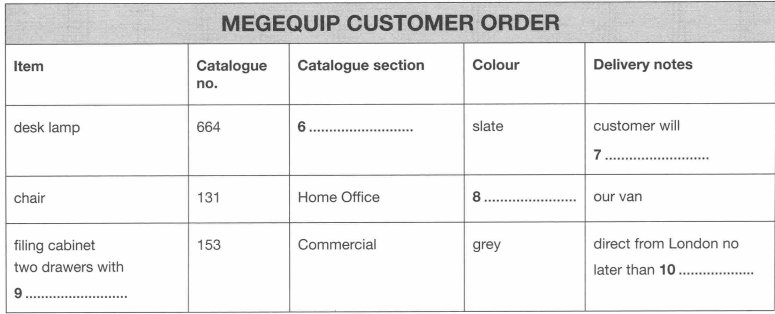
6 – 10Questions 6-10. Complete the table below. Write NO MORE THAN ONE WORD AND/OR A NUMBER for each answer.
PART 2
Questions
11 – 12
Questions 11 and 12. Choose TWO letters, A-E. Which TWO things make the museum unusual?
- 1112
- Athe guidesBthe eventsCthe animalsDthe buildingsEthe objects
Questions
13 – 14
Questions 13 and 14. Choose TWO letters, A-E. Which TWO things can visitors do at the museum?
- 1314
- Abuy home-made breadBride a horseCride on a tramDbuy copies of original postersEgo down a coal mine
Questions
15 – 20
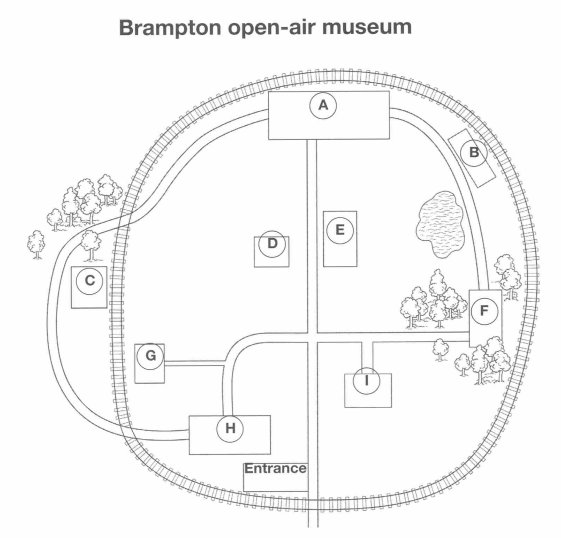
Questions 15-20. Label the map below. Write the correct letter, A-I, next to questions 15-20.
PART 3
Questions
21 – 26
Questions 21-26. Which attitude is associated with the following people during the conversation? Choose SIX answers from the box and write the correct letter, A-H, next to questions 21-26.
Attitudes
|
Questions
27 – 30
Questions 27-30. Choose the correct letter, A, B or C.
- 27
What was Cressida asked to do at the beginning of her placement?
- A
go out to buy things for the production team
Brun errands to other parts of the TV news centre
Cmeet visitors and escort them to the studio
- 28
What was fortunate for Cressida?
- A
She was familiar with a piece of equipment.
BShe spent a lot of time in the editing suite.
CShe was given a chance to interview someone.
- 29
What does Cressida feel she needs to improve?
- A
her understanding of business
Bher organisational skills
Cher ability to work in a team
- 30
What has given her an idea for her final assignment?
- A
a meeting with a public relations professional
Bseeing a politician speaking to an audience
Ca disagreement with one of the TV presenters
PART 4
Questions
31 – 40
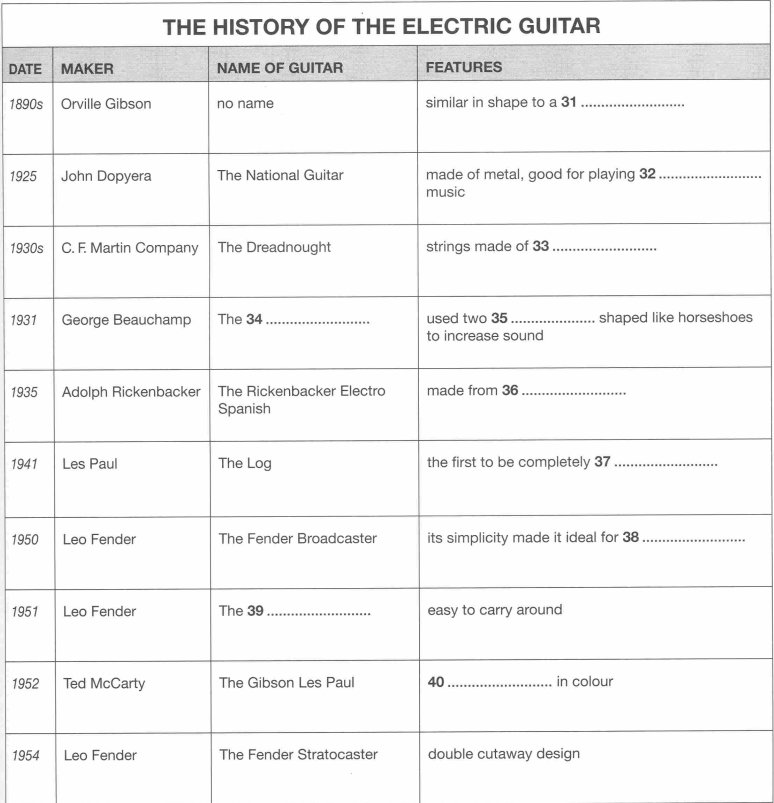
Questions 31-40. Complete the table below. Write NO MORE THAN TWO WORDS for each answer.
Chỗ trống 31
Chỗ trống 32
Chỗ trống 33
Chỗ trống 34
Chỗ trống 35
Chỗ trống 36
Chỗ trống 37
Chỗ trống 38
Chỗ trống 39
Chỗ trống 40
PART 1
Questions
1 – 5Questions 1-5. Complete the form below. Write ONE WORD AND/OR A NUMBER for each answer.
Giải thích đáp án
Sally: Good afternoon. Megequip. This is Sally speaking. How may I help you?
Oskar: Oh hello. Um, I’d like to order some items from your catalog.
Sally: Yes. Are you an existing customer?
Oskar: Er, no. I’ve only just moved here from South Africa. But picked up your winter catalog in the city center yesterday.
Sally: Fine. The winter catalog is our current one. As you’re a new customer, I need to take a few details from you. The customer is using the winter catalog, so ‘winter’ has been written in the space.
Oskar: Sure.
Sally: Your name is?
Oskar: (Q1) Oskar Greening. That’s Oskar with a ‘K’.
Sally: O-S-K-A-R?
(Oskar Greening. Đó là Oskar với chữ ‘K’.
Sally: O-S-K-A-R?)
Oskar: Yes.
Sally: Greening. And your address? (Địa chỉ của bạn là?)
Oskar: Um, York Terrace.
Sally: Here in the city?
Oskar: Yes. Sally: What number?
Oskar: (Q2) It’s a flat. Number 52C. (Đó là một căn hộ. Số 52C)
Sally: Got that. (Q3) And would that be the same address for delivery? (Và có phải đó cũng là địa chỉ giao hàng?)
Oskar: Um, no, actually, I’m out all day. But my neighbor can take delivery at number 5 York Avenue. (Ừm, không, thực ra, tôi ra ngoài cả ngày. Nhưng hàng xóm của tôi có thể nhận hàng ở số 5 Đại lộ York.) It’s just round the corner.
Sally: OK, fine, number 5, I’ve got that. And will you be paying by debit card or credit card?
Oskar: (Q4) Well, er, I don’t have any cards yet. I’ll have some shortly, but I want these things this week if possible. Could I come to the store and pay cash in advance? (À, ờ, tôi chưa có thẻ nào. Tôi sẽ có một số sớm thôi, nhưng tôi muốn những thứ này trong tuần này nếu có thể. Tôi có thể đến cửa hàng và thanh toán tiền mặt trước được không?)
Sally: Well, I guess so. I’ll make a note. I’m afraid that payment method doesn’t entitle you to a discount.
Oskar: No, I didn’t expect one for that. But what about my address? It says on the cover of the catalog –
Sally: (Q5) Oh yes, you’re right. Of course York Terrace is within the city so you get free delivery and 5% discount on your order. (Ồ vâng, bạn nói đúng. Tất nhiên York Terrace nằm trong thành phố nên bạn được miễn phí giao hàng và giảm 5% cho đơn hàng)
Questions
6 – 10Questions 6-10. Complete the table below. Write NO MORE THAN ONE WORD AND/OR A NUMBER for each answer.
Giải thích đáp án
Oskar:
Oh, good.
Sally:
So what would you like to order? You have our current catalog, you say?
Oskar: Yes, I need three things for the room where I study – my office, I guess. Um, the most urgent thing is a desk lamp. (Q6) Is your catalog number 664 in stock?
Sally: 664? That’s, um, not ‘Home Office’? It’s in the ‘Living’ section of the catalog?
(Oskar: Số danh mục 664 của bạn còn hàng không?
Sally: 664? Đó, ừm, không phải ‘Home Office’? Đó là trong phần ‘Living’ của danh mục?)
Oskar: It is. I want a small one that clips onto the edge of the desk.
Sally: Yes, no problem. In which color?
Oskar: I’d like the grayish-coloured one, please
Sally: Oh you mean the shade we call slate’. Yes, it’s a nice color.
Oskar: And, um, I wondered, could I get that when I come in to pay rather than waiting for delivery? I really need to be able to read at night and the lights in this flat are useless.
Sally: (Q7) Yes, I’m sure that’ll be OK. I’ll note down that – ‘customer will collect’. What else did you want? (Vâng, tôi chắc chắn rằng sẽ ổn thôi. Tôi sẽ ghi lại rằng – ‘khách hàng sẽ thu tiền’. Bạn còn muốn gì nữa?)
Oskar: Well, I need a chair which gives good support when I’m using my computer. I saw one in your ‘Home Office’ section and think it would suit me. It’s on page 45, item number, oh, um, 129.
Sally: Um, yes?
Oskar: And it’s fully adjustable, isn’t it?
Sally: Let me see. Height, yes, back, yes, I’m not sure about the arms though.
Oskar: Oh, that could be a problem … I’m very tall.
Sally: What about 131 on the same page? It has adjustable arms, seats, everything!
Oskar: But can I get that in the same color, I mean the green like the one it shows?
Sally: Oh, they all come in the full range of colors.
Oskar: (Q8) OK, so I’ll go for 131 in green then. (OK, vậy tôi sẽ chọn 131 màu xanh lá)
Sally: Mm … I think you’ll like that. My brother’s very tall and he uses one. We can make sure there’s one on the delivery van to you early next week.
Oskar: Oh good, thanks. And so, lastly, I need a filing cabinet for my documents. A little filing cabinet. With two drawers?
Sally: OK. Two drawers. Do you want the ordinary one or the lockable one? It’s an extra twenty pounds.
Oskar: Sorry, what’s that?
Sally: (Q9) You can have it with a lock, which is more secure. (Bạn có thể có nó với một khóa, an toàn hơn.)
Oskar: Oh, yes, please.
Sally: OK … so that’s number 153.
Oskar: It doesn’t by any chance come in slate, does it?
Sally: Well, it’s similar. But the commercial office furniture doesn’t come in so many shades.
Oskar: So it’s gray?
Sally: That’s right.
Oskar: Fine, that’ll do.
Sally: Now, about delivery. The two items will probably come at different times as we have the chair in stock here so our van will bring it, as I said. (Q10) The filing cabinet will be coming direct from London, so today’s the 29th of September, say, not more than four days, that’ll be delivered on or before the 3rd of October. (Tủ hồ sơ sẽ được gửi trực tiếp từ Luân Đôn, vì vậy hôm nay là ngày 29 tháng 9, chẳng hạn, không quá bốn ngày, sẽ được giao vào hoặc trước ngày 3 tháng 10). You’ll have them both within four days.
Oskar: That’s fine. I’ll drop in tomorrow morning to pay and get the lamp. Um, thanks for all your help.
Sally: Thank you for your order. Let me know if we can do anything else for you.
Oskar: Thank you. I will. Bye.
Sally: Bye.
PART 2
Questions
11 – 12Questions 11 and 12. Choose TWO letters, A-E. Which TWO things make the museum unusual?
- 1112
Bạn chọn thiếu đáp án này
Athe guidesBthe eventsCthe animalsBạn chọn thiếu đáp án này
Dthe buildingsEthe objects
Giải thích đáp án
CÂU HỎI | TRANSCRIPT & GIẢI THÍCH |
11&12. Which TWO things make the museum unusual?
A. the guides B. the events C. the animals D. the buildings E. the objects | The site was chosen because there were already some historic 19th-century buildings here and others have been dismantled in different parts of the region and rebuilt on the site. This hadn’t been attempted before in these parts so we’re very proud of what we have here. All the buildings are filled with furniture, machinery and objects. You may be able to see these in other museums but not in their original settings. (Tất cả các tòa nhà đều chứa đầy đồ nội thất, máy móc và đồ vật. Bạn có thể nhìn thấy những thứ này trong các bảo tàng khác nhưng không phải trong bối cảnh ban đầu của chúng) => D What also sets Brampton apart from other museums is that the story of the exhibits is told not by labels but by costumed staff like myself. (Điều cũng khiến Brampton khác biệt so với các bảo tàng khác là câu chuyện về các cuộc triển lãm không được kể bằng nhãn hiệu mà được kể bởi những nhân viên mặc trang phục đắt giá như tôi). I look after sheep, cows and hens, which are much the same as those you see on modern farms, but I use traditional methods to care for them. You will also be able to see a blacksmith and a printer, as well as other craftspeople. =>A |
DỊCH NGHĨA | |
11&12. HAI điều nào khiến bảo tàng trở nên khác thường?
A. hướng dẫn viên B. các sự kiện C. động vật D. các tòa nhà E. các đối tượng
|
Questions
13 – 14Questions 13 and 14. Choose TWO letters, A-E. Which TWO things can visitors do at the museum?
- 1314
- Abuy home-made breadBride a horse
Bạn chọn thiếu đáp án này
Cride on a tramDbuy copies of original postersBạn chọn thiếu đáp án này
Ego down a coal mine
Giải thích đáp án
CÂU HỎI | TRANSCRIPT & GIẢI THÍCH |
13&14. Which TWO things can visitors do at the museum? A. buy home-made bread B. ride a horse C. ride on a steam train D. buy copies of original posters E. go down a coal mine
| Vintage trams travel along from one end of the street to the other, carrying visitors on their journey into the past. We will also be visiting the farm and taking a ride on a steam train. (Chúng tôi cũng sẽ đến thăm trang trại và đi tàu hơi nước.) =>C Visitors can put on a hard hat and take a guided tour underground to see how coal was worked and to experience the working conditions in the early 1900s. (Du khách có thể đội mũ cứng và tham gia chuyến tham quan có hướng dẫn viên dưới lòng đất để xem cách khai thác than và trải nghiệm điều kiện làm việc vào đầu những năm 1900.) =>E |
DỊCH NGHĨA | |
13&14. HAI điều du khách có thể làm tại bảo tàng? A. mua bánh mì làm tại nhà B. cưỡi ngựa C. đi xe điện D. mua bản sao của áp phích gốc E. đi xuống một mỏ than |
Questions
15 – 20Questions 15-20. Label the map below. Write the correct letter, A-I, next to questions 15-20.
Bạn chưa trả lời câu hỏi này
E
Bạn chưa trả lời câu hỏi này
A
Bạn chưa trả lời câu hỏi này
C
Bạn chưa trả lời câu hỏi này
H
Bạn chưa trả lời câu hỏi này
F
Bạn chưa trả lời câu hỏi này
B
Giải thích đáp án
Now if you’d like to look at your map, we’ll begin our tour. The site is a bit like a circle with the railway going round the edge. You can see where we are now by the entrance and we’re going to start by walking to the High Street. (Q15) We’ll go to the crossroads in the middle of the map and go straight on, making our way between two buildings on either side of the path. The larger one is an exhibition center but it’s not open today, unfortunately. (Chúng ta sẽ đi đến ngã tư ở giữa bản đồ và đi thẳng, đi giữa hai tòa nhà ở hai bên đường. Cái lớn hơn là một trung tâm triển lãm nhưng tiếc là hôm nay nó không mở cửa). The other building is offices. (Q16) The path leads directly to the High Street building which is at the opposite side of the site to the entrance. (Con đường dẫn thẳng đến tòa nhà High Street nằm ở phía đối diện của địa điểm nơi có lối vào). Here you’re free to wander around and take a ride up and down on a tram. (Q17) We’ll then take the path which follows the railway line and crosses it to the farm. If you wish, you can have tea in the farmhouse and there’ll be time to look at the animals and the machinery. (Sau đó chúng ta sẽ đi theo con đường men theo đường sắt và băng qua nó để đến trang trại. Nếu muốn, bạn có thể uống trà trong trang trại và sẽ có thời gian để ngắm nhìn động vật và máy móc). (Q18) Then, we cross the railway line again and visit our special attraction which is the coal mine. (Sau đó, chúng ta sẽbăng qua tuyến đường sắt một lần nữa và ghé thăm điểm thu hút đặc biệt của chúng ta đó là mỏ than). It’s just in front of us here at the entrance. (Q19) We’ll return to the crossroads and walk through a small wooded area to the Manor House. (Chúng ta sẽ quay trở lại ngã tư đường và đi bộ qua một khu rừng nhỏ để đến Manor House). This is one of the original buildings on the site and belonged to a wealthy farmer. You can look round the house and gardens and talk to our guides who can tell you what it was like to live there. (Q20) We will then follow a path which goes past the pond and will take us to the Railway Station which is situated between the path and the railway line (Sau đó, chúng ta sẽ đi theo một con đường đi qua cái ao và sẽ đưa chúng ta đến Ga xe lửa nằm giữa con đường và tuyến đường sắt). Finally we’ll take the steam train back around the site, passing alongside the High Street and the Coal Mine back to the entrance. So if you’d like to follow me…
PART 3
Questions
21 – 26Questions 21-26. Which attitude is associated with the following people during the conversation? Choose SIX answers from the box and write the correct letter, A-H, next to questions 21-26.
Attitudes
|
Bạn chưa trả lời câu hỏi này
A
Bạn chưa trả lời câu hỏi này
H
Bạn chưa trả lời câu hỏi này
B
Bạn chưa trả lời câu hỏi này
G
Bạn chưa trả lời câu hỏi này
D
Bạn chưa trả lời câu hỏi này
E
Giải thích đáp án
Dr Erskine: Well, Cressida, that was an interesting presentation you gave yesterday on your placement at the TV news center.
Cressida: Thank you, Dr Erskine, I did work hard on it.
Dr Erskine: (Q21) Yes and you did entertain the class, they enjoyed your humor (=amused), but you informed them too. (Vâng và bạn đã làm cả lớp vui, họ rất thích sự hài hước của bạn, nhưng bạn cũng đã cung cấp kiến thức cho họ). But I felt there was a bit of a back story – you know, something you weren’t telling us? So how was it really?
Cressida: Yeah, well, I learnt a lot, as I said. But I think some of the lessons weren’t ones I wanted to share with the whole group. (Q22) I mean, my expectations about what it would be like were too high (=unrealistic) (Ý tôi là, kỳ vọng của tôi về việc nó sẽ diễn ra như thế nào là quá cao). I’d been fantasizing a bit about what I’d be doing. I mean, it all worked out OK in the end… but I got off to a bad start.
Dr Erskine: Yes, I heard something similar from (Q23) the producer – um. Ainsley Webb-who assessed your performance. He was quite negative (=critical) about some of the things you did, and your initial attitude, I’m afraid. Would you like to give me your version? (Vâng, tôi đã nghe điều gì đó tương tự từ nhà sản xuất – ừm. Ainsley Webb-người đã đánh giá hiệu quả làm việc của bạn. Tôi e là anh ấy không hài lòng về một số điều bạn đã làm, và thái độ ban đầu của bạn,. Bạn có muốn cho tôi biết phía câu chuyện của bạn?)
Cressida: I didn’t prepare properly is the main thing. On my first morning, I hadn’t checked my commuting route properly, and I didn’t notice that it says the buses don’t start till six. I had to run all the way to the studio, but I was still late, and I looked a mess.
Dr Erskine: Well, better at this stage of your career than later. (Q24) To be honest, I made the same kind of mistakes (=sympathetic) when I was your age. But anyway, as I say, I think the presentation yesterday went extremely well, and I will bear that in mind when I grade your work experience overall. (Thành thật mà nói, tôi đã mắc phải những sai lầm tương tự khi tôi bằng tuổi bạn. Nhưng dù sao đi nữa, như tôi đã nói, tôi nghĩ rằng buổi thuyết trình ngày hôm qua đã diễn ra rất tốt, và tôi sẽ ghi nhớ điều đó khi chấm điểm tổng thể trải nghiệm làm việc của bạn.)
Cressida: Thank you for being so understanding.
Dr Erskine: Right. (Q25) Now, have you completed your diary of what you did there? Professor Jenkins hasn’t received it, he says. (Bây giờ, bạn đã hoàn thành nhật ký của mình về những gì bạn đã làm ở đó chưa? Giáo sư Jenkins nói rằng ông ấy đã không nhận được nó.)
Cressida: Um, yes, I have finished it, but I wanted to just tidy it up a bit. Some of it was written in a bit of a hurry. I’ll email it to him this afternoon.
Dr Erskine: OK. But I’m afraid he says this will have to be the last time you submit late. Journalism is all about deadlines and if you can’t manage them on your course he can’t give you a diploma saying you’re competent, can he?
Cressida: Oh. Yes, I’ll do it straight after this. I didn’t realize.
Dr Erskine: Well, he can be a bit abrupt (=impatient) if he’s kept waiting. (Chà, ông ấy có thể hơi nóng nảy nếu ông ấy bị bắt chờ đợi). It’s the one thing he really doesn’t like. I’m sure everything is going to be fine. You’re getting very good grades on your work, so, as long as you remember that.
Cressida: Yes
Dr Erskine: Now, did you manage OK generally, do you think?
Cressida: Yeah, OK, I think. Well, it took awhile to get to grips with all the equipment. Some of it was quite old, not as fast as what we have here in college and at first I kept thinking it was my fault-I wasn’t pressing the right buttons, or something. (Q26) The thing was, none of the TV center staff asked me if I wanted instructions. If I asked them how to do some particular operation, they were perfectly civil (=polite) and would show me, and even say thank you for what I did, but I felt awkward to keep asking. (Vấn đề là, không ai trong số các nhân viên của trung tâm truyền hình hỏi tôi có muốn được hướng dẫn không. Nếu tôi hỏi họ cách thực hiện một thao tác cụ thể nào đó, họ hoàn toàn lịch sự và sẽ chỉ cho tôi, thậm chí còn nói cảm ơn vì những gì tôi đã làm, nhưng tôi cảm thấy lúng túng khi phải tiếp tục hỏi)
Questions
27 – 30Questions 27-30. Choose the correct letter, A, B or C.
- 27
What was Cressida asked to do at the beginning of her placement?
Bạn chưa trả lời câu hỏi này
- A
go out to buy things for the production team
Brun errands to other parts of the TV news centre
Cmeet visitors and escort them to the studio
Giải thích đáp án
CÂU HỎI | TRANSCRIPT & GIẢI THÍCH |
27. What was Cressida asked to do at the beginning of her placement? A. go out to buy things for the production team B. run errands to other parts of the TV news center C. meet visitors and escort them to the studio
| Cressida: The first couple of days were manic, the production team was short of staff and I was rushing all over the building taking messages to various people and fetching things. Of course, I didn’t know my way around, so I kept ending up in some store room or somewhere instead of the studio I was meant to be in. (Vài ngày đầu tiên thật lộn xộn, đội sản xuất thiếu nhân viên và tôi phải chạy khắp tòa nhà để gửi tin nhắn cho nhiều người và lấy đồ. Tất nhiên, tôi không biết đường nên cuối cùng tôi vẫn ở trong một căn phòng kho hoặc một nơi nào đó thay vì trường quay mà tôi phải có mặt). Ori mistook some important visitor for a colleague, because I didn’t know who anyone was. |
DỊCH NGHĨA | |
27. Cressida được yêu cầu làm gì khi bắt đầu vị trí của mình? A. ra ngoài mua đồ cho đội sản xuất B. chạy việc vặt đến các bộ phận khác của trung tâm tin tức truyền hình C. gặp khách và hộ tống họ đến trường quay
|
- 28
What was fortunate for Cressida?
Bạn chưa trả lời câu hỏi này
- A
She was familiar with a piece of equipment.
BShe spent a lot of time in the editing suite.
CShe was given a chance to interview someone.
Giải thích đáp án
CÂU HỎI | TRANSCRIPT & GIẢI THÍCH |
28. What was fortunate for Cressida? A. She was familiar with a piece of equipment. B. She spent a lot of time in the editing suite. C. She was given a chance to interview someone.
| Then after that, things sort-of calmed down, so sometimes I was hanging about until someone decided to give me a chore. But I had a piece of luck at the end of the week because they got a new bit of equipment which was the same as we have in the editing suite here and I knew how to use it, which none of them did. (Nhưng tôi đã gặp một chút may mắn vào cuối tuần vì họ có một thiết bị mới giống như cái chúng tôi có trong bộ chỉnh sửa ở đây và tôi biết cách sử dụng nó, điều mà không ai trong số họ làm được). So that gave me a bit of status. |
DỊCH NGHĨA | |
28. Điều gì đã may mắn cho Cressida? A. Cô ấy đã quen thuộc với một thiết bị. B. Cô ấy đã dành rất nhiều thời gian trong phòng biên tập. C. Cô ấy đã có cơ hội phỏng vấn ai đó.
|
- 29
What does Cressida feel she needs to improve?
Bạn chưa trả lời câu hỏi này
- A
her understanding of business
Bher organisational skills
Cher ability to work in a team
Giải thích đáp án
CÂU HỎI | TRANSCRIPT & GIẢI THÍCH |
29. What does Cressida feel she needs to improve? A. her understanding of business B. her organizational skills C. her ability to work in a team
| Cressida: Yes. Well, I know I need to learn from my mistakes. I mean, basically I need to think more about forward planning, ((Ý tôi là, về cơ bản, tôi cần suy nghĩ nhiều hơn về việc lập kế hoạch cho tương lai) but on the other hand I feel much more confident now; I did survive, didn’t ruin anything, I did actually make a contribution, according to the producer., |
DỊCH NGHĨA | |
29. Cressida cảm thấy mình cần phải cải thiện điều gì? A. sự hiểu biết của cô ấy về kinh doanh B. kỹ năng tổ chức của cô ấy C. khả năng làm việc theo nhóm của cô ấy
|
- 30
What has given her an idea for her final assignment?
Bạn chưa trả lời câu hỏi này
- A
a meeting with a public relations professional
Bseeing a politician speaking to an audience
Ca disagreement with one of the TV presenters
Giải thích đáp án
CÂU HỎI | TRANSCRIPT & GIẢI THÍCH |
30. What has given her an idea for her final assignment? A. a meeting with a public relations professional B. seeing a politician speaking to an audience C. a disagreement with one of the TV presenters
| Cressida: … One thing I want to take forward to my final assignment, though, is some reflections on ethics. Dr Erskine: Yes? Cressida: I had a bit of an argument with one of the senior presenters. (Tôi đã có bất đồng một chút với một trong những diễn giả cấp cao.) He was editing part of an interview and he just changed something someone said. When I questioned him he just snubbed me. And I mean, this wasn’t some public relations expert or government professional spokesperson, it was, like, a member of the public, but he said ‘Oh they never remember what they said anyway’. |
DỊCH NGHĨA | |
30. Điều gì đã giúp cô ấy có ý tưởng cho nhiệm vụ cuối cùng của mình? A. một cuộc họp với một chuyên gia quan hệ công chúng B. quan sát một chính trị gia nói chuyện với khán giả C. bất đồng với một trong những người dẫn chương trình truyền hình
|
PART 4
Questions
31 – 40Questions 31-40. Complete the table below. Write NO MORE THAN TWO WORDS for each answer.
Giải thích đáp án
Lecturer: During today’s lecture in this series about the history of popular music, I’m going to look at the different stages the electric guitar went through before we ended up with the instrument we know so well today.
The driving force behind the invention of the electric guitar was simply the search for a louder sound. (Q31) In the late 1890s, Orville Gibson, founder of the Gibson Mandolin-Guitar Manufacturing Company, designed a guitar with an arched or curved top, as is found on a violin. (Vào cuối những năm 1890, Orville Gibson, người sáng lập Công ty sản xuất đàn guitar Gibson Mandolin, đã thiết kế một cây đàn ghi-ta có đỉnh hình vòm hoặc cong, giống như đàn vi-ô-lông) This made it both stronger and louder than earlier designs but it was still hard to hear amongst other louder instruments.
During the 1920s with the beginnings of big-band music, commercial radio and the rise of the recording industry, the need to increase the volume of the guitar became even more important. Around 1925 John Dopyera came up with a solution. He designed a guitar, known as ‘The National Guitar‘, with a metal body which had metal resonating cones built into the top. (Q32) It produced a brash tone which became popular with guitarists who played blues but was unsuitable for many other types of music. (Nó tạo ra một giai điệu chói tai mà trở nên phổ biến với những nghệ sĩ guitar chơi nhạc blues nhưng không phù hợp với nhiều thể loại nhạc khác)
Another way of increasing the volume was thought of in the 1930s. (Q33) The C. F. Martin Company became known for its ‘Dreadnought‘, a large flat-top acoustic guitar that used steel strings instead of the traditional gut ones. (Công ty C. F. Martin được biết đến với ‘Dreadnought’, một cây guitar acoustic lớn có phần đầu phẳng và sử dụng dây thép thay vì dây ruột truyền thống). It was widely imitated by other makers. These mechanical fixes helped, but only up to a point. So guitarists began to look at the possibilities offered by the new field of electronic amplification. What guitar players needed was a way to separate the guitar’s sound and boost it in isolation from the rest of a band or the surroundings.
Guitar makers and players began experimenting with electrical pickups which are the main means of amplification used today. The first successful one was invented in 1931 by George Beauchamp. (Q34) He introduced to the market a guitar known as ‘The Frying Pan‘ because the playing area consisted of a small round disk (Ông ấy đã cho ra mắt thị trường một cây đàn được gọi là ‘The Frying Pan’ vì khu vực chơi dây đàn bao gồm một đĩa tròn nhỏ). The guitar was hollow and was made of aluminum and steel. (Q35) He amplified the sound by using a pair of horseshoe-shaped magnets (Ông khuếch đại âm thanh bằng cách sử dụng một cặp nam châm hình móng ngựa). It was the first commercially successful electric guitar.
So by the mid-1930s, an entirely new kind of sound was born. Yet along with its benefits, the new technology brought problems. The traditional hollow body of a guitar caused distortion and feedback when combined with electromagnetic pickups. Musicians and manufacturers realized that a new kind of guitar should be designed from scratch with amplification in mind.
In 1935 Adolph Rickenbacker produced a guitar which took his name – The Rickenbacker Electro Spanish’. (Q36) It was the first guitar produced in plastic, which, because of its weight, vibrated less readily than wood (Đó là cây đàn guitar đầu tiên được sản xuất bằng nhựa, mà do trọng lượng của nó nên ít rung hơn gỗ). It eliminated the problems of earlier versions which were plagued by acoustic feedback. The Electro Spanish had its own problems, however, because it was very heavy, smaller than other guitars of the period, and was quite awkward to play. (Q37) Developments continued and in 1941 Les Paul made a guitar which he called ‘The Log’, and true to its name, it was totally solid (Quá trình phát triển tiếp tục và vào năm 1941, Les Paul đã tạo ra một cây đàn guitar mà ông gọi là ‘The Log’, và đúng như tên gọi của nó, nó hoàn toàn ở thể rắn). All previous guitars had been hollow or partly hollow. It looked slightly strange but the next step had been made towards the modern electric guitar.
The first guitar successfully produced in large numbers was made in 1950 by Leo Fender. His Spanish-style electric guitar, known as a ‘Fender Broadcaster‘, had a bolt-on neck, and was initially criticized by competitors as being very simple and lacking in craftsmanship. (Q38) Yet it was immediately successful and was particularly suited(=made it ideal for) to mass production, spurring other guitar companies to follow Fender’s lead (Tuy nhiên, nó đã ngay lập tức thành công và đặc biệt phù hợp với việc sản xuất hàng loạt, thúc đẩy các công ty sản xuất đàn guitar khác đi theo sự dẫn dắt của Fender).
In 1951 Leo Fender revolutionized the music world yet again when he produced an electric bass guitar. This was the first commercially successful bass model to be played like a guitar. (Q39) It was easier for players to hit an exact note: that’s why it was called ‘The Precision’ (Người chơi sẽ dễ dàng đánh được một nốt chính xác hơn: đó là lý do tại sao nó được gọi là ‘The Precision’). Although there had already been electric stand up basses, this was much more portable. It is now standard in the upbringing of any rock band and some historians suggest that entire genres of music, such as reggae and funk, could not exist without it.
In 1952 the Gibson company became Fender’s first major competitor when Ted McCarty created ‘The Gibson Les Paul‘ guitar. (Q40) It was distinctive because it was coloured gold (Nó nổi bật vì nó có màu vàng). The reason for this was to disguise the fact that it was made from two different kinds of wood. In 1954 Leo Fender responded to this successful instrument by introducing ‘The Fender Stratocaster’. It is easily identified by its double cutaway design and three pickups. This model may be the most influential electric guitar ever produced. The modern guitar as we know it was here to stay.
