
Strategies for the IELTS 1 – Test 6
23/10/2024 2024-10-23 2:21Strategies for the IELTS 1 – Test 6
PART 1
Questions
1 – 10
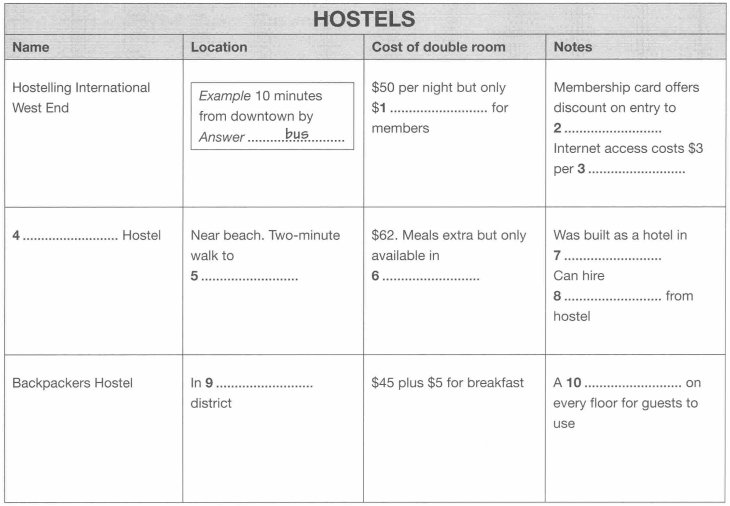
Questions 1-10. Complete the table below. Write ONE WORD AND/OR A NUMBER for each answer.
Chỗ trống 1
Chỗ trống 2
Chỗ trống 3
Chỗ trống 4
Chỗ trống 5
Chỗ trống 6
Chỗ trống 7
Chỗ trống 8
Chỗ trống 9
Chỗ trống 10
PART 2
Questions
11 – 15
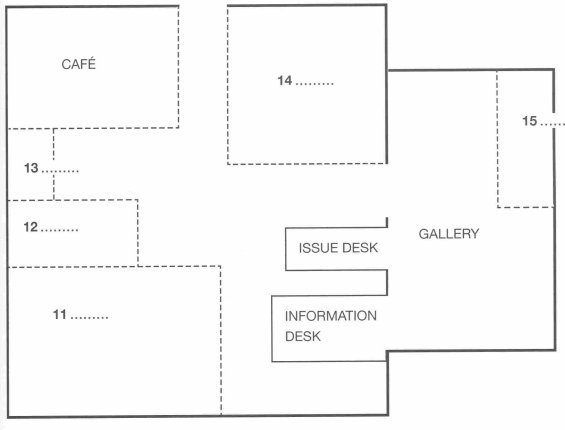
Questions 11-15. Label the map below. Choose FIVE answers from the box and write the correct letter, A-H, next to questions 11-15.
|
Questions
16 – 20
Questions 16-20. Choose the correct letter, A, B or C.
- 16
After two years, library members have to
- A
show proof of their current address.
Bpay for a new membership card.
Cbring a passport or identity card into the library.
- 17
What happens if you reserve a book?
- A
It will be available after five days.
BYou can collect it a week later.
CYou will be contacted when it is available.
- 18
Which materials can be borrowed for one week only?
- A
some reference books
BCD-ROMs
Cchildren’s DVDs
- 19
On which day does the library stay open later than it used to?
- A
Wednesday
BSaturday
CSunday
- 20
Large bags should be left on the
- A
first floor.
Bsecond floor.
Cthird floor.
PART 3
Questions
21 – 25
Questions 21-25. Choose the correct letter, A, B or C.
- 21
Why did Anita and Lee choose to talk about John Chapman?
- A
He was Lee’s childhood hero.
BThey wanted to talk about the USA.
CHe was relevant to the topic of their studies.
- 22
Where did the students record their sources of information?
- A
on their laptops
Bon a handout
Con a database
- 23
The tutor claims she does not understand whether
- A
apples grew in America before Europeans arrived.
Bthe Native Americans had always eaten apples.
CAmerican apples were first bred in Europe.
- 24
The tutor says the audience was particularly interested to hear about
- A
grafting techniques in ancient China.
Bthe cultivation of apples in Kazakhstan.
Cthe spread of apples along the Silk Route.
- 25
How will Anita and Lee present their follow-up work?
- A
on the department website
Bas a paper
Cas a poster
Questions
26 – 30
Questions 26-30. What do Lee and Anita agree about their presentation skills with their tutor?
|
PART 4
Questions
31 – 40
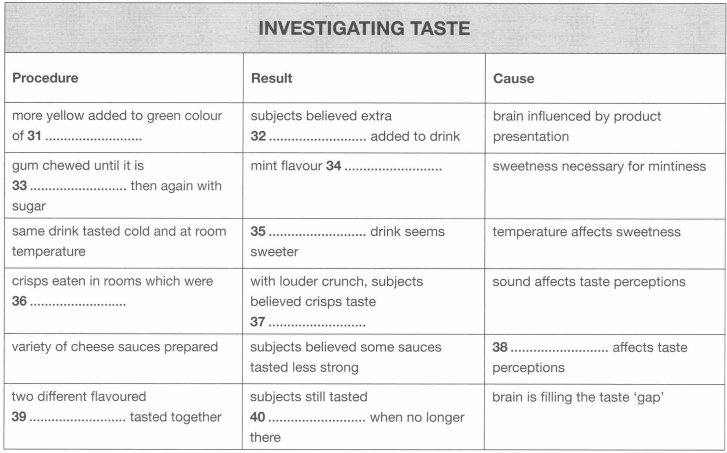
Questions 31-40. Complete the table below. Write NO MORE THAN ONE WORD for each answer.
Chỗ trống 31
Chỗ trống 32
Chỗ trống 33
Chỗ trống 34
Chỗ trống 35
Chỗ trống 36
Chỗ trống 37
Chỗ trống 38
Chỗ trống 39
Chỗ trống 40
PART 1
Questions
1 – 10Questions 1-10. Complete the table below. Write ONE WORD AND/OR A NUMBER for each answer.
Giải thích đáp án
Man: Good morning. Can I help you?
Woman: I hope so! I have a friend in Spain and her two daughters are coming to the city to study for a month. So I thought the Tourist Information Centre was the best place to ask about hostels. Can you recommend any?
Man: Of course. Ah, I usually suggest one of the Hostelling International places. HI West End is a big hostel in a residential area, but it’s only ten minutes from downtown if you take a bus. It’s really popular.
Woman: OK. Sounds good! I need to know how much it costs. The girls want a double room to themselves. They don’t want to share with other people.
Man: That makes it more expensive. The price is under $30 for a bed in a dormitory but they’ll be paying $50 a night. (Q1) But if they become members of Hostelling International, the price comes down to $41 a night. (Nhưng nếu họ trở thành thành viên của Hostelling International, giá sẽ giảm xuống còn 41 đô la một đêm.) Membership costs $35.
Woman: Right.
Man: And membership offers them benefits too on all kinds of activities.
Woman: Ah, what kind of things?
Man: Oh, er, skydiving and white-water rafting. Things like that.
Woman: Mm, I don’t think they’re interested in that kind of thing. (Q2) If they become members, will they get cheaper entrance tickets to (= discount on entry to) museums? (Nếu họ trở thành thành viên, liệu họ có nhận được vé vào cửa viện bảo tàng rẻ hơn hay không?)
Man: Oh, yes and also discounts on bicycle and car hire.
Woman: OK. It’s probably worth it. Is the hostel very noisy? They’re coming here to do some studying.
Man: Ah, I think it is quite noisy as it’s a really big hostel. And if they want to use the Internet this hostel still makes a charge unfortunately. It’s $1 for 15 minutes and (Q3) $3 for an hour (3 đô la một giờ).
Woman: Mm … it might not be ideal for them. What else can you recommend? Is there anything in a quiet area?
Man: There’s Elliscoat Hostel (Nhà trọ Elliscoat).
Woman: Mm, how do you spell that?
Man: (Q4) E-L-L-I-S-C-O-A-T.
Woman: I’ve never heard that name before. And where is that?
Man: It’s on the beach looking over the bay. Here, look on the map. It’s quiet but not far from Dragon Island – there’s plenty going on there in the evening.
Woman: Oh, that’s a nice area. And if they want to go to Dragon Island (Q5) it only takes a couple of minutes to walk (two-minute walk) down to the ferry. (chỉ mất một vài phút đi bộ xuống phà.) So how much is a room there?
Man: It’s in such a nice spot that the rooms are a bit more expensive. They’re $62.
Woman: Does that include any meals?
Man: Unfortunately not. It is possible to buy meals in the hostel at a reasonable price but because it isn’t very busy in the winter, (Q6) they only cook in (= only available in) summer. (họ chỉ nấu ăn vào mùa hè.)
Woman: Oh, I think I know the place you mean. It’s an old building, isn’t it?
Man: Yes, it’s well known as it’s one of the oldest in the city. (Q7) There’s been a hotel there since 1887 when it was first built. (Có một khách sạn ở đó từ năm 1887 khi nó lần đầu được xây dựng.) It was turned into a hostel in 1985 and they’ve invested a lot of money restoring it inside.
Woman: Mm, they’d like that but I’m just looking on the map at where their college is – it’s right in the centre. It is a bit far for them from there.
Man: (Q8) The hostel actually has scooters for hire (Thật ra, nhà trọ cho thuê xe tay ga) at a very good price. So they could do that. Er, it would be quicker than cycling or walking to the centre.
Woman: Mm, it is a bit expensive … But it sounds like the best one so far unless there’s something a bit cheaper?
Man: OK. Er, well, what about the Backpackers Hostel? That’s not so expensive. (Q9) It’s in a side street in the entertainment district. (Nó nằm trên một con phố nhỏ trong khu giải trí.) They wouldn’t need to go far to find everything they want – they could walk everywhere. And it’s very reasonable. Only $45 and another $5 if they want to have breakfast.
Woman: Mm, but what about other meals?
Man: There’s no café but (Q10) on each floor in this hostel (= on every floor) there’s a kitchen for residents to cook in. (trên mỗi tầng của nhà trọ này đều có bếp cho cư dân nấu nướng.) I’m not sure how well equipped they are but it should be fine for basic meals.
Woman: Well, that’s really very helpful. I’ll pass all this information on now.
Man: Do ask your friends to ring me if they need to know anything else.
Woman: I will. Thank you.
PART 2
Questions
11 – 15Questions 11-15. Label the map below. Choose FIVE answers from the box and write the correct letter, A-H, next to questions 11-15.
|
Bạn chưa trả lời câu hỏi này
B
Bạn chưa trả lời câu hỏi này
H
Bạn chưa trả lời câu hỏi này
C
Bạn chưa trả lời câu hỏi này
E
Bạn chưa trả lời câu hỏi này
A
Giải thích đáp án
Welcome to the Selmore Public Library which has just been reopened after major refurbishment. This tour will introduce you to the building and its services. At any time you can stop the tour. We enter by the café and our tour begins at the issue desk.
(Q11) If you stand between the information desk and the issue desk and look at the opposite wall, you will see shelves of books in the left-hand corner. This is where you will find a large number of novels and short stories. (= fiction) (Nếu bạn đứng giữa quầy thông tin và quầy hướng dẫn và nhìn vào bức tường ở phía đối diện, bạn sẽ thấy những kệ sách ở góc bên trái. Đây là nơi mà bạn sẽ tìm thấy một số lượng lớn tiểu thuyết và truyện ngắn.) They are arranged alphabetically. If you’re looking for something in particular and it’s not on the shelf you can reserve it. (Q12) The next area, directly opposite the issue desk, is a section where people can study (= study area). (Khu vực tiếp theo đối diện trực tiếp với quầy hướng dẫn chính là nơi mọi người học tập.) The library provides computers for users free of charge on the next floor beside the reference books but this area is for people to use their own laptops. You should ask for the internet passcode at the information desk.
In the right-hand corner of this floor there is a café. A selection of daily newspapers is always available there (Q13) but you can also take magazines into the café to read while you have a drink. You will find these on the racks to the left of the café and there is a large selection. (nhưng bạn cũng có thể mang tạp chí vào quán cà phê để đọc khi đang thưởng thức đồ uống. Bạn sẽ tìm thấy những thứ này trên giá ở phía bên trái của quán cà phê và có rất nhiều những sự lựa chọn.) They are for reference only and cannot be borrowed but you are welcome to photocopy any articles of interest. We ask you to return them when you have finished. You are not allowed to take fiction or any other books from the shelves into the café.
Next to the café is the exit door leading to the stairs and escalator to the other floors. The largest collection of books in the library is fiction and (Q14) the next largest is non–fiction which is in the corner of this floor opposite the café. (bộ sưu tập sách lớn thứ hai là sách phi hư cấu, chúng nằm ở một góc của tầng này, đối diện với quán cà phê.) These can all be borrowed as opposed to the reference books on the next floor, most of which cannot be taken out of the library – but they can be photocopied. There are several photocopiers available for this purpose downstairs in the basement. (Q15) To one side of the issue desk is a door leading onto a gallery. This was added to the library as a public space where talks are given once a week on a Saturday by visiting authors of both fiction and non-fiction. It also houses the biography section. (Phía bên cạnh quầy hướng dẫn là một cánh cửa dẫn vào phòng trưng bày. Nó được thêm vào thư viện như một không gian chung nơi những tác giả của các bộ tiểu thuyết và tác phẩm phi hư cấu đến trò chuyện mỗi tuần một lần vào ngày thứ bảy. Căn phòng cũng có cả sách thể loại tiểu sử.) There are notices advertising the talks in the study area.
Any books that you want to borrow should be taken to the issue desk. Before we leave this floor I will give you some information about using the library. There are also helpful notices by the information desk.
Questions
16 – 20Questions 16-20. Choose the correct letter, A, B or C.
- 16
After two years, library members have to
Bạn chưa trả lời câu hỏi này
- A
show proof of their current address.
Bpay for a new membership card.
Cbring a passport or identity card into the library.
Giải thích đáp án
CÂU HỎI VÀ TRẢ LỜI | TRANSCRIPT & GIẢI THÍCH |
16. After two years, library members have to A. show proof of their current address. B. pay for a new membership card. C. bring a passport or identity card into the library. | After a period of two years, all readers are required to go to the desk with a document that has their name and current address on it so the library can keep up-to-date records of where people are living. (Cứ hai năm một lần, tất cả độc giả cần mang giấy tờ có tên và địa chỉ hiện tại của mình đến quầy lễ tân thư viện để thư viện có thể cập nhật địa chỉ hiện tại nơi họ đang sống, nhờ đó thư viện có thể cập nhật thông tin về nơi ở của mọi người.) |
DỊCH NGHĨA | |
16. Sau hai năm, các thành viên trong thư viện phải A. đưa ra bằng chứng về địa chỉ hiện tại của họ. B. trả tiền cho thẻ thành viên mới. C. mang theo hộ chiếu hoặc chứng minh nhân dân vào thư viện. |
- 17
What happens if you reserve a book?
Bạn chưa trả lời câu hỏi này
- A
It will be available after five days.
BYou can collect it a week later.
CYou will be contacted when it is available.
Giải thích đáp án
CÂU HỎI VÀ TRẢ LỜI | TRANSCRIPT & GIẢI THÍCH |
17. What happens if you reserve a book? A. It will be available after five days. B. You can collect it a week later. C. You will be contacted when it is available. | Either way, we notify you by phone or email when the item is available to be picked up. (Dù sao thì, chúng tôi cũng thông báo cho bạn qua điện thoại hoặc email khi có sẵn sách để mượn.) |
DỊCH NGHĨA | |
17. Điều gì xảy ra nếu bạn đặt trước một cuốn sách? A. Nó sẽ có sau năm ngày. B. Bạn có thể lấy nó sau một tuần. C. Bạn sẽ được liên lạc khi có sách. |
- 18
Which materials can be borrowed for one week only?
Bạn chưa trả lời câu hỏi này
- A
some reference books
BCD-ROMs
Cchildren’s DVDs
Giải thích đáp án
CÂU HỎI VÀ TRẢ LỜI | TRANSCRIPT & GIẢI THÍCH |
18. Which materials can be borrowed for one week only? A. some reference books B. CD-ROMs C. children’s DVDs | The same system exists for CD-ROMs and CDs but DVDs, both children’s and adults’, can only be borrowed for up to seven days. (đĩa DVD, dành cho cả trẻ em và người lớn, chỉ có thể được mượn nhiều nhất bảy ngày.)
|
DỊCH NGHĨA | |
18. Những tài liệu nào chỉ được mượn trong một tuần? A. một số sách tham khảo B. đĩa CD-ROM C. đĩa DVD dành cho trẻ em |
- 19
On which day does the library stay open later than it used to?
Bạn chưa trả lời câu hỏi này
- A
Wednesday
BSaturday
CSunday
Giải thích đáp án
CÂU HỎI VÀ TRẢ LỜI | TRANSCRIPT & GIẢI THÍCH |
19. On which day does the library stay open later than it used to? A. Wednesday B. Saturday C. Sunday | Instead of opening late on Wednesday evenings till 8pm, we will be closing at 6, as on other weekdays, but we will close at 7 instead of 5.30 on Saturdays (chúng tôi sẽ đóng cửa lúc 7 giờ thay vì 5 giờ 30 vào những ngày thứ bảy) and – a new development – we are going to open on Sunday mornings from next month – 9 to 1.
|
DỊCH NGHĨA | |
19. Vào ngày nào thì thư viện mở cửa muộn hơn trước đây? A. Thứ tư B. Thứ bảy C. Chủ nhật |
- 20
Large bags should be left on the
Bạn chưa trả lời câu hỏi này
- A
first floor.
Bsecond floor.
Cthird floor.
Giải thích đáp án
CÂU HỎI VÀ TRẢ LỜI | TRANSCRIPT & GIẢI THÍCH |
20. Large bags should be left on the A. first floor. B. second floor. C. third floor. | Before you go upstairs, please note that if you are going to the exhibition area on the third floor, large bags are not allowed. There are lockers beside the reference area on the second floor where you can deposit them. (khi đến khu vực triển lãm trên tầng ba, bạn không được phép mang theo những chiếc túi lớn. Sẽ có tủ khóa bên cạnh khu vực sách tham khảo trên tầng hai để ký gửi.) |
DỊCH NGHĨA | |
20. Nên để những chiếc túi lớn ở A. tầng một. B. tầng hai. C. tầng ba. |
PART 3
Questions
21 – 25Questions 21-25. Choose the correct letter, A, B or C.
- 21
Why did Anita and Lee choose to talk about John Chapman?
Bạn chưa trả lời câu hỏi này
- A
He was Lee’s childhood hero.
BThey wanted to talk about the USA.
CHe was relevant to the topic of their studies.
Giải thích đáp án
CÂU HỎI VÀ TRẢ LỜI | TRANSCRIPT & GIẢI THÍCH |
21. Why did Anita and Lee choose to talk about John Chapman? A. He was Lee’s childhood hero. B. They wanted to talk about the USA. C. He was relevant to the topic of their studies.
| Tutor: One thing which you didn’t explain was why you decided to do a presentation on this man who spread apple varieties across the US? (Một điều mà bạn chưa giải thích là lý do tại sao bạn lại quyết định thuyết trình về người đàn ông đã trồng giống táo này trên khắp nước Mỹ?) Anita: Well, ages ago, we were chatting about stuff we’d read as children, and I told Lee the Johnny Appleseed story – I had these American story books when I was small. Then when we were looking into the area of domesticated species of plants for our presentation, we realised that the introduction of the apple with the settlers in the US would be a good case study. (Sau đó, khi chúng tôi nghiên cứu về các giống cây thuần chủng cho bài thuyết trình, chúng tôi đã nhận ra rằng việc giới thiệu về táo và những người định cư ở Mỹ (bao gồm cả John Chapman) là một case study tốt.) * case study: những gì thuộc về tình huống, hoàn cảnh, sự việc có thật trong thực tế, mà có thể áp dụng các kiến thức lý thuyết vào để phân tích, tìm hiểu, mổ xẻ vấn đề. Nói cách khác, case study là các ví dụ thực tiễn cho việc học thêm hiệu quả. |
DỊCH NGHĨA | |
21. Tại sao Anita và Lee lại chọn nói về John Chapman? A. Anh ấy là anh hùng thời thơ ấu của Lee. B. Họ muốn nói về Hoa Kỳ. C. Ông ấy có liên quan đến chủ đề nghiên cứu của họ. |
- 22
Where did the students record their sources of information?
Bạn chưa trả lời câu hỏi này
- A
on their laptops
Bon a handout
Con a database
Giải thích đáp án
CÂU HỎI VÀ TRẢ LỜI | TRANSCRIPT & GIẢI THÍCH |
22. Where did the students record their sources of information? A. on their laptops B. on a handout C. on a database | Anita: We’ve put them on the back of the handout we gave everyone at the end. (Chúng tôi đã ghi chúng ở mặt sau của tài liệu mà chúng tôi đã phát cho mọi người lúc cuối giờ.) |
DỊCH NGHĨA | |
22. Học sinh đã ghi lại những nguồn thông tin của mình ở đâu? A. trên máy tính xách tay B. trên tài liệu phát tay C. trên cơ sở dữ liệu |
- 23
The tutor claims she does not understand whether
Bạn chưa trả lời câu hỏi này
- A
apples grew in America before Europeans arrived.
Bthe Native Americans had always eaten apples.
CAmerican apples were first bred in Europe.
Giải thích đáp án
CÂU HỎI VÀ TRẢ LỜI | TRANSCRIPT & GIẢI THÍCH |
23. The tutor claims she does not understand whether A. apples grew in America before Europeans arrived. B. the Native Americans had always eaten apples. C. American apples were first bred in Europe. | Tutor: What your listeners wanted to understand was whether there were apples in the US before the Europeans started to live there. (Điều mà người nghe muốn hiểu rõ là việc liệu có phải táo có ở Mỹ trước khi người châu Âu bắt đầu sinh sống ở đó hay không.) … I don’t think you were very clear about species already there. (Tôi không nghĩ rằng bạn đã hiểu rất rõ về các giống táo ở đó.)
|
DỊCH NGHĨA | |
23. Gia sư nói rằng cô ấy không hiểu liệu có phải A. táo có ở Mỹ trước khi người châu Âu đến. B. người Mỹ bản địa đã luôn ăn táo. C. táo Mỹ được nhân giống lần đầu tiên ở châu Âu. |
- 24
The tutor says the audience was particularly interested to hear about
Bạn chưa trả lời câu hỏi này
- A
grafting techniques in ancient China.
Bthe cultivation of apples in Kazakhstan.
Cthe spread of apples along the Silk Route.
Giải thích đáp án
CÂU HỎI VÀ TRẢ LỜI | TRANSCRIPT & GIẢI THÍCH |
24. The tutor says the audience was particularly interested to hear about A. grafting techniques in ancient China. B. the cultivation of apples in Kazakhstan. C. the spread of apples along the Silk Route. | Tutor: But what to me was fascinating – and I saw most members of your audience start to take notes – was when you discussed how the apple genes spread via the Silk Route into Europe from the wild apple woods of Kazakhstan. (Nhưng điều khiến tôi cảm thấy hấp dẫn – và theo như tôi thấy hầu hết khán giả của bạn bắt đầu ghi chép – là khi bạn nói về việc vận chuyển táo có nguồn gốc từ những cánh rừng táo dại ở Kazakhstan qua Con đường tơ lụa đến châu Âu.) |
DỊCH NGHĨA | |
24. Gia sư nói rằng khán giả đặc biệt thích nghe về A. kỹ thuật ghép cành ở Trung Quốc cổ đại. B. việc trồng táo ở Kazakhstan. C. việc vận chuyển táo dọc Con đường tơ lụa. |
- 25
How will Anita and Lee present their follow-up work?
Bạn chưa trả lời câu hỏi này
- A
on the department website
Bas a paper
Cas a poster
Giải thích đáp án
CÂU HỎI VÀ TRẢ LỜI | TRANSCRIPT & GIẢI THÍCH |
25. How will Anita and Lee present their follow-up work? A. on the department website B. as a paper C. as a poster | Tutor: So, now we need to discuss the form your follow–up work will take. Are you going to produce a paper? Or are you thinking of putting it all up on the department website? (bây giờ chúng ta cần thảo luận về hình thức để trình bày phần công việc tiếp theo. Liệu bạn sẽ tạo ra một bài báo? Hay bạn có nghĩ đến việc đưa tất cả lên trang web của khoa?) Anita: Um, I felt we could do both. And we could do a poster of some of the data. But Lee wasn’t sure. Lee: I think it would be enough to use the website. (Tôi nghĩ rằng sử dụng trang web là đủ.) We can offer a link to our email for queries. |
DỊCH NGHĨA | |
25. Anita và Lee sẽ trình bày phần làm tiếp theo của mình như thế nào? A. trên trang web của khoa B. dưới dạng báo cáo C. dưới dạng áp phích |
Questions
26 – 30Questions 26-30. What do Lee and Anita agree about their presentation skills with their tutor?
|
Bạn chưa trả lời câu hỏi này
A
Bạn chưa trả lời câu hỏi này
B
Bạn chưa trả lời câu hỏi này
C
Bạn chưa trả lời câu hỏi này
B
Bạn chưa trả lời câu hỏi này
A
Giải thích đáp án
Tutor: Now I just want to give you a few pointers about the techniques of your presentation. Mostly it was good, but there are a few things you need to bear in mind next time you do one. (Q26) You both managed the hardware (= use of equipment) I mean the projector and things, very well indeed, which is always a great help. (Cả hai bạn đều biết sử dụng các thiết bị như máy chiếu và những thứ khác rất tốt, điều đó giúp ích cho bạn nhiều đấy.) (=> excellent)
Anita: Good.
Lee: Thanks.
Tutor: You’d obviously checked it out carefully.
Lee: Yes. But unfortunately we hadn’t finished our maps when we did the practice on my computer at home, that’s why there were some the wrong way up.
Anita: We didn’t realise the software on the laptop was a bit different from the one I have. (Chúng tôi không nhận ra rằng phần mềm trên máy tính xách tay hơi khác so với phần mềm của tôi.)
Tutor: But you sorted out the problem very quickly and didn’t let it fluster you, so it wasn’t a big problem. We could all read the map when we needed to. (Nhưng bạn đã giải quyết vấn đề rất nhanh chóng và không để nó làm bạn bối rối, vì vậy đó không phải là vấn đề lớn. Tất cả chúng ta đều có thể đọc bản đồ khi cần.)
Anita: (Q27) So it was OK. But we could have done better (Nó vẫn ổn. Nhưng lẽ ra chúng ta có thể làm nó tốt hơn) (=> acceptable), we realise.
Tutor: Mm. There was a bit at the end where I felt something didn’t go as you’d planned – am I right?
Lee: We had a few maps which we ended up leaving out, because we needed to get on to our conclusions.
Anita: Yes, it took longer to explain the technical aspects of grafting than we’d expected. (chúng tôi mất nhiều thời gian hơn để giải thích các khía cạnh kỹ thuật của việc cấy ghép hơn dự tính.)
Lee: (Q28) So sticking to the time limit for each part of our presentation (= timing of sections) is something we didn’t manage at all. (Vì vậy, việc tuân thủ giới hạn thời gian cho từng phần trong bài thuyết trình là điều mà chúng tôi hoàn toàn không làm được.) (=> poor) Which means we’ve definitely got to improve before we do another one.
Anita: Yes.
Tutor: Apart from that, well, (Q29) the handout was perfectly adequate for a seminar like this, it gave all the key information, and, of course, now I realise the sources are listed at the back. But you need to do those references in the correct format, as footnotes, in future. (tài liệu phát tay hoàn toàn phù hợp cho một buổi hội thảo như thế này, nó đưa ra tất cả những thông tin quan trọng, và tất nhiên, bây giờ tôi nhận ra rằng các nguồn tài liệu đều được liệt kê ở phía sau. Tuy nhiên, trong tương lai bạn cần phải ghi các nguồn tham khảo sao cho đúng định dạng, giống như footnote.) (=> acceptable)
* Footnote là một đoạn văn bản nằm dưới chân của một trang để bạn ghi chú những từ xuất hiện trong trang đó cần giải thích
Anita: OK.
Lee: Yes, sorry, we will.
Tutor: And finally, other students will be presenting projects later in the course. I shall be reminding them (Q30) how well you both spoke and that no one had any problem hearing or understanding (= clarity of speech) either of you. In that respect your talk was a model that the others can follow. (cả hai bạn đều đã nói rất tốt và không ai gặp bất cứ vấn đề gì trong việc nghe hiểu hai bạn. Xét về khía cạnh đó, bài nói của các bạn đúng là một hình mẫu mà những người khác có thể noi theo) (=> excellent)
Lee: Oh, thank you.
Anita: Yes, thanks very much. This feedback has been very helpful. Tutor Well done, both of you. See you in a fortnight.
Anita: Bye. Thanks.
PART 4
Questions
31 – 40Questions 31-40. Complete the table below. Write NO MORE THAN ONE WORD for each answer.
Giải thích đáp án
This morning I’m going to describe for you a few of the kinds of experiments that have been used to investigate the sense of taste, which is now recognised as being a far more complex and important area of neurological science than was previously believed by most people. The results of some of these experiments can be quite fun and I shall suggest that you may want to choose one or two to try out in groups before having a go at designing a new experimental procedure of your own and trying to pinpoint the cause of your findings.
The first one concerns a marketing exercise by a soft drinks company. (Q31) The green colour of some cans was altered by the addition of yellow (= more yellow added) (Màu xanh của một vài chiếc lon đã được thay đổi khi thêm vào màu vàng), so they were a brighter green. Then test subjects were asked what they thought about the flavour of the drink in the new-style cans, and (Q32) they stated that there was more (= extra) lime in the drink (họ cho rằng có nhiều chanh hơn trong đồ uống của họ) if it was in the ones with the new colour. This was because the brain picks up cues from the way the product is presented, as well as the product itself, which trigger taste sensations. Before food was packaged, humans used colour to gauge the ripeness of fruit, for example.
Next there’s the old problem with chewing gum. Everyone knows that after a few minutes’ chewing it loses its minty flavour. However, (Q33) if you ask people to chew up to the point (= gum chewed until) where it becomes tasteless, and then ask them to eat a little sugar (nếu bạn yêu cầu họ nhai đến khi không còn vị gì nữa rồi sau đó ăn thêm một chút đường) and continue chewing, to most people’s surprise, what happens is that (Q34) the original mintiness (= mint flavour) actually returns (hương vị bạc hà ban đầu đã thực sự trở lại) because it is the sweetness which is needed to make the mintiness perceptible. So combinations of flavours can be significant, as the brain needs one of them in order to recognise the other.
Another experiment demonstrates something we’ve all done. Drink half a fizzy drink straight from the fridge and then leave it at room temperature for a while. Take a sip and you may well decide you don’t like it. (Q35) The warm drink is too sweet (= sweeter) (Đồ uống ấm thì quá ngọt) to be refreshing. So put the rest back in the fridge until it’s chilled again. Now try it. Much better. Of course the sweetness doesn’t change, it is our perception, because how sweet it tastes depends on the temperature. The extent to which the drink is sweetened is less evident if the drink has been cooled.
Another interesting result has been derived from experiments with sound. (Q36) One of these involved eating crisps. Subjects were put into soundproof rooms and given batches of crisps to eat. (Một trong số những thí nghiệm đó liên quan đến việc ăn khoai tây chiên giòn. Các đối tượng được đưa vào phòng cách âm và được đưa cho những gói khoai tây chiên giòn để ăn.) As they ate, the sound of crunching which they made as they ate the crisps was played back to them. This was adjusted so that they sometimes heard the crunching as louder, or, at other times, more high–frequency sounds were audible in the sound feedback that accompanied their eating. (Q37) Fascinatingly, if the sound level was louder (= louder crunch) or higher frequency they reported that the crisps were actually fresher. (Điều thú vị là, nếu âm lượng to hơn hoặc tần số cao hơn thì họ cho rằng khoai tây chiên sẽ thực sự tươi ngon hơn.) Of course, the crisps were in fact the same every time! So, it was clear that the level and quality of what they were hearing was influencing their taste perceptions.
So, we’ve looked briefly at colour, at complementary flavours, at temperature and sound. It seems that all the senses are working together here, but what about the sense of touch? A number of experiments have been done in this area. If you take, for instance, cheese sauce and prepare different versions, some thicker and some thinner, but without any alteration in the strength of flavour, what do you think the subjects perceive? Yup, if the sauce is thicker, they’ll say the cheesy flavour is less strong. It was clear that (Q38) the thing that was influencing the subjects’ judgement (= affects taste perceptions) about the flavour of the sauces was the texture of each one. (thứ ảnh hưởng đến phán đoán của các đối tượng về hương vị của nước sốt là kết cấu của từng loại.) Now, this result is important for dietitians as well as marketing executives.
Lastly, another variation on the two flavours theme. This concerns the capacity of the brain for bridging a sensory gap. (Q39) The subjects in this experiment stuck out their tongues so that the testers could drip two liquids onto them simultaneously (= two … tasted together) (Các đối tượng trong thí nghiệm này phải lè lưỡi ra để những người thử nghiệm nhỏ đồng thời hai chất lỏng lên), one strawberry flavoured and one sugar flavoured. The testers then took away each flavour in turn. When the sweetness was taken away, the subjects reported they could hardly taste anything, (Q40) but they continued to think they could taste strawberry even after it was taken away (= when no longer there)! (nhưng họ vẫn giữ suy nghĩ rằng họ có thể nếm được vị dâu tây ngay cả sau khi bỏ đi vị ngọt) So that taste gap was filled.
Well, that’s just a quick look at some of the examples in the current literature. The references will be in the handout you’ll get at the end of the session. Now let’s see about trying a few of them for ourselves.
