IELTS Handbook 16 – Test 3 – R

Passage 1

Roman shipbuilding and navigation

Shipbuilding today is based on science and ships are built using computers and sophisticated tools. Shipbuilding in ancient Rome, however, was more of an art relying on estimation, inherited techniques and personal experience. The Romans were not traditionally sailors but mostly land-based people, who learned to build ships from the people that they conquered, namely the Greeks and the Egyptians.

There are a few surviving written documents that give descriptions and representations of ancient Roman ships, including the sails and rigging. Excavated vessels also provide some clues about ancient shipbuilding techniques. Studies of these have taught us that ancient Roman shipbuilders built the outer hull first, then proceeded with the frame and the rest of the ship. Planks used to build the outer hull were initially sewn together. Starting from the 6th century BCE, they were fixed using a method called mortise and tenon, whereby one plank locked into another without the need for stitching. Then in the first centuries of the current era, Mediterranean shipbuilders shifted to another shipbuilding method, still in use today, which consisted of building the frame first and then proceeding with the hull and the other components of the ship. This method was more systematic and dramatically shortened ship construction times. The ancient Romans built large merchant ships and warships whose size and technology were unequalled until the 16th century CE.

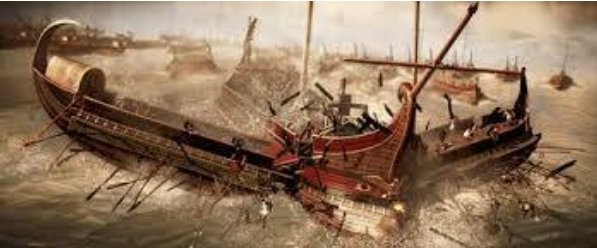
Warships were built to be lightweight and very speedy. They had to be able to sail near the coast which is why they had no ballast or excess load and were built with a long, narrow hull. They did not sink when damaged and often would lie crippled on the sea’s surface following naval battles. They had a bronze battering ram, which was used to pierce the timber hulls or break the oars of enemy vessels. Warships used both wind (sails) and human power (oarsmen) and were therefore very fast. Eventually, Rome’s navy became the largest and most powerful in the Mediterranean, and the Romans had control over what they therefore called Mare Nostrum meaning ‘our sea’.

There were many kinds of warships. The ‘trireme’ was the dominant warship from the 7th to 4th century BCE. It had rowers in the top, middle and lower levels, and approximately 50 rowers in each bank. The rowers at the bottom had the most uncomfortable position as they were under the other rowers and were exposed to the water entering through the oar-holes. It is worth noting that contrary to popular perception, rowers were not slaves but mostly Roman citizens enrolled in the military. The trireme was superseded by larger ships with even more rowers.

Merchant ships were built to transport lots of cargo over long distances and at a reasonable cost. They had a wider hull, double planking and a solid interior for added stability. Unlike warships, their V-shaped hull was deep underwater, meaning that they could not sail too close to the coast. They usually had two huge side rudders located off the stern and controlled by a small tiller bar connected to a system of cables. They had from one to three masts with large square sails and a small triangular sail at the bow. Just like warships, merchant ships used oarsmen, but coordinating the hundreds of rowers in both types of ship was not an easy task. In order to assist them, music would be played on an instrument, and oars would then keep time with this.

The cargo on merchant ships included raw materials (e.g. iron bars, copper, marble and granite), and agricultural products (e.g. grain from Egypt’s Nile valley). During the Empire, Rome was a huge city by ancient standards of about one million inhabitants. Goods from all over the world would come to the city through the port of Pozzuoli situated west of the bay of Naples in Italy and through the gigantic port of Ostia situated at the mouth of the Tiber River. Large merchant ships would approach the destination port and, just like today, be intercepted by a number of towboats that would drag them to the quay.

The time of travel along the many sailing routes could vary widely. Navigation in ancient Rome did not rely on sophisticated instruments such as compasses but on experience, local knowledge and observation of natural phenomena. In conditions of good visibility, seamen in the Mediterranean often had the mainland or islands in sight, which greatly facilitated navigation. They sailed by noting their position relative to a succession of recognisable landmarks. When weather conditions were not good or where land was no longer visible, Roman mariners estimated directions from the pole star or, with less accuracy, from the Sun at noon. They also estimated directions relative to the wind and swell. Overall, shipping in ancient Roman times resembled shipping today with large vessels regularly crossing the seas and bringing supplies from their Empire.
Questions

– 5
 

Do the following statements agree with the information given in Reading Passage 1?

In boxes 1-5 on your answer sheet, write

TRUE               if the statement agrees with the information

FALSE              if the statement contradicts the information

NOT GIVEN    if there is no information on this

  • 1

    The Romans’ shipbuilding skills were passed on to the Greeks and the Egyptians.

     
  • A

    True

    B

    False

    C

    Not Given

  • 2

    Skilled craftsmen were needed for the mortise and tenon method of fixing planks.

     
  • A

    True

    B

    False

    C

    Not Given

  • 3

    The later practice used by Mediterranean shipbuilders involved building the hull before the frame.

     
  • A

    True

    B

    False

    C

    Not Given

  • 4

    The Romans called the Mediterranean Sea Mare Nostrum because they dominated its use.

     
  • A

    True

    B

    False

    C

    Not Given

  • 5

    Most rowers on ships were people from the Roman army.

     
  • A

    True

    B

    False

    C

    Not Given

Questions

– 13
 

Complete the summary below. Choose ONE WORD ONLY from the passage for each answer. Write your answers in boxes 6-13 on your answer sheet.

Warships and merchant ships

Warships were designed so that they were 6
 
and moved quickly. They often remained afloat after battles and were able to sail close to land as they lacked any additional weight. A battering ram made of 7
 
was included in the design for attacking and damaging the timber and oars of enemy ships. Warships, such as the ‘trireme’, had rowers on three different 8
 
. Unlike warships, merchant ships had a broad 9
 
that lay far below the surface of the sea. Merchant ships were steered through the water with the help of large rudders and a tiller bar. They had both square and 10
 
sails. On merchant ships and warships, 11
 
was used to ensure rowers moved their oars in and out of the water at the same time. Quantities of agricultural goods such as 12
 
were transported by merchant ships to two main ports in Italy. The ships were pulled to the shore by 13
 
. When the weather was clear and they could see islands or land, sailors used landmarks that they knew to help them navigate their route.

Passage 2

Climate change reveals ancient artefacts in Norway’s glaciers

A

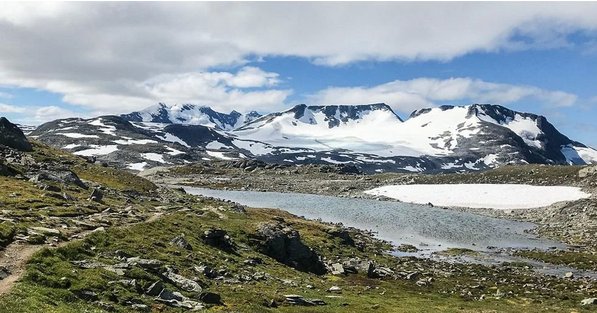
Well above the treeline in Norway’s highest mountains, ancient fields of ice are shrinking as Earth’s climate warms. As the ice has vanished, it has been giving up the treasures it has preserved in cold storage for the last 6,000 years – items such as ancient arrows and skis from Viking Age* traders. And those artefacts have provided archaeologists with some surprising insights into how ancient Norwegians made their livings.

———–

*Viking Age: a period of European history from around 700 CE to around 1050 CE when Scandinavian Vikings migrated throughout Europe by means of trade and warfare

B

Organic materials like textiles and hides are relatively rare finds at archaeological sites. This is because unless they’re protected from the microorganisms that cause decay, they tend no to last long. Extreme cold is one reliable way to keep artefacts relatively fresh for a few thousand years, but once thawed out, these materials experience degradation relatively swiftly.

With climate change shrinking ice cover around the world, glacial archaeologists need to race the clock to find newly revealed artefacts, preserve them, and study them. If something fragile dries and is windblown it might very soon be lost to science, or an arrow might be exposed and then covered again by the next snow and remain well-preserved. The unpredictability means that glacial archaeologists have to be systematic in their approach to fieldwork.

C

Over a nine-year period, a team of archaeologists, which included Lars Pilø of Oppland County Council, Norway, and James Barrett of the McDonald Institute for Archaeological Research, surveyed patches of ice in Oppland, an area of south-central Norway that is home to some of the country’s highest mountains. Reindeer once congregated on these ice patches in the later summer months to escape biting insects, and from the late Stone Age**, hunters followed. In addition, trade routes threaded through the mountain passes of Oppland, linking settlements in Norway to the rest of Europe.

The slow but steady movement of glaciers tends to destroy anything at their bases, so the team focused on stationary patches of ice, mostly above 1,400 metres. That ice is found amid fields of frost-weathered boulders, fallen rocks, and exposed bedrock that for nine months of the year is buried beneath snow.

‘Fieldwork is hard work – hiking with all our equipment, often camping on permafrost – but very rewarding. You’re rescuing the archaeology, bringing the melting ice to wider attention, discovering a unique environmental history and really connecting with the natural environment,’ says Barrett.

—————

**The Stone Age: a period in early history that began about 3.4 million years ago

D

At the edges of the contracting ice patches, archaeologists found more than 2,000 artefacts, which formed a material record that ran from 4,000 BCE to the beginnings of the Renaissance in the 14th century. Many of the artefacts are associated with hunting. Hunters would have easily misplaced arrows and they often discarded broken bows rather than take them all the way home. Other items could have been used by hunters traversing the high mountain passes of Oppland: all-purpose items like tools, skis, and horse tack.

E

Barrett’s team radiocarbon-dated 153 of the artefacts and compared those dates to the timing of major environmental changes in the region – such as periods of cooling or warming – and major social and economic shifts – such as the growth of farming settlements and the spread of international trade networks leading up to the Viking Age. They found that some periods had produced lots of artefacts, which indicates that people had been pretty active in the mountains during those times. But there were few or no signs of activity during other periods.

F

What was surprising, according to Barrett, was the timing of these periods. Oppland’s mountains present daunting terrain and in periods of extreme cold, glaciers could block the higher mountain passes and make travel in the upper reaches of the mountains extremely difficult. Archaeologists assumed people would stick to lower elevations during a time like the Late Antique Little Ice Age, a short period of deeper-than-usual cold from about 536-600 CE. But it turned out that hunters kept regularly venturing into the mountains even when the climate turned cold, based on the amount of stuff they had apparently dropped there.

‘Remarkably, though, the finds from the ice may have continued through this period, perhaps suggesting that the importance of mountain hunting increased to supplement failing agricultural harvests in times of low temperatures,’ says Barrett. A colder turn in the Scandinavian climate would likely have meant widespread crop failures, so more people would have depended on hunting to make up for those losses.

G

Many of the artefacts Barrett’s team recovered date from the beginning of the Viking Age, the 700s through to the 900s CE. Trade networks connecting Scandinavia with Europe and the Middle East were expanding around this time. Although we usually think of ships when we think of Scandinavian expansion, these recent discoveries show that plenty of goods travelled on overland routes, like the mountain passes of Oppland. And growing Norwegian towns, along with export markets, would have created a booming demand for hides to fight off the cold, as well as antlers to make useful things like combs. Business must have been good for hunters.

H

Norway’s mountains are probably still hiding a lot of history – and prehistory – in remote ice patches. When Barrett’s team looked at the dates for their sample of 153 artefacts, they noticed a gap with almost no artefacts from about 3,800 to 2,200 BCE. In fact, archaeological finds from that period are rare all over Norway. The researchers say that could be because many of those artefacts have already disintegrated or are still frozen in the ice. That means archaeologists could be extracting some of those artefacts from retreating ice in years to come.
Questions

14 – 19
 

Reading Passage 2 has eight sections, A-H. Which section contains the following information?

14
an explanation for weapons being left behind in the mountains
Chọn đáp án
15
a reference to the physical difficulties involved in an archaeological expedition
Chọn đáp án
16
an explanation of why less food may have been available
Chọn đáp án
17
a reference to the possibility of future archaeological discoveries
Chọn đáp án
18
examples of items that would have been traded
Chọn đáp án
19
a reference to the pressure archaeologists are under to work quickly
Chọn đáp án

Questions

20 – 22
 

Complete the summary below. Choose ONE WORD ONLY from the passage for each answer. Write your answers in boxes 20-22

Interesting finds at an archaeological site

Organic materials such as animal skins and textiles are not discovered very often at archaeological sites. They have little protection against 20
 
, which means that they decay relatively quickly. But this is not always the case. If temperatures are low enough, fragile artefacts can be preserved for thousands of years. A team of archaeologists have been working in the mountains in Oppland in Norway to recover artefacts revealed by shrinking ice cover. In the past, there were trade routes through these mountains and 21
 
gathered there in the summer months to avoid being attacked by 22
 
on lower ground. The people who used these mountains left things behind and it is those objects that are of interest to archaeologists.

Questions

23 – 24
 

Choose TWO letters, A-E. Which TWO of the following statements does the writer make about the discoveries of Barrett’s team?

  • 23
    24
  •  
    A
    Artefacts found in the higher mountain passes were limited to skiing equipment.
     
    B
    Hunters went into the mountains even during periods of extreme cold.
     
    C
    The number of artefacts from certain time periods was relatively low.
     
    D
    Radiocarbon dating of artefacts produced some unreliable results.
     
    E
    More artefacts were found in Oppland than at any other mountain site.

Questions

25 – 26
 

Choose TWO letters, A-E. Which TWO of the following statements does the writer make about the Viking Age?

  • 25
    26
  •  
    A
    Hunters at this time benefited from an increased demand for goods.
     
    B
    The beginning of the period saw the greatest growth in the wealth of Vikings.
     
    C
    Vikings did not rely on ships alone to transport goods.
     
    D
    Norwegian towns at this time attracted traders from around the world.
     
    E
    Vikings were primarily interested in their trading links with the Middle East.

Passage 3

Plant ‘thermometer’ triggers springtime growth by measuring night-time heat

A photoreceptor molecule in plant cells has been found to have a second job as a thermometer after dark – allowing plants to read seasonal temperature changes. Scientists say the discovery could help breed crops that are more resilient to the temperatures expected to result from climate change

A

An international team of scientists led by the University of Cambridge has discovered that the ‘thermometer’ molecule in plants enables them to develop according to seasonal temperature changes. Researchers have revealed that molecules called phytochromes – used by plants to detect light during the day – actually change their function in darkness to become cellular temperature gauges that measure the heat of the night.

The new findings, published in the journal Science, show that phytochromes control genetic switches in response to temperature as well as light to dictate plant development.

B

At night, these molecules change states, and the pace at which they change is ‘directly proportional to temperature’, say scientists, who compare phytochromes to mercury in a thermometer. The warmer it is, the faster the molecular change – stimulating plant growth.

C

Farmers and gardeners have known for hundreds of years how responsive plants are to temperature: warm winters cause many trees and flowers to bud early, something humans have long used to predict weather and harvest times for the coming year. The latest research pinpoints for the first time a molecular mechanism in plants that reacts to temperature – often triggering the buds of spring we long to see at the end of winter.

D

With weather and temperatures set to become ever more unpredictable due to climate change, researchers say the discovery that this light-sensing molecule also functions as the internal thermometer in plant cells could help us breed tougher crops. ‘It is estimated that agricultural yields will need to double by 2050, but climate change is a major threat to achieving this. Key crops such as wheat and rice are sensitive to high temperatures. Thermal stress reduces crop yields by around 10% for every one degree increase in temperature,’ says lead researcher Dr Philip Wigge from Cambridge’s Sainsbury Laboratory. ‘Discovering the molecules that allow plants to sense temperature has the potential to accelerate the breeding of crops resilient to thermal stress and climate change.’

E

In their active state, phytochrome molecules bind themselves to DNA to restrict plant growth. During the day, sunlight activates the molecules, slowing down growth. If a plant finds itself in shade, phytochromes are quickly inactivated – enabling it to grow faster to find sunlight again. This is how plants compete to escape each other’s shade. ‘Light-driven changes to phytochrome activity occur very fast, in less than a second,’ says Wigge.

At night, however, it’s a different story. Instead of a rapid deactivation following sundown, the molecules gradually change from their active to inactive state. This is called ‘dark reversion’. ‘Just as mercury rises in a thermometer, the rate at which phytochromes revert to their inactive state during the night is a direct measure of temperature,’ says Wigge.

F

‘The lower the temperature, the slower the rate at which phytochromes revert to inactivity, so the molecules spend more time in their active, growth-suppressing state. This is why plants are slower to grow in winter. Warm temperatures accelerate dark reversion, so that phytochromes rapidly reach an inactive state and detach themselves from the plant’s DNA – allowing genes to be expressed and plant growth to resume.’ Wigge believes phytochrome thermo-sensing evolved at a later stage, and co-opted the biological network already used for light-based growth during the downtime of night.

G

Some plants mainly use day length as an indicator of the reason. Other species, such as daffodils, have considerable temperature sensitivity, and can flower months in advance during a warm winter. In fact, the discovery of the dual role of phytochromes provides the science behind a well-known rhyme long used to predict the coming season: oak before ash we’ll have a plash, ash before oak we’re in for a soak.

Wigge explains: ‘Oak trees rely much more on temperature, likely using phytochromes as thermometers to dictate development, whereas ash trees rely on measuring day length to determine their seasonal timing. A warmer spring, and consequently a higher likeliness of a hot summer, will result in oak leafing before ash. A cold spring will see the opposite. As the British know only too well, a colder summer is likely to be a rain-soaked one.’

H

The new findings are the culmination of twelve years of research involving scientists from Germany, Argentina and the US, as well as the Cambridge team. The work was done in a model system, using a mustard plant called Arabidopsis, but Wigge says the phytochrome genes necessary for temperature sensing are found in crop plants as well. ‘Recent advances in plant genetics now mean that scientists are able to rapidly identify the genes controlling these processes in crop plants, and even alter their activity using precise molecular “scalpels”,’ adds Wigge. ‘Cambridge is uniquely well-positioned to do this kind of research as we have outstanding collaborators nearby who work on more applied aspects of plant biology, and can help us transfer this new knowledge into the field.’
Questions

27 – 32
 

Do the following statements agree with the information given in Reading Passage 3?

In boxes 27-32 on your answer sheet, write

TRUE               if the statement agrees with the information

FALSE              if the statement contradicts the information

NOT GIVEN    if there is no information on this

  • 27

    The Cambridge scientists’ discovery of the ‘thermometer molecule’ caused surprise among other scientists.

     
  • A

    True

    B

    False

    C

    Not Given

  • 28

    The target for agricultural production by 2050 could be missed

     
  • A

    True

    B

    False

    C

    Not Given

  • 29

    Wheat and rice suffer from a rise in temperatures

     
  • A

    True

    B

    False

    C

    Not Given

  • 30

    It may be possible to develop crops that require less water

     
  • A

    True

    B

    False

    C

    Not Given

  • 31

    Plants grow faster in sunlight than in shade

     
  • A

    True

    B

    False

    C

    Not Given

  • 32

    Phytochromes change their state at the same speed day and night

     
  • A

    True

    B

    False

    C

    Not Given

Questions

33 – 37
 

Reading Passage 3 has eight sections, A-H. Which section contains the following information?

33
mention of specialists who can make use of the research findings
Chọn đáp án
34
a reference to a potential benefit of the research findings
Chọn đáp án
35
scientific support for a traditional saying
Chọn đáp án
36
a reference to people traditionally making plans based on plant behaviour
Chọn đáp án
37
a reference to where the research has been reported
Chọn đáp án

Questions

38 – 40
 

Complete the sentences below. Choose NO MORE THAN TWO WORDS from the passage for each answer. Write your answers in boxes 38-40.

Daffodils are likely to flower early in response to 38
 
weather. If ash trees come into leaf before oak trees, the weather in 39
 
will probably be wet. The research was carried out using a particular species of 40


Questions

– 5
 

Do the following statements agree with the information given in Reading Passage 1?

In boxes 1-5 on your answer sheet, write

TRUE               if the statement agrees with the information

FALSE              if the statement contradicts the information

NOT GIVEN    if there is no information on this

  • 1

    The Romans’ shipbuilding skills were passed on to the Greeks and the Egyptians.

     
  • A

    True

    B

    False

    C

    Not Given

Giải thích đáp án


Question 1 – FALSE
Câu hỏi

The Romans’ shipbuilding skills were passed on to the Greeks and the Egyptians.

Kỹ năng đóng tàu của người La Mã đã được truyền lại cho người Hy Lạp và Ai Cập.

Định vị vùng thông tin

The Romans were not traditionally sailors but mostly land- based people, who learned to build ships from the people that they conquered, namely the Greeks and the Egyptians.

Theo truyền thống, người La Mã không phải là thủy thủ mà chủ yếu là những người sống trên cạn, họ học cách đóng tàu từ những người mà họ đã chinh phục, cụ thể là người Hy Lạp và người Ai Cập.

  • 2

    Skilled craftsmen were needed for the mortise and tenon method of fixing planks.

     
  • Bạn chưa trả lời câu hỏi này

  • A

    True

    B

    False

    C

    Not Given

Giải thích đáp án


Question 2 – NOT GIVEN
Câu hỏi

Skilled craftsmen were needed for the mortise and tenon method of fixing planks.

Các thợ thủ công lành nghề là cần thiết cho phương pháp đục lỗ và làm mộng để cố định ván.

Định vị vùng thông tin

Starting from the 6th century BCE, they were fixed using a method called mortise and tenon, whereby one plank locked into another without the need for stitching. 

Bắt đầu từ thế kỷ thứ 6 trước Công nguyên, chúng được cố định bằng một phương pháp gọi là lỗ mộng và mộng, theo đó một tấm ván được khóa vào tấm ván khác mà không cần khâu.

NOTE: Chi tiết các thợ thủ công lành nghề không được đề cập tới trong đoạn này
  • 3

    The later practice used by Mediterranean shipbuilders involved building the hull before the frame.

     
  • Bạn chưa trả lời câu hỏi này

  • A

    True

    B

    False

    C

    Not Given

Giải thích đáp án


Question 3 – FALSE
Câu hỏi

The later practice used by Mediterranean shipbuilders involved building the hull before the frame.

Phương pháp sau đó được các nhà đóng tàu Địa Trung Hải sử dụng liên quan đến việc chế tạo thân tàu trước khung.

Định vị vùng thông tin

Then in the first centuries of the current era, Mediterranean shipbuilders shifted to another shipbuilding method, still in use today, which consisted of building the frame first and then proceeding with the hull and the other components of the ship

Sau đó trong những thế kỷ đầu tiên của kỷ nguyên hiện tại, các nhà đóng tàu Địa Trung Hải chuyển sang một phương pháp đóng tàu khác, vẫn được sử dụng cho đến ngày nay, bao gồm xây dựng khung trước rồi mới tiến hành đóng thân tàu và các thành phần khác của tàu.

  • 4

    The Romans called the Mediterranean Sea Mare Nostrum because they dominated its use.

     
  • Bạn chưa trả lời câu hỏi này

  • A

    True

    B

    False

    C

    Not Given

Giải thích đáp án


Question 4 – TRUE
Câu hỏi

The Romans called the Mediterranean Sea Mare Nostrum because they dominated its use.

Người La Mã gọi Biển Địa Trung Hải là Mare Nostrum vì họ đã thống trị nó

Định vị vùng thông tin

Eventually, Rome’s navy became the largest and most powerful in the Mediterranean, and the Romans had control over what they therefore called Mare Nostrum meaning ‘our sea’

Cuối cùng, hải quân của La Mã trở thành lực lượng lớn nhất và mạnh nhất ở Địa Trung Hải, và người La Mã có quyền kiểm soát những gì họ gọi là Mare Nostrum có nghĩa là ‘biển của chúng ta’.

  • 5

    Most rowers on ships were people from the Roman army.

     
  • Bạn chưa trả lời câu hỏi này

  • A

    True

    B

    False

    C

    Not Given

Giải thích đáp án


Question 5 – TRUE
Câu hỏi

Most rowers on ships were people from the Roman army.

Hầu hết những người chèo thuyền đều là người của quân đội La Mã.

Định vị vùng thông tin

It is worth noting that contrary to popular perception, rowers were not slaves but mostly Roman citizens enrolled in the military.

Điều đáng chú ý là trái với nhận thức thông thường, những người chèo thuyền không phải là nô lệ mà chủ yếu là công dân La Mã đăng ký vào quân đội.

Questions

– 13
 

Complete the summary below. Choose ONE WORD ONLY from the passage for each answer. Write your answers in boxes 6-13 on your answer sheet.

Warships and merchant ships

Warships were designed so that they were 6
lightweight
and moved quickly. They often remained afloat after battles and were able to sail close to land as they lacked any additional weight. A battering ram made of 7
bronze
was included in the design for attacking and damaging the timber and oars of enemy ships. Warships, such as the ‘trireme’, had rowers on three different 8
levels
. Unlike warships, merchant ships had a broad 9
hull
that lay far below the surface of the sea. Merchant ships were steered through the water with the help of large rudders and a tiller bar. They had both square and 10
triangular
sails. On merchant ships and warships, 11
music
was used to ensure rowers moved their oars in and out of the water at the same time. Quantities of agricultural goods such as 12
grain
were transported by merchant ships to two main ports in Italy. The ships were pulled to the shore by 13
towboats
. When the weather was clear and they could see islands or land, sailors used landmarks that they knew to help them navigate their route.

Giải thích đáp án


Question 6 – lightweight
Câu hỏi

Warships were designed so that they were _____ and moved quickly.

Tàu chiến được thiết kế để chúng _____ và di chuyển nhanh chóng.

Định vị vùng thông tin

Warships were built to be lightweight and very speedy

Tàu chiến được chế tạo để có trọng lượng nhẹ và rất nhanh

Question 7 – bronze
Câu hỏi

A battering ram made of _____ was included in the design for attacking and damaging the timber and oars of enemy ships.

Một chiếc đập làm bằng _____ đã được đưa vào thiết kế để tấn công và làm hư hại gỗ và mái chèo của tàu địch.

Định vị vùng thông tin

They had a bronze battering ram, which was used to pierce the timber hulls or break the oars of enemy vessels.

Họ có một thanh đập bằng đồng, dùng để đâm thủng vỏ gỗ hoặc làm gãy mái chèo của tàu địch.

Question 8 – levels
Câu hỏi

Warships, such as the ‘trireme’, had rowers on three different _____ .

Các tàu chiến, chẳng hạn như ‘trireme’, có các tay chèo trên ba _____ khác nhau.

Định vị vùng thông tin

The ‘trireme’ was the dominant warship from the 7th to 4th century BCE. It had rowers in the top, middle and lower levels, and approximately 50 rowers in each bank.

‘Trireme’ là tàu chiến thống trị từ thế kỷ thứ 7 đến thế kỷ thứ 4 trước Công nguyên.  có các tay chèo ở các cấp cao nhất, trung bình và thấp hơn, và khoảng 50 tay chèo ở mỗi ngân hàng.

Question 9 – hull
Câu hỏi

Unlike warshipsmerchant ships had a broad _____ that lay far below the surface of the sea

Không giống như tàu chiếntàu buôn có một _____ rộng nằm xa dưới mặt biển

Định vị vùng thông tin

Merchant ships were built to transport lots of cargo over long distances and at a reasonable cost. They had a wider hull, double planking and a solid interior for added stability. Unlike warships, their V-shaped hull was deep underwater, meaning that they could not sail too close to the coast.

Tàu buôn được chế tạo để vận chuyển nhiều hàng hóa trên quãng đường dài với chi phí hợp lý. Chúng có thân tàu rộng hơn, ván đôi và nội thất chắc chắn để tăng thêm độ ổn định. Không giống như tàu chiến, thân tàu hình chữ V của họ nằm sâu dưới nước, có nghĩa là họ không thể đi quá gần bờ biển.

Question 10 – triangular
Câu hỏi

Merchant ships were steered through the water with the help of large rudders and a tiller bar. They had both square and _____ sails.

Các tàu buôn được lái trên mặt nước với sự trợ giúp của các bánh lái lớn và một thanh xới. Chúng có cả hình vuông và buồm _____.

Định vị vùng thông tin

They usually had two huge side rudders located off the stern and controlled by a small tiller bar connected to a system of cables. They had from one to three masts with large square sails and a small triangular sail at the bow.

Chúng thường có hai bánh lái phụ rất lớn nằm ngoài đuôi tàu và được điều khiển bởi một thanh xới nhỏ nối với hệ thống dây cáp. Chúng có từ một đến ba cột buồm với cánh buồm vuông lớn và một cánh buồm hình tam giác nhỏ ở mũi.

Question 11 – music
Câu hỏi

On merchant ships and warships, _____ was used to ensure rowers moved their oars in and out of the water at the same time.

Trên các tàu buôn và tàu chiến, _____ được sử dụng để đảm bảo những người chèo thuyền di chuyển mái chèo của họ vào và ra khỏi mặt nước cùng một lúc.

Định vị vùng thông tin

Just like warships, merchant ships used oarsmen, but coordinating the hundreds of rowers in both types of ship was not an easy task. In order to assist them, music would be played on an instrument, and oars would then keep time with this

Cũng giống như tàu chiến, tàu buôn sử dụng mái chèo, nhưng việc phối hợp hàng trăm tay chèo ở cả hai loại tàu không phải là một việc dễ dàng. Để hỗ trợ họ, người ta sẽ chơi nhạc để giúp người chèo thuyền điều khiển mái chèo theo nhịp điệu của nhạc

Question 12 – grain
Câu hỏi

Quantities of agricultural goods such as _____ were transported by merchant ships to two main ports in Italy.

Số lượng hàng hóa nông nghiệp như _____ đã được vận chuyển bằng tàu buôn đến hai cảng chính ở Ý.

Định vị vùng thông tin

The cargo on merchant ships included raw materials (e.g. iron bars, copper, marble and granite), and agricultural products (e.g. grain from Egypt’s Nile valley)

Hàng hóa trên các tàu buôn bao gồm nguyên liệu thô (ví dụ: thanh sắt, đồng, đá cẩm thạch và đá granit) và các sản phẩm nông nghiệp (ví dụ: ngũ cốc từ thung lũng sông Nile của Ai Cập)

Question 13 – towboats
Câu hỏi

The ships were pulled to the shore by _____ . 

Các con tàu đã được kéo vào bờ bởi _____.

Định vị vùng thông tin

Large merchant ships would approach the destination port and, just like today, be intercepted by a number of towboats that would drag them to the quay.

Các tàu buôn lớn sẽ tiếp cận cảng đích và cũng giống như ngày nay, bị chặn lại bởi một số thuyền kéo sẽ kéo chúng vào cầu cảng.

Questions

14 – 19
 

Reading Passage 2 has eight sections, A-H. Which section contains the following information?

14
an explanation for weapons being left behind in the mountains

Bạn chưa trả lời câu hỏi này

D

15
a reference to the physical difficulties involved in an archaeological expedition

Bạn chưa trả lời câu hỏi này

C

16
an explanation of why less food may have been available

Bạn chưa trả lời câu hỏi này

F

17
a reference to the possibility of future archaeological discoveries

Bạn chưa trả lời câu hỏi này

H

18
examples of items that would have been traded

Bạn chưa trả lời câu hỏi này

G

19
a reference to the pressure archaeologists are under to work quickly

Bạn chưa trả lời câu hỏi này

B

Giải thích đáp án


Question 14 – D
Câu hỏi

an explanation for weapons being left behind in the mountains

lời giải thích cho việc vũ khí bị bỏ lại trên núi

Định vị vùng thông tin

Many of the artefacts are associated with hunting. Hunters would have easily misplaced arrows and they often discarded broken bows rather than take them all the way home

Nhiều đồ tạo tác gắn liền với săn bắn. Những người thợ săn sẽ dễ dàng đặt nhầm mũi tên và họ thường vứt bỏ những chiếc cung bị hỏng hơn là mang chúng về nhà

Question 15 – C
Câu hỏi

a reference to the physical difficulties involved in an archaeological expedition

đề cập đến những khó khăn về thể chất liên quan đến một cuộc thám hiểm khảo cổ học

Định vị vùng thông tin

Fieldwork is hard work – hiking with all our equipment, often camping on permafrost – but very rewarding

Thực địa là công việc khó khăn – cần đi bộ đường dài với tất cả các thiết bị của chúng tôi, thường cắm trại trên lớp băng vĩnh cửu – nhưng rất bổ ích

Question 16 – F
Câu hỏi

an explanation of why less food may have been available

giải thích lý do tại sao có thể có sẵn ít thức ăn hơn

Định vị vùng thông tin

A colder turn in the Scandinavian climate would likely have meant widespread crop failures, so more people would have depended on hunting to make up for those losses.

Khí hậu Scandinavia trở nên lạnh hơn có thể đồng nghĩa với việc mất mùa trên diện rộng, vì vậy nhiều người sẽ phụ thuộc vào săn bắn để bù đắp cho những thiệt hại đó.

Question 17 – H
Câu hỏi

a reference to the possibility of future archaeological discoveries

một tài liệu tham khảo về khả năng khám phá khảo cổ học trong tương lai

Định vị vùng thông tin

That means archaeologists could be extracting some of those artefacts from retreating ice in years to come

Điều đó có nghĩa là các nhà khảo cổ có thể sẽ khai thác một số đồ tạo tác đó từ lớp băng rút đi trong nhiều năm tới

Question 18 – G
Câu hỏi

examples of items that would have been traded

ví dụ về các mặt hàng sẽ được giao dịch

Định vị vùng thông tin

And growing Norwegian towns, along with export markets, would have created a booming demand for hides to fight off the cold, as well as antlers to make useful things like combs

Và các thị trấn Na Uy ngày càng phát triển, cùng với thị trường xuất khẩu, sẽ tạo ra nhu cầu bùng nổ về da sống để chống lại cái lạnh, cũng như gạc để làm những thứ hữu ích như lược

Question 19 – B
Câu hỏi

a reference to the pressure archaeologists are under to work quickly

liên quan đến áp lực mà các nhà khảo cổ đang phải làm việc nhanh chóng

Định vị vùng thông tin

With climate change shrinking ice cover around the world, glacial archaeologists need to race the clock to find newly revealed artefacts, preserve them, and study them.

Với tình trạng biến đổi khí hậu, lớp băng bao phủ trên khắp thế giới ngày càng thu hẹp, các nhà khảo cổ học về băng hà cần phải chạy đua để tìm ra những đồ tạo tác mới được tiết lộ, bảo quản và nghiên cứu chúng.

Questions

20 – 22
 

Complete the summary below. Choose ONE WORD ONLY from the passage for each answer. Write your answers in boxes 20-22

Interesting finds at an archaeological site

Organic materials such as animal skins and textiles are not discovered very often at archaeological sites. They have little protection against 20
, which means that they decay relatively quickly. But this is not always the case. If temperatures are low enough, fragile artefacts can be preserved for thousands of years. A team of archaeologists have been working in the mountains in Oppland in Norway to recover artefacts revealed by shrinking ice cover. In the past, there were trade routes through these mountains and 21
reindeer
gathered there in the summer months to avoid being attacked by 22
insects
on lower ground. The people who used these mountains left things behind and it is those objects that are of interest to archaeologists.

Giải thích đáp án


Question 20 – microorganisms / micro-organisms
Câu hỏi

They have little protection against _____, which means that they decay relatively quickly.

Chúng có ít khả năng bảo vệ chống lại _____, có nghĩa là chúng phân hủy tương đối nhanh.

Định vị vùng thông tin

Paragraph B: This is because unless they’re protected from the microorganisms that cause decay, they tend no to last long

Đoạn B: Điều này là do trừ khi chúng được bảo vệ khỏi các vi sinh vật gây thối rữa, chúng có xu hướng không tồn tại lâu

Question 21 – reindeer và Question 22 – insects
Câu hỏi

In the past, there were trade routes through these mountains and _____ gathered there in the summer months to avoid being attacked by _____ on lower ground.

Trong quá khứ, có những tuyến đường thương mại xuyên qua những ngọn núi này và _____ tập trung ở đó vào những tháng mùa hè để tránh bị tấn công bởi _____ ở vùng đất thấp hơn.

Định vị vùng thông tin

Paragraph C: […] area of south-central Norway that is home to some of the country’s highest mountainsReindeer once congregated on these ice patches in the later summer months to escape biting insects

Đoạn C: […] khu vực miền trung nam Na Uy, nơi có một số ngọn núi cao nhất của đất nướcNhững con tuần lộc đã từng tụ tập trên những tảng băng này vào những tháng cuối mùa hè để trốn côn trùng cắn

Questions

23 – 24
 

Choose TWO letters, A-E. Which TWO of the following statements does the writer make about the discoveries of Barrett’s team?

  • 23
    24
  •  
    A
    Artefacts found in the higher mountain passes were limited to skiing equipment.

    Bạn chọn thiếu đáp án này

     
    B
    Hunters went into the mountains even during periods of extreme cold.

    Bạn chọn thiếu đáp án này

     
    C
    The number of artefacts from certain time periods was relatively low.
     
    D
    Radiocarbon dating of artefacts produced some unreliable results.
     
    E
    More artefacts were found in Oppland than at any other mountain site.

Giải thích đáp án


Question 23 & 24 – B & C
Câu hỏi

Which TWO of the following statements does the writer make about the discoveries of Barrett’s team?

A. Artefacts found in the higher mountain passes were limited to skiing equipment.

B. Hunters went into the mountains even during periods of extreme cold.

C. The number of artefacts from certain time periods was relatively low.

D. Radiocarbon dating of artefacts produced some unreliable results.

E. More artefacts were found in Oppland than at any other mountain site.

HAI câu nào sau đây người viết đưa ra về khám phá của đội Barrett?

A. Các đồ tạo tác được tìm thấy trên các con đèo cao hơn chỉ giới hạn trong các thiết bị trượt tuyết.

B. Những người thợ săn đã vào núi ngay cả trong thời kỳ cực kỳ lạnh giá.

C. Số lượng đồ tạo tác từ những khoảng thời gian nhất định tương đối thấp.

D. Việc xác định niên đại bằng cacbon phóng xạ của các đồ tạo tác cho ra một số kết quả không đáng tin cậy.

E. Nhiều đồ tạo tác được tìm thấy ở Oppland hơn bất kỳ địa điểm trên núi nào khác.

Định vị vùng thông tin

Paragraph F: Oppland’s mountains present daunting terrain and in periods of extreme cold, glaciers could block the higher mountain passes and make travel in the upper reaches of the mountains extremely difficult […] But it turned out that hunters kept regularly venturing into the mountains even when the climate turned cold, based on the amount of stuff they had apparently dropped there

Paragraph E: They found that some periods had produced lots of artefacts, which indicates that people had been pretty active in the mountains during those times. But there were few or no signs of activity during other periods

Đoạn văn F: Những ngọn núi ở Oppland có địa hình hiểm trở và trong thời kỳ cực kỳ lạnh giá, các sông băng có thể chặn các đèo cao hơn và khiến việc đi lại ở các vùng thượng lưu của dãy núi trở nên vô cùng khó khăn […] Tuy nhiên, các thợ săn vẫn thường xuyên mạo hiểm lên các dãy núi ngay cả trong điều kiện thời tiết lạnh

Đoạn văn E: Họ phát hiện ra rằng một số thời kỳ đã tạo ra rất nhiều đồ tạo tác, điều này cho thấy rằng con người đã hoạt động khá tích cực ở vùng núi trong thời gian đó. Nhưng có rất ít hoặc không có dấu hiệu hoạt động trong các thời kỳ khác

Questions

25 – 26
 

Choose TWO letters, A-E. Which TWO of the following statements does the writer make about the Viking Age?

  • 25
    26
  • Bạn chọn thiếu đáp án này

     
    A
    Hunters at this time benefited from an increased demand for goods.
     
    B
    The beginning of the period saw the greatest growth in the wealth of Vikings.

    Bạn chọn thiếu đáp án này

     
    C
    Vikings did not rely on ships alone to transport goods.
     
    D
    Norwegian towns at this time attracted traders from around the world.
     
    E
    Vikings were primarily interested in their trading links with the Middle East.

Giải thích đáp án


Question 25 & 26 – A & C
Câu hỏi

Which TWO of the following statements does the writer make about the Viking Age?

A. Hunters at this time benefited from an increased demand for goods.

B. The beginning of the period saw the greatest growth in the wealth of Vikings.

C. Vikings did not rely on ships alone to transport goods.

D. Norwegian towns at this time attracted traders from around the world.

E. Vikings were primarily interested in their trading links with the Middle East.

Nhà văn đưa ra HAI nhận định nào sau đây về Thời đại Viking?

A. Những người đi săn lúc này được hưởng lợi do nhu cầu hàng hóa tăng lên.

B. Đầu thời kỳ này chứng kiến sự tăng trưởng tài sản lớn nhất của người Viking.

C. Người Viking không chỉ dựa vào tàu để vận chuyển hàng hóa.

D. Các thị trấn của Na Uy vào thời gian này đã thu hút các thương nhân từ khắp nơi trên thế giới.

E. Người Viking chủ yếu quan tâm đến các liên kết thương mại của họ với Trung Đông

Định vị vùng thông tin

Paragraph G: Although we usually think of ships when we think of Scandinavian expansion, these recent discoveries show that plenty of goods travelled on overland routes, like the mountain passes of Oppland[…]

And growing Norwegian towns, along with export markets, would have created a booming demand for hides to fight off the cold, as well as antlers to make useful things like combsBusiness must have been good for hunters.

Đoạn văn G: Mặc dù hầu hết chúng ta khi nhắc đến sự mở rộng của bán đảo Scandinavian đều nghĩ ngay đến các con tàu, các phát kiến ngày nay chỉ ra rằng có rất nhiều sản phẩm được vận chuyển qua đất liền, ví dụ như đường đèo ở Oppland […]

Và các thị trấn Na Uy ngày càng phát triển, cùng với thị trường xuất khẩu, sẽ tạo ra nhu cầu bùng nổ về da sống để chống lại cái lạnh, cũng như gạc để làm những thứ hữu ích như lượcCông việc kinh doanh hẳn là tốt cho những người thợ săn.


Questions

27 – 32

Do the following statements agree with the information given in Reading Passage 3?

In boxes 27-32 on your answer sheet, write

TRUE               if the statement agrees with the information

FALSE              if the statement contradicts the information

NOT GIVEN    if there is no information on this

  • 27

    The Cambridge scientists’ discovery of the ‘thermometer molecule’ caused surprise among other scientists.

  • Bạn chưa trả lời câu hỏi này

Giải thích đáp án

Question 27 – NOT GIVEN
Câu hỏi

The Cambridge scientists’ discovery of the ‘thermometer molecule’ caused surprise among other scientists.

Việc các nhà khoa học Cambridge khám phá ra “phân tử nhiệt kế” đã gây ra sự ngạc nhiên cho các nhà khoa học khác.

Định vị vùng thông tin

Paragraph A: An international team of scientists led by the University of Cambridge has discovered that the ‘thermometer’ molecule in plants enables them to develop according to seasonal temperature changes […] The new findings, published in the journal Science, show that phytochromes control genetic switches in response to temperature as well as light to dictate plant development.

Đoạn A: Một nhóm các nhà khoa học quốc tế do Đại học Cambridge dẫn đầu đã phát hiện ra rằng phân tử ‘nhiệt kế’ trong thực vật cho phép chúng phát triển theo sự thay đổi nhiệt độ theo mùa […] Phát hiện mới được công bố trên tạp chí Science cho thấy phytochromes kiểm soát các công tắc di truyền để phản ứng với nhiệt độ cũng như ánh sáng để quyết định sự phát triển của thực vật.

NOTE: Những phát kiến này được xuất bản trên tạp chí Science nhưng đoạn văn không hề đề cập tới việc những nghiên cứu này gây bất ngờ cho các nhà khoa học khác
  • 28

    The target for agricultural production by 2050 could be missed

  • Bạn chưa trả lời câu hỏi này

Giải thích đáp án

Question 28 – TRUE
Câu hỏi

The target for agricultural production by 2050 could be missed

Mục tiêu sản xuất nông nghiệp đến năm 2050 có thể bị bỏ lỡ

Định vị vùng thông tin

Paragraph D: It is estimated that agricultural yields will need to double by 2050, but climate change is a major threat to achieving this

Đoạn D: Người ta ước tính rằng sản lượng nông nghiệp sẽ cần phải tăng gấp đôi vào năm 2050, nhưng biến đổi khí hậu là một mối đe dọa lớn để đạt được điều này.

  • 29

    Wheat and rice suffer from a rise in temperatures

  • Bạn chưa trả lời câu hỏi này

Giải thích đáp án

Question 29 – TRUE
Câu hỏi

Wheat and rice suffer from a rise in temperatures

Lúa mì và gạo bị tăng nhiệt độ

Định vị vùng thông tin

Paragraph D: Key crops such as wheat and rice are sensitive to high temperatures. Thermal stress reduces crop yields by around 10% for every one degree increase in temperature

Đoạn D: Các cây trồng chủ lực như lúa mì và gạo rất nhạy cảm với nhiệt độ cao. Căng thẳng nhiệt làm giảm năng suất cây trồng khoảng 10% khi nhiệt độ tăng một độ

  • 30

    It may be possible to develop crops that require less water

  • Bạn chưa trả lời câu hỏi này

Giải thích đáp án

Question 30 – NOT GIVEN
Câu hỏi

It may be possible to develop crops that require less water

Có thể phát triển các loại cây trồng cần ít nước hơn

Định vị vùng thông tin

Paragraph D: Discovering the molecules that allow plants to sense temperature has the potential to accelerate the breeding of crops resilient to thermal stress and climate change

Đoạn D: Khám phá các phân tử cho phép thực vật cảm nhận nhiệt độ có khả năng đẩy nhanh việc nhân giống các loại cây trồng có khả năng chống chịu với stress nhiệt và biến đổi khí hậu

NOTE: Đoạn văn chỉ nhắc tới các loại cây trồng chống lại địa nhiệt cao và biến đổi khí hậu, không có thông tin liên quan đến loại cây trồng cần ít nước hơn
  • 31

    Plants grow faster in sunlight than in shade

  • Bạn chưa trả lời câu hỏi này

Giải thích đáp án

Question 31 – FALSE
Câu hỏi

Plants grow faster in sunlight than in shade

Cây phát triển nhanh hơn trong ánh sáng mặt trời hơn trong bóng râm

Định vị vùng thông tin

Paragraph E: During the day, sunlight activates the molecules, slowing down growth. If a plant finds itself in shade, phytochromes are quickly inactivated – enabling it to grow faster to find sunlight again.

Đoạn E: Vào ban ngày, ánh sáng mặt trời kích hoạt các phân tử, làm chậm sự phát triển. Nếu cây trồng ở trong bóng râm, phytochromes nhanh chóng bị bất hoạt – tạo điều kiện cho nó phát triển nhanh hơn để tìm lại ánh sáng mặt trời.

  • 32

    Phytochromes change their state at the same speed day and night

  • Bạn chưa trả lời câu hỏi này

Giải thích đáp án

Question 32 – FALSE
Câu hỏi

Phytochromes change their state at the same speed day and night

Phytochromes thay đổi trạng thái của chúng với tốc độ như nhau cả ngày lẫn đêm

Định vị vùng thông tin

Paragraph E: During the day, sunlight activates the molecules, slowing down growth. If a plant finds itself in shade, phytochromes are quickly inactivated – enabling it to grow faster to find sunlight again. This is how plants compete to escape each other’s shade. ‘ Light-driven changes to phytochrome activity occur very fast, in less than a second,’ says Wigge.

At night, however, it’s a different story. Instead of a rapid deactivation following sundown, the molecules gradually change from their active to inactive state.

Đoạn E: Vào ban ngày, ánh sáng mặt trời kích hoạt các phân tử, làm chậm sự phát triển. Nếu cây trồng ở trong bóng râm, phytochromes nhanh chóng bị bất hoạt – tạo điều kiện cho nó phát triển nhanh hơn để tìm lại ánh sáng mặt trời. Đây là cách thực vật cạnh tranh để thoát khỏi bóng râm của nhau. ‘ Wigge cho biết những thay đổi theo hướng ánh sáng đối với hoạt động phytochrome diễn ra rất nhanh, trong vòng chưa đầy một giây.

Tuy nhiên, vào ban đêm, đó là một câu chuyện khác. Thay vì ngừng hoạt động nhanh chóng sau khi mặt trời lặn, các phân tử dần dần chuyển từ trạng thái hoạt động sang trạng thái không hoạt động.

NOTE: Chú ý tới liên từ “however” (tuy nhiên) – thể hiện 2 luồng thông tin đối lập

Questions

33 – 37

Reading Passage 3 has eight sections, A-H. Which section contains the following information?

33
mention of specialists who can make use of the research findings

Bạn chưa trả lời câu hỏi này

H

34
a reference to a potential benefit of the research findings

Bạn chưa trả lời câu hỏi này

D

35
scientific support for a traditional saying

Bạn chưa trả lời câu hỏi này

G

36
a reference to people traditionally making plans based on plant behaviour

Bạn chưa trả lời câu hỏi này

C

37
a reference to where the research has been reported

Bạn chưa trả lời câu hỏi này

A

Giải thích đáp án

Question 33 – H
Câu hỏi

mention of specialists who can make use of the research findings

đề cập đến các chuyên gia có thể sử dụng các kết quả nghiên cứu

Định vị vùng thông tin

outstanding collaborators nearby who work on more applied aspects of plant biology, and can help US transfer this new knowledge into the field

những cộng tác viên xuất sắc gần đó, những người làm việc về các khía cạnh ứng dụng hơn của sinh học thực vật và có thể giúp Hoa Kỳ chuyển giao kiến thức mới này vào lĩnh vực này

Question 34 – D
Câu hỏi

a reference to a potential benefit of the research findings

sự tham chiếu đến lợi ích tiềm năng của các kết quả nghiên cứu

Định vị vùng thông tin

Discovering the molecules that allow plants to sense temperature has the potential to accelerate the breeding of crops resilient to thermal stress and climate change.

Việc phát hiện ra các phân tử cho phép thực vật cảm nhận nhiệt độ có khả năng thúc đẩy quá trình lai tạo các loại cây trồng có khả năng chống chịu với stress nhiệt và biến đổi khí hậu.

Question 35 – G
Câu hỏi

scientific support for a traditional saying

hỗ trợ khoa học cho một câu nói truyền thống

Định vị vùng thông tin

the discovery of the dual role of phytochromes provides the science behind a well-known rhyme long used to predict the coming season

việc khám phá ra vai trò kép của phytochromes cung cấp khoa học đằng sau một vần điệu nổi tiếng từ lâu được sử dụng để dự đoán mùa tới

Question 36 – C
Câu hỏi

a reference to people traditionally making plans based on plant behaviour

tham chiếu đến những người lập kế hoạch một cách truyền thống dựa trên hành vi của thực vật

Định vị vùng thông tin

Farmers and gardeners have known for hundreds of years how responsive plants are to temperature: warm winters cause many trees and flowers to bud early, something humans have long used to predict weather and harvest times for the coming year.

Hàng trăm năm naynông dân và những người làm vườn đã biết thực vật phản ứng nhanh như thế nào với nhiệt độ: mùa đông ấm áp khiến nhiều cây và hoa ra nụ sớm, điều mà con người từ lâu đã sử dụng để dự đoán thời tiết và thời gian thu hoạch cho năm tới.

Question 37 – A
Câu hỏi

a reference to where the research has been reported

tham chiếu đến nơi nghiên cứu đã được báo cáo

Định vị vùng thông tin

The new findingspublished in the journal Science, show that phytochromes control genetic switches in response to temperature as well as light to dictate plant development.

Phát hiện mới được công bố trên tạp chí Science cho thấy phytochromes kiểm soát các công tắc di truyền để phản ứng với nhiệt độ cũng như ánh sáng để quyết định sự phát triển của thực vật.

Questions

38 – 40

Complete the sentences below. Choose NO MORE THAN TWO WORDS from the passage for each answer. Write your answers in boxes 38-40.

Daffodils are likely to flower early in response to 38
weather. If ash trees come into leaf before oak trees, the weather in 39
summer
will probably be wet. The research was carried out using a particular species of 40

Giải thích đáp án

Question 38 – warm / warm winter
Câu hỏi

Daffodils are likely to flower early in response to _____ weather.

Hoa thủy tiên vàng có khả năng ra hoa sớm để đáp ứng với thời tiết _____.

Định vị vùng thông tin

Paragraph G: Other species, such as daffodils, have considerable temperature sensitivity, and can flower months in advance during a warm winter.

Đoạn G: Các loài khác, chẳng hạn như hoa thủy tiên vàng, có độ nhạy cảm với nhiệt độ đáng kể, và có thể ra hoa trước nhiều tháng trong mùa đông ấm áp.

Question 39 – summer
Câu hỏi

If ash trees come into leaf before oak trees, the weather in _____ will probably be wet.

Nếu cây tần bì ra lá trước cây sồi, thời tiết vào _____ có thể sẽ ẩm ướt.

Định vị vùng thông tin

Paragraph G: A warmer spring, and consequently a higher likeliness of a hot summer, will result in oak leafing before ash. A cold spring will see the opposite. As the British know only too well, a colder summer is likely to be a rain-soaked one.

Đoạn G: Mùa xuân ấm hơn, và do đó khả năng xảy ra mùa hè nóng nực cao hơn, cây sồi sẽ rụng lá trước cây tần bì. Một mùa xuân lạnh sẽ thấy điều ngược lại. Như người Anh chỉ biết quá rõ, một mùa hè lạnh hơn có thể sẽ là một mùa mưa đẫm nước.

Question 40 – mustard / mustard plant / mustard plants
Câu hỏi

The research was carried out using a particular species of _____ 

Nghiên cứu được thực hiện bằng cách sử dụng một loài _____ cụ thể

Định vị vùng thông tin

Paragraph H: The work was done in a model system, using a mustard plant called Arabidopsis

Đoạn H: Công việc được thực hiện trong một hệ thống mô hình, sử dụng một loại cây mù tạt có tên là Arabidopsis

Select the fields to be shown. Others will be hidden. Drag and drop to rearrange the order.
  • Image
  • SKU
  • Rating
  • Price
  • Stock
  • Availability
  • Add to cart
  • Description
  • Content
  • Weight
  • Dimensions
  • Additional information
Click outside to hide the comparison bar
Compare